Many production managers have already optimized machines, refined shift schedules, and trained operators. Yet the production line still does not run as efficiently as expected.
One factor that is often overlooked during evaluations is the WIP box used every day.
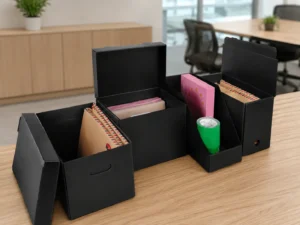
A WIP box is a container used to store and move semi-finished products between workstations.
Its role may seem simple, but choosing the wrong WIP box can slow workflow, increase the risk of product damage, and add unnecessary operational costs.
On the other hand, a box designed according to production needs can become a daily support system for efficiency.
Signs of Inefficient WIP Boxes
1. Material Terlalu Berat
Heavy boxes add physical strain to operators during every transfer between stations. If hundreds of transfer cycles occur within one shift, operator fatigue will eventually affect work speed and accuracy.
In addition, heavy boxes slow down loading and unloading processes. This means handling time per cycle becomes longer than necessary.
2. Easily Damaged or Not Durable
Boxes that dent, crack, or lose their shape after only a few uses create two major problems.
First, the WIP products inside are no longer properly protected. Second, replacement frequency increases, causing operational costs to rise.
3. Incorrect Product Size Fit
Boxes that are too large allow products to move during transfers, increasing the risk of damage.
Meanwhile, boxes that are too small may apply excessive pressure on products, causing deformation or making products unable to fit properly at all.
4. Not Stackable or Difficult to Stack
If boxes cannot be stacked securely, warehouse areas fill up quickly because products must be arranged horizontally instead of vertically.
Space that could accommodate three stacked layers may only be used for one.
Besides wasting storage space, unstable stacking also increases the risk of workplace accidents and product damage.
5. Poor Ergonomic Design
Boxes without proper handles, with sharp edges, or with poorly distributed weight slow operators down and increase the risk of injury.
6. Not Resistant to Production Conditions
FMCG production floors contain moisture from wet processes, exposure to mild chemicals from sanitation procedures, dust from dry production lines, and varying temperatures.
Box WIP yang tidak dirancang untuk bertahan dalam kondisi ini akan mengalami degradasi material yang memperpendek umur pakainya.
7. Difficult to Clean
For factories producing food, pharmaceuticals, or products requiring high hygiene standards, difficult-to-clean boxes can become a serious problem.
Rough surfaces, unreachable gaps, or materials that absorb liquids can become breeding grounds for contaminants that threaten product quality.
8. Does Not Support Visual Management
Modern production systems rely on visual management to monitor material flow. Boxes that do not support clear labeling, color coding, or quick identification will hinder these systems and slow operator response on the production line.
The Impact of Inefficient WIP Boxes on Production
Improper WIP boxes can affect almost every aspect of production operations, including:
- Reduced operator productivity. Heavy and difficult-to-handle boxes slow down every transfer cycle and drain operator energy throughout the shift.
- Higher risk of product damage. Boxes that are incorrectly sized or have lost structural strength fail to properly protect WIP products during transfers between stations.
- Bottleneck dan downtime. Boxes that cannot be stacked or moved efficiently create congestion at certain points, slowing down the entire production line.
- Increased operational costs. This includes product damage costs, longer handling times, and more frequent box replacement.
Tips for Choosing WIP Boxes for Industrial Use
1. Match the Product Type and Production Flow
One box size rarely fits all production requirements.
The internal dimensions of the box should match the size and weight of the WIP products it will contain.
In addition, the box design should consider how materials move within your specific production line whether transfers are handled manually, using trolleys, or integrated with conveyors.
If you need more specific guidance, our article about WIP box specifications based on production flow can serve as a useful starting reference before making procurement decisions.
2. Consider Usage Frequency
Boxes used dozens of times per day require higher material specifications than boxes used occasionally.
The higher the usage frequency, the more important material durability and dimensional consistency become over repeated use.
3. Choose Durable and Reusable Materials
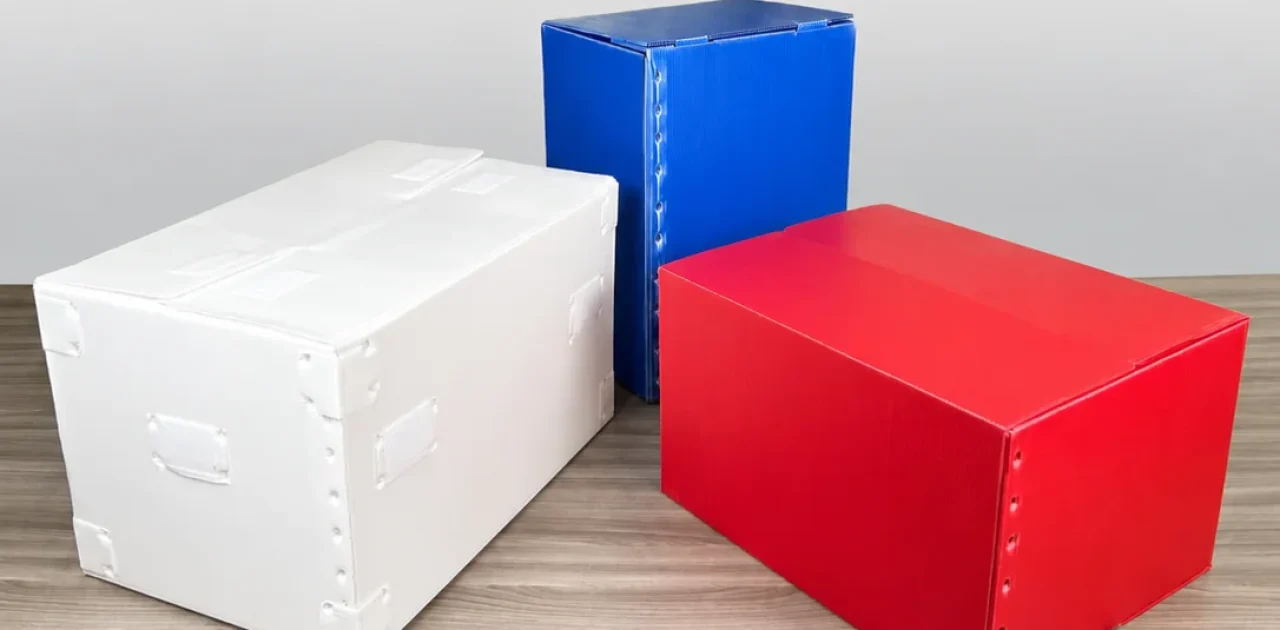
Corrugated polypropylene plastic sheets are one of the best material choices for WIP boxes in FMCG factories.
The material is lightweight yet strong, water-resistant, resistant to mild chemicals, and capable of maintaining its shape even after repeated use.
In addition, its reusable nature results in a lower total cost of ownership compared to cardboard boxes that need constant replacement.
4. Ensure the Supplier Can Provide Custom Designs
Every factory has different production requirements. Suppliers that only offer standard catalog sizes may not meet the specific needs of your production system.
Therefore, make sure the chosen supplier offers custom design capabilities, including adjustments to dimensions, material thickness, and color options.
ALVAboard provides WIP boxes made from corrugated plastic sheets that can be customized according to your production line’s technical specifications.
Container solution and storage system solutions are also available to support efficient material handling on FMCG production floors.
5. Evaluate Long-Term Efficiency, Not Just Initial Price
Polypropylene plastic boxes may have a slightly higher upfront cost compared to cardboard boxes.
However, when calculated based on total ownership cost including replacement frequency, product damage costs, and handling efficiency corrugated plastic sheets often result in lower long-term costs.
Choose the Right WIP Box for Better Production Efficiency!
The wrong WIP box on the production floor affects productivity, product quality, and overall operational costs. Choosing boxes based solely on the lowest price can lead to damages far more expensive than the initial savings.
The good news is that corrugated polypropylene plastic sheets from ALVAboard solve many of the weaknesses found in conventional materials.
Using premium-quality PP material, ALVAboard WIP boxes are lighter, stronger, resistant to demanding production conditions, easy to clean, and reusable for long-term use.
Interested in improving your factory production line efficiency with the right WIP box?
Consult your production line WIP box requirements with the ALVAboard team via WhatsApp at +62 877-9310-2838 today!