WIP boxes that are dented, cracked, or unstable when stacked are clearly due for replacement.
However, many factories immediately order replacement boxes with the exact same specifications as before without evaluating whether those specifications still meet current production requirements. As a result, the new boxes often experience similar problems within a short period.
Therefore, before ordering new WIP boxes, there are several important factors you should evaluate first. Read on to learn more!
Why Can’t WIP Boxes Be Replaced Arbitrarily?
Every production line has different characteristics, including product types, material weights, handling frequency, and working environment conditions. A WIP box that works well for one production line may not necessarily be suitable for another, even within the same factory.
If the specifications of the new boxes do not match actual operational requirements, the consequences extend beyond premature box damage.
Boxes that are too small slow down operations because they require frequent refilling. Boxes that are too large waste space and make handling more difficult. Specification mismatches like these can negatively impact the entire production workflow.
To better understand the warning signs, our article on the characteristics of inefficient WIP boxes can serve as a useful starting point before beginning the evaluation process.
Checklist Before Replacing WIP Boxes
1. Evaluate the Existing Box Material
What caused the old boxes to fail? Was the material unable to withstand humidity, prone to denting, or insufficiently impact-resistant?
The answers will help determine which material specifications should be avoided in replacement boxes.
2. Size and Dimensions
Do the dimensions of the current boxes still match the products being handled today?
Production requirements can change over time due to new products, packaging changes, or different production volumes.
Make sure the dimensions of the replacement boxes align with current operational needs.
3. Load Capacity
Determine the average weight of the materials being stored, then choose boxes with a load capacity that provides sufficient safety margins.
Avoid selecting boxes that operate at their maximum limit, as even slight overloads can quickly cause deformation or structural weakening.
4. Material Handling System
How are the boxes moved? Manually, by trolley, or through an integrated conveyor system?
The box design, including handles, weight, and dimensions, should be compatible with the handling system to ensure safe and efficient movement.
5. Stacking System
Will the boxes be stacked in temporary storage areas? If so, ensure that the new boxes feature a stackable design suitable for the required stacking height.
Boxes that are not designed to support vertical loads may deform even if they are made from strong materials.
6. Production Environment
Production areas with high humidity, chemical exposure, or extreme temperatures require different material specifications than standard production environments.
Make sure replacement boxes are selected based on the actual conditions in which they will be used.
Common Mistakes When Replacing WIP Boxes
These mistakes often prevent replacement projects from delivering the expected improvements.
- Focusing Only on Price. The cheapest box is not always the most cost-effective. If its service life is significantly shorter, repeated replacement costs can easily exceed the initial savings.
- Reusing Old Dimensions Without Evaluation. Production requirements may evolve, yet box specifications are often reused without reassessment.
- Ignoring the Overall Production System. Boxes are sometimes selected without considering compatibility with existing handling systems, stacking requirements, and material flow processes.
- Skipping Supplier Consultation. Many specification issues can be identified and resolved early through technical discussions with suppliers before placing an order.
The Solution: Choosing the Right WIP Box for an Upgrade
Once the checklist above has been completed, the next step is determining replacement box specifications that truly address operational requirements.
- Choose Stronger Materials.PP board is specifically designed for intensive production environments because it is impact-resistant, waterproof, and capable of repeated use without losing its shape. Learn more about PP board WIP to better understand their advantages
- Consider Custom Dimensions. If standard catalog boxes do not fit your requirements, choose custom solutions that allow adjustments to dimensions, colors, and designs.
- Match Operational Systems. Box features such as handles, openings, and label slots should support existing workflows rather than hinder them.
- Select Designs That Improve Efficiency. Features such as stackability, nestability, and divider slots provide additional flexibility that supports long-term productivity.
The Supplier’s Role in WIP Box Replacement Projects
The right supplier helps ensure that box specifications are fully aligned with operational requirements before production begins.
- Needs Assessment. Initial discussions cover product types, production volumes, and environmental conditions to determine the most appropriate specifications.
- Specification Recommendations. Experienced suppliers can recommend suitable material thicknesses, dimensions, and features based on similar projects they have successfully completed.
- Sampling and Testing. Before placing a large order, sample boxes can be tested directly on the production line to verify compatibility with actual operating conditions.
- Production Based on Approved Specifications. Once specifications are finalized, the supplier manufactures the boxes according to the agreed requirements.
ALVAboard WIP Boxes: Strong and Durable Solutions for Your Factory Operations
Smooth factory operations require WIP boxes you can rely on. As a trusted PP board manufacturer in Indonesia, ALVAboard provides customizable WIP container solutions and storage systems including dimensions, material thicknesses, and design configurations tailored to your specific production requirements.
Choose from three WIP box variants designed for different industrial applications:
WIP Box A
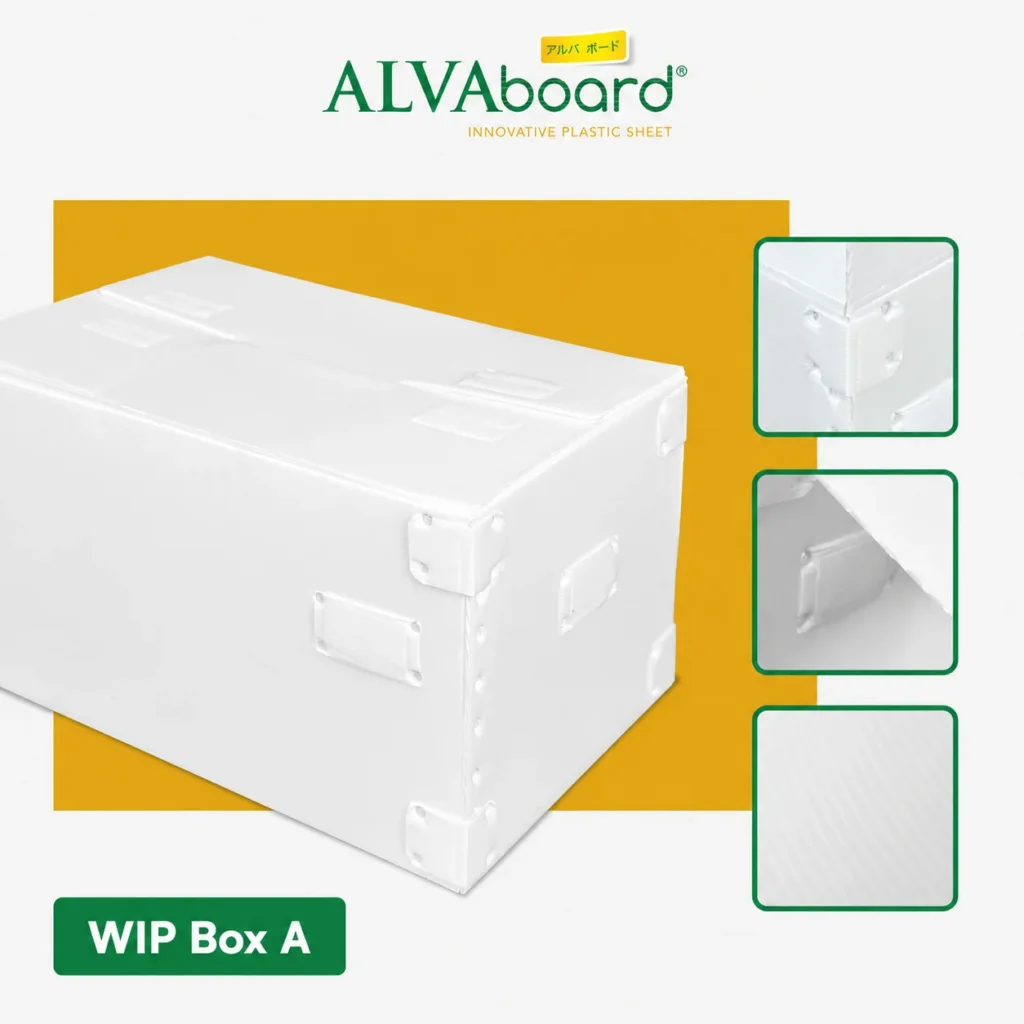
This variant is constructed from thick and durable material, making it ideal for industries with intensive usage requirements.
It features velcro lid fasteners to keep contents secure during transport, S/S-Rib channels that enhance structural rigidity and impact resistance, and reinforced hinges that maintain durability even after repeated use.
WIP Box B
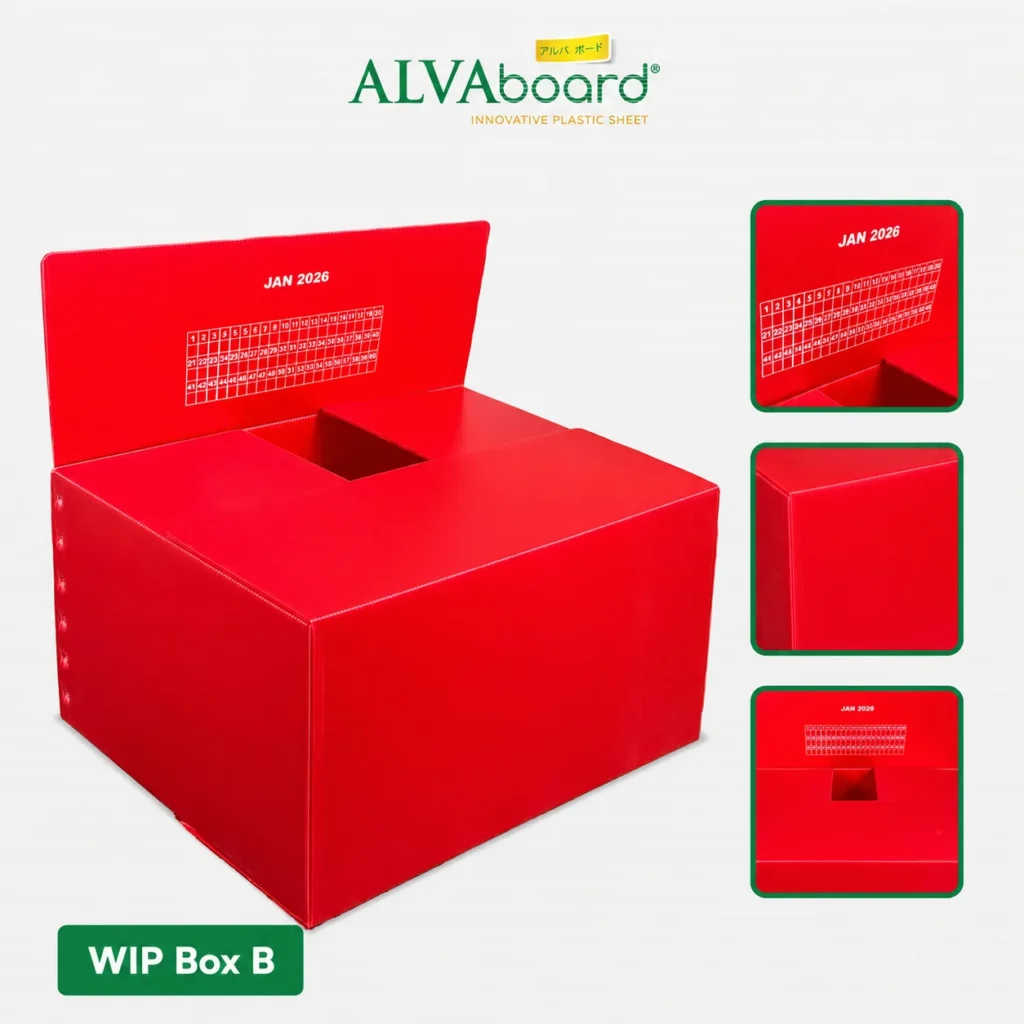
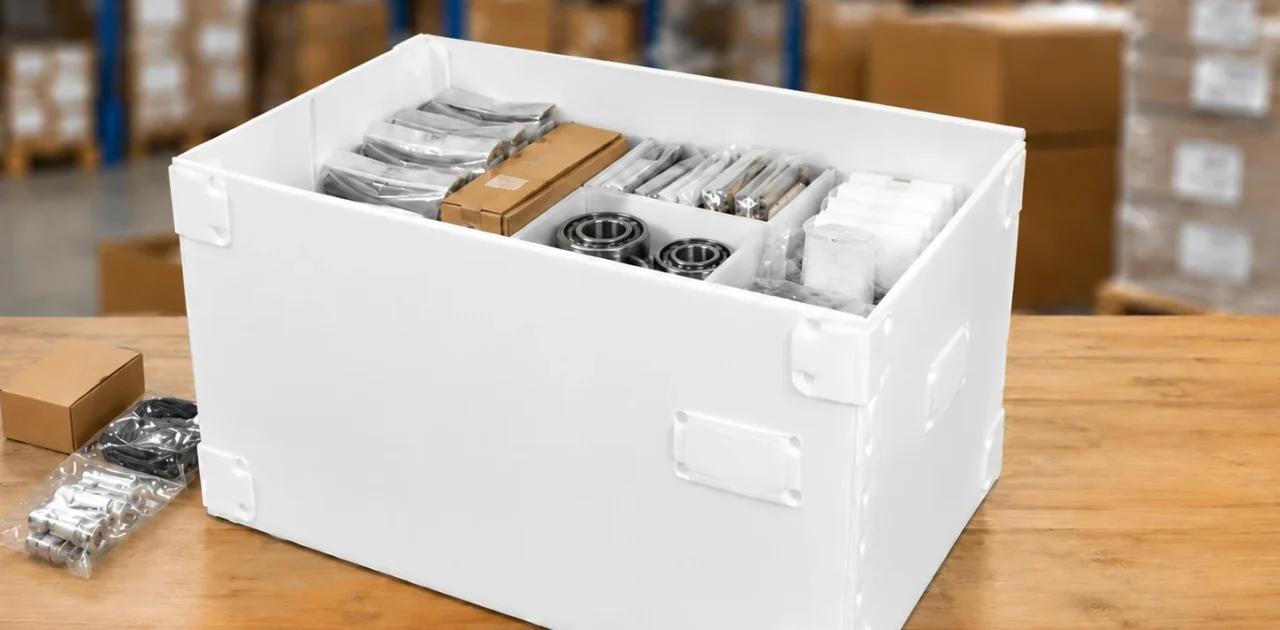
A sturdy and durable WIP box designed for large-scale production operations.
It can be equipped with screen-printed markings to support visual identification systems on the production floor. Dimensions and colors can be fully customized to meet your industry’s specific requirements.
ALVAbox Type D
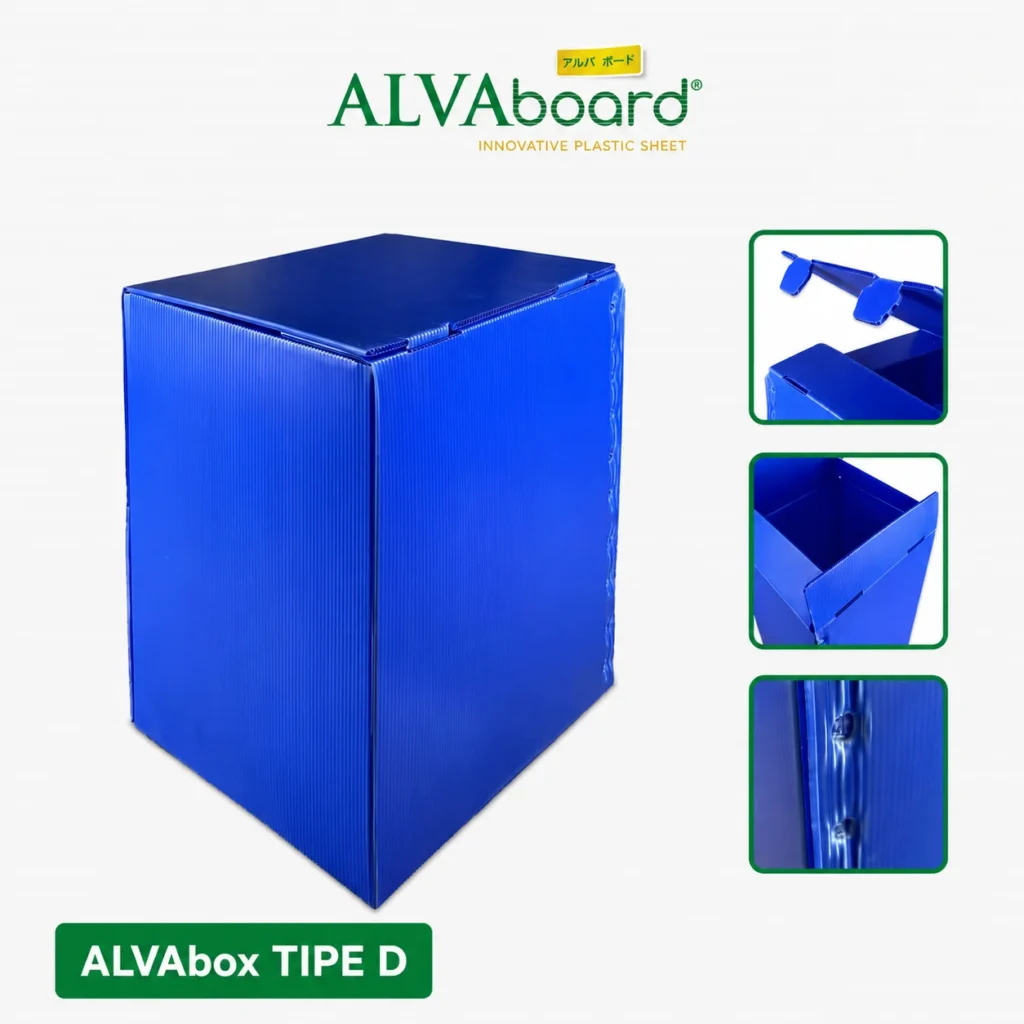
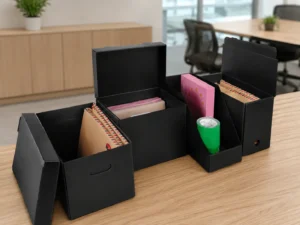
A variant that resembles a corrugated cardboard box but offers significantly greater strength and durability. Its foldable design helps save storage space when not in use.
All variants are available in multiple color options and can be customized in size to fit seamlessly into your existing material handling systems and production workflows.
Contact the ALVAboard team today via WhatsApp at +62 877-9310-2838 to discuss the ideal WIP box solution for your production line!