Machines have already been optimized, shifts are well arranged, and manpower is sufficient, yet bottlenecks in the production line still occur.
Many FMCG factories keep searching for solutions in the wrong places, when the real issue often lies in an ineffective WIP handling system.
When semi-finished products do not have a clear storage flow, materials pile up at one point while other stations run short of input.
One of the main causes of production bottlenecks is not only machine capacity, but also poorly organized WIP handling.
Why Do Production Bottlenecks Often Occur in FMCG Factories?
The FMCG industry has unique characteristics, including high production volumes, rapid SKU changes, and extremely low tolerance for delays.
In this kind of environment, one blocked point can immediately impact the entire production line.
What often happens on the production floor is that operators do not know where to place semi-finished products after one process is completed. There is no designated storage area, no system regulating sequence, and products end up piled randomly near machines or on the floor.
This situation usually occurs because there is no proper WIP handling system in place.
Signs That WIP Storage Has Become a Problem Source
Before looking for solutions, it is important to identify whether WIP handling is truly the root cause. Some common signs include:
- Semi-finished products frequently piling up in one area without clarity on when they will be processed;
- Operators wasting time searching for or moving WIP to the next station;
- Certain workstations often sitting idle while waiting for input from previous processes;
- Difficulty tracking the amount of WIP currently in progress;
- Boxes or containers get damaged easily and require frequent replacement.
If several of these points sound familiar, the problem most likely lies in the WIP handling system.
The Role of WIP in Production Systems
WIP (Work in Progress) refers to all materials and products that have passed through one production stage but have not yet completed the entire process.
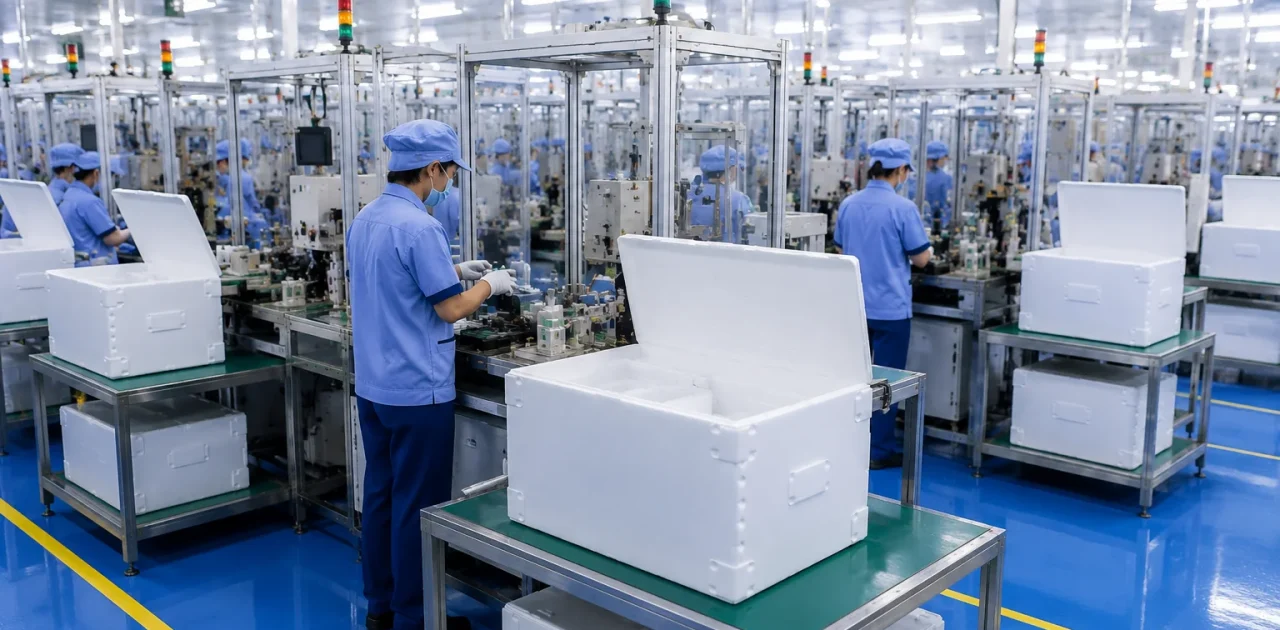
In FMCG production lines, WIP exists everywhere, between filling and capping stations, between mixing and packaging, and between quality checks and labeling.
WIP as a Buffer Between Stations
WIP functions as a buffer that allows each production station to continue operating without constantly waiting for the previous station to finish. Without sufficient and well-managed WIP, even a slight delay at one station can immediately stop the next station from operating.
WIP Determines Production Flow Efficiency
The amount and placement of WIP at each production point reflect how smoothly the workflow is operating.
WIP accumulation at a single point is a sign of capacity imbalance between stations that must be addressed immediately.
Poorly Managed WIP Becomes a Hidden Burden
Many factories carefully manage their machinery while allowing WIP movement to happen without a system.
As a result, operators spend more time searching for, moving, and organizing semi-finished products than focusing on actual production activities.
Unorganized WIP Triggers Bottlenecks
When WIP does not have clear containers and designated storage areas, two major problems occur simultaneously : Stations receiving excess input become overcrowded, disorganized, and stations lacking input are forced to stop and wait.
WIP Storage Solutions to Reduce Bottlenecks
Effective WIP handling solutions do not always require building new warehouses or purchasing automated conveyor systems.
The most effective first step is often simply providing the right WIP containers at every production station.
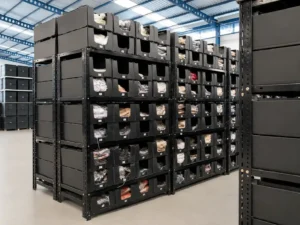
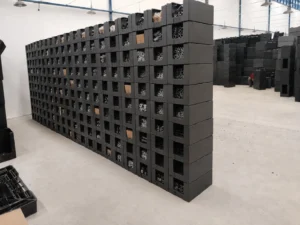
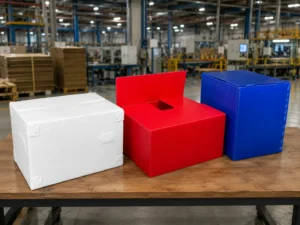
Specialized WIP boxes for production lines, such as those made from PP corrugated hollow plastic boards, can significantly improve how operators manage semi-finished goods.
Lightweight, durable, and standardized boxes make WIP transfers between stations faster, more organized, and easier to monitor.
How the Right WIP Box Improves Production Flow
With a structured WIP handling system, several improvements can happen on the production floor:
- Each station knows exactly how many WIP units should be available before starting the next process;
- Product movement between stations becomes faster because the boxes are standardized and easy to handle;
- Product piles on the floor decrease because every WIP item has a designated container and storage location;
- WIP stock monitoring becomes easier through labels, color codes, or printed identifiers on the boxes.
Characteristics of Ideal WIP Storage for FMCG
Unfortunately, not every container is suitable for FMCG production environments. Several important characteristics should be considered before choosing a WIP storage solution:
- Lightweight yet durable. WIP boxes must be strong enough to handle product loads while remaining lightweight so operators do not become fatigued from repeatedly moving them throughout a shift. PP corrugated hollow plastic sheets meet both requirements effectively.
- Resistant to Production Environments. FMCG factory environments are often humid, exposed to cleaning liquids, and subject to fluctuating temperatures. PP board withstands these conditions well, unlike cardboard, which weakens immediately when exposed to water.
- Easy to clean. Hygiene standards in the FMCG industry are extremely strict. The smooth, non-porous surface of hollow plastic boards makes sanitation much easier compared to porous materials such as wood or cardboard.
- Customizable. Every production line has different operational requirements. An ideal WIP handling system should be customizable in terms of size, color, and printed markings on the box surface.
- Durable and reusable. Factory operational costs are also influenced by how frequently containers need replacement. WIP boxes made from PP board are designed for repeated long-term use without significant quality degradation.
Start with WIP Handling, Not the Machines
Production bottlenecks do not always require expensive or complicated solutions. Sometimes, what factories truly need is a more structured WIP handling system, starting with selecting the right WIP box for every production station.
ALVAboard provides WIP boxes made from PP corrugated hollow plastic boards specifically designed for industrial operational needs.
ALVAboard WIP boxes are available in several types with thick and durable materials, customizable sizes, colors, and printed identifiers, while also being reusable to help reduce long-term operational costs.
In addition, through its wide range of available products, including industrial container solutions for various operational needs, ALVAboard is ready to become your trusted partner in supporting smoother and more efficient factory operations.
Contact the ALVAboard team today via WhatsApp at +6287793102838 to discuss your factory’s WIP box requirements!