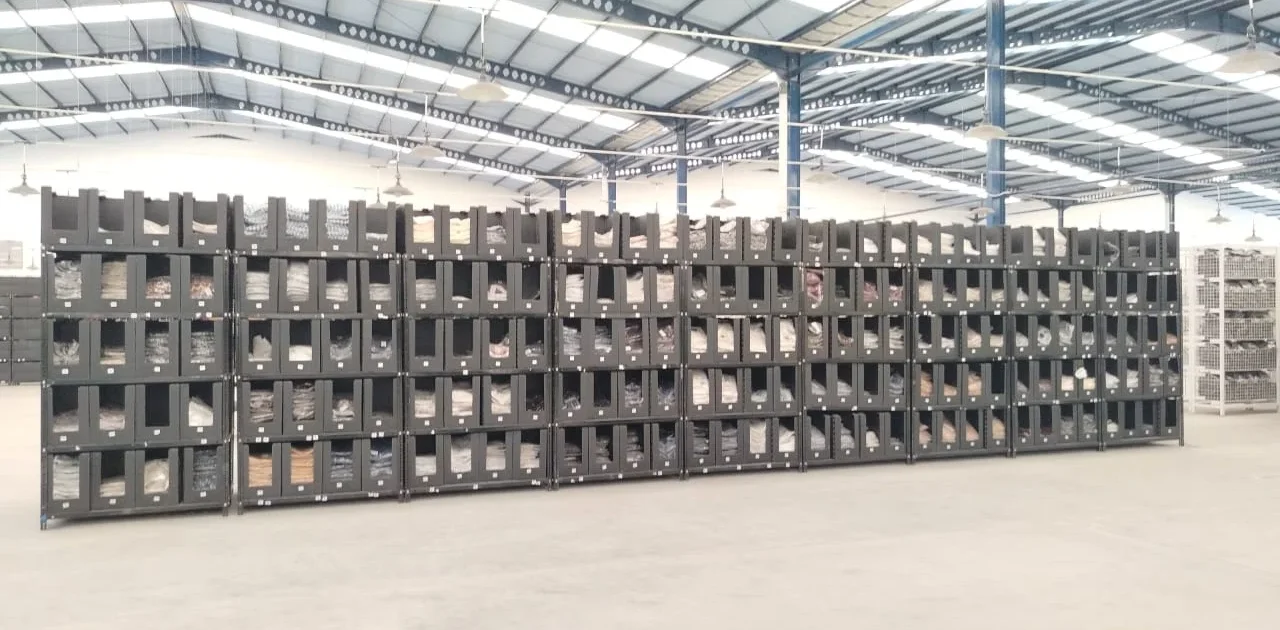
There are several reasons why industrial warehouses appear overcrowded. One of them is a poorly organized storage system.
For example, products may be stacked randomly, access to specific items becomes difficult, and operators spend excessive time searching for a single item.
As a solution to these issues, many companies have started implementing racking systems.
What exactly is a racking system, and what functions does it serve in industrial warehouses? Let’s take a closer look below!
What Is a Racking System?
A racking system is a rack-based storage system designed to maximize the use of vertical warehouse space.
Instead of storing goods only on the floor, items are stacked upward in an organized, secure, and easily accessible arrangement.
The system works by installing racks made of sturdy steel materials vertically and horizontally, creating storage slots that can accommodate pallets, bin boxes, or containers depending on the type of goods being stored.
As a result, each storage slot can be accessed efficiently using forklifts, reach trucks, or even manually, depending on the type of racking system used.
The right racking system can support inventory management systems, accelerate picking processes, and reduce the risk of product damage during storage.
Functions of Racking Systems in Industrial Warehouses
1. Optimizing Vertical Space
As mentioned earlier, racking systems are designed to maximize the use of vertical warehouse space.
By stacking goods upward using multi-tier racks, storage capacity can be increased without expanding the warehouse floor area.
2. Simplifying Product Access and Picking
Products stored within an organized racking system are easier to locate and retrieve.
Each storage location has a clear identification code, allowing operators to go directly to the correct location without wasting time searching.
As a result, order fulfillment becomes faster, and the likelihood of human error during the picking process is reduced.
3. Improving Operational Efficiency
An efficient warehouse layout enables smoother movement of goods, forklifts, and operators. This allows receiving, storage, and shipping processes to run more efficiently.
4. Protecting Products and Maintaining Their Condition
Products stored on suitable racks are less likely to be crushed, fall, or become damaged due to disorganized stacking.
A racking system with the appropriate load capacity ensures that every item remains safely stored until it is needed.
5. Supporting FIFO and LIFO Systems
Racking systems make it easier for companies to implement and manage FIFO (First In, First Out) and LIFO (Last In, First Out) inventory methods.
FIFO is a storage method in which the first items received are the first items dispatched. Meanwhile, LIFO means that the most recently received items are the first to be dispatched.
Both systems are essential for warehouses storing products with expiration dates, seasonal products, or components that require continuous stock rotation.
Common Types of Racking Systems
1. ALVAboard Racking System
Unlike conventional racking systems that rely solely on steel rack structures, this system combines metal rack frames with PP board storage media from ALVAboard, including bin boxes, pigeon holes, and shelf dividers that can be customized according to rack slot dimensions.
This system is particularly suitable for FMCG, logistics, and manufacturing warehouses that require organized storage by SKU or product category.
Bin Box Racking System ALVAboard
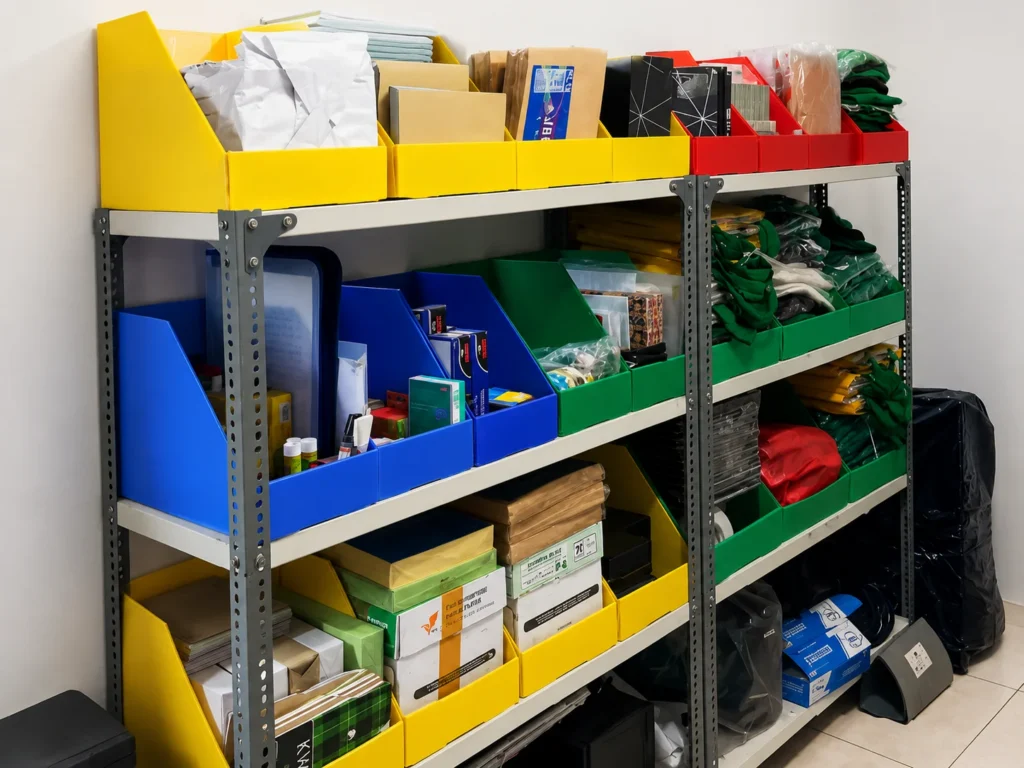
Bin boxes feature open front access, making it easier to pick items directly from the rack without removing the box.
Pigeon Hole Racking System ALVAboard
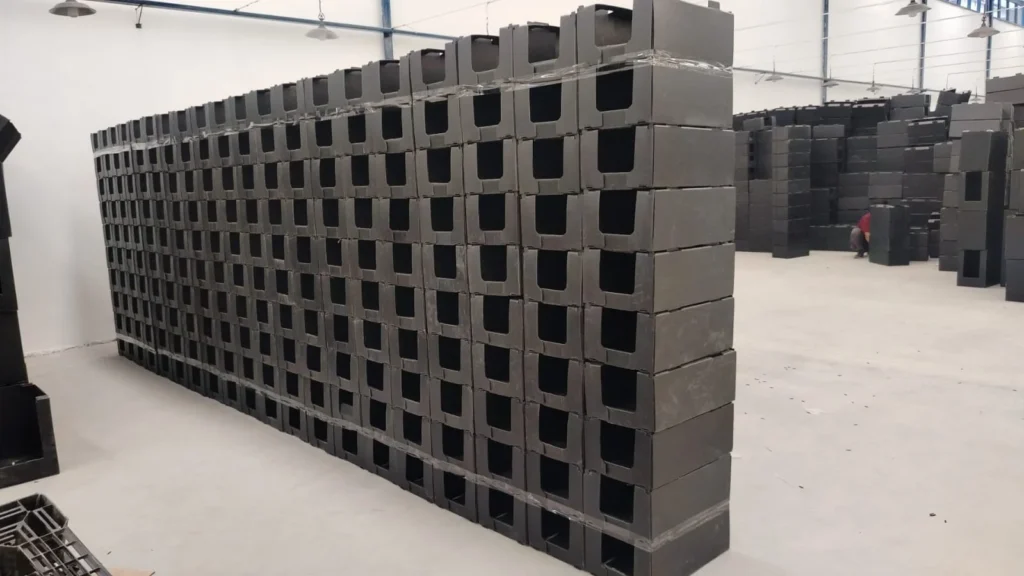
Pigeon holes can be used to store small-sized items.
Shelf Divider Racking System ALVAboard
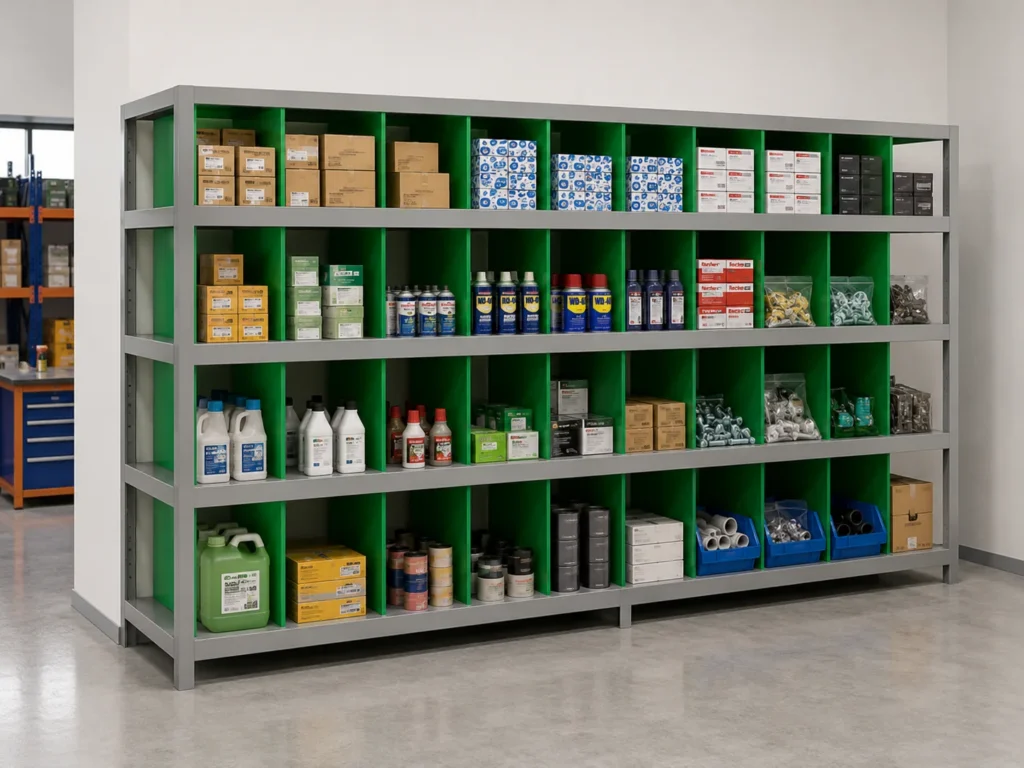
Shelf dividers separate rack slots into more structured compartments.
The main advantage of this system lies in its flexibility. The storage media can be replaced, added, or removed without altering the existing rack structure.
All PP board components are also water-resistant, termite-resistant, lightweight, and reusable for long-term use.
2. Selective Pallet Racking
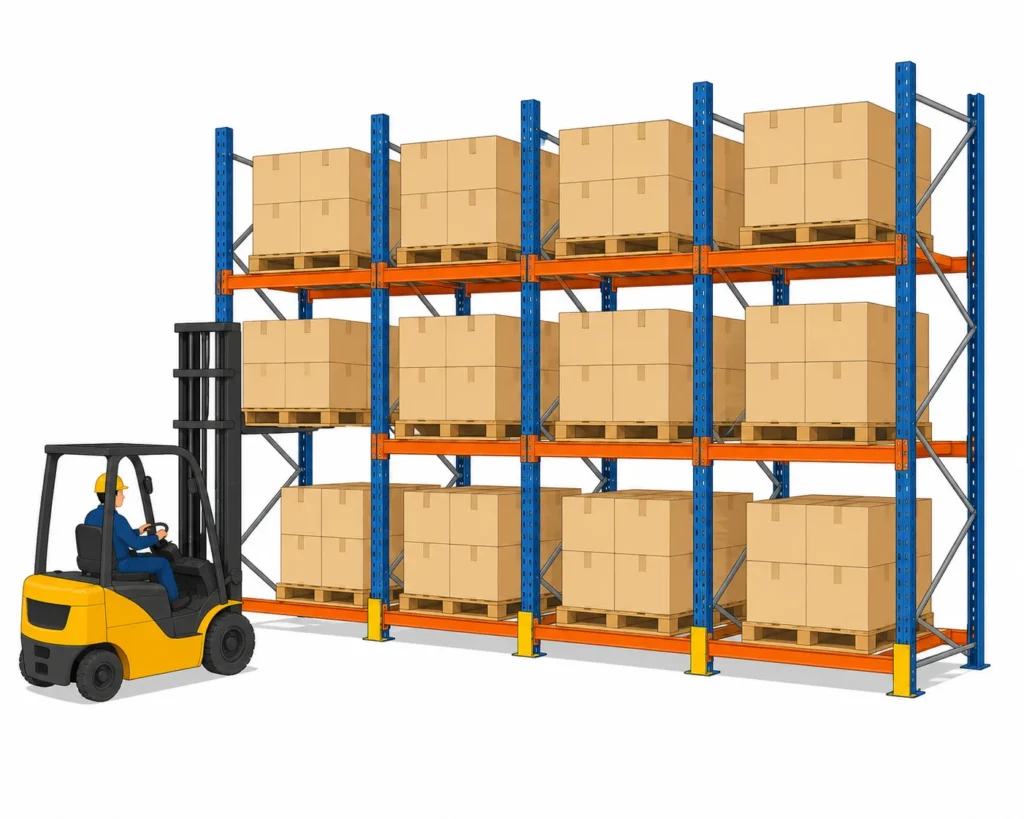
Selective pallet racking works by storing each pallet in its own dedicated slot, allowing direct access without having to move other pallets first.
Think of it like a large bookshelf in a library. Every book has its own place, and you can take any book without shifting the others.
This system operates using forklifts that move through aisles between racks to retrieve or place pallets in designated slots.
The racks consist of vertical columns and horizontal beams where pallets are stored. This system uses the FIFO method, making it ideal for products with limited shelf lives.
3. Drive-In / Drive-Through Racking
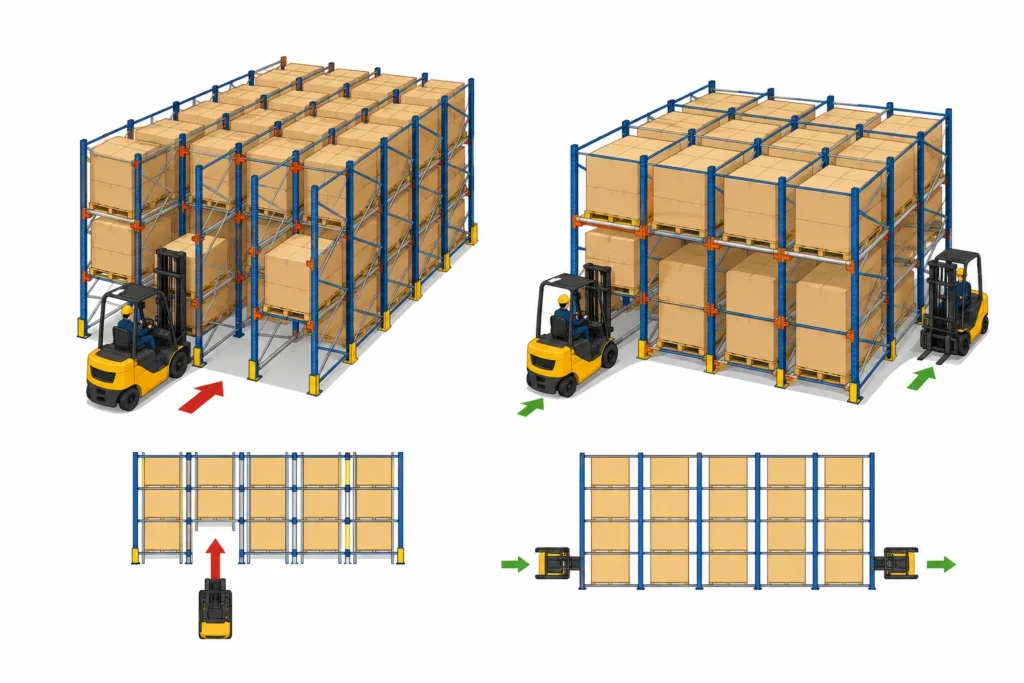
Drive-in racking allows forklifts to enter the rack lane from the same side for both loading and unloading pallets.
Because the end of the rack lane is closed, the last pallet loaded becomes the first pallet retrieved (LIFO).
Meanwhile, drive-through racking provides access from two sides. Forklifts enter from one side to load pallets and retrieve them from the opposite side.
Since the rack lane extends from front to back, the first pallet loaded becomes the first pallet retrieved (FIFO).
However, both systems operate on the same principle: pallets are placed on horizontal rails within the rack lanes and can be stored upward and inward, accommodating multiple pallets within a single lane.
The key difference lies in where forklifts enter and exit.
| Drive-In | Drive-Through | |
| Forklift Access | One side (same entry and exit point) | Forklift Access: Two sides (enter from the front, exit from the back) |
| Inventory System | LIFO. Last in, first out | FIFO. First in first out |
| Installation Position | Can be placed against the wall | Requires open access on both sides |
4. Push Back Racking
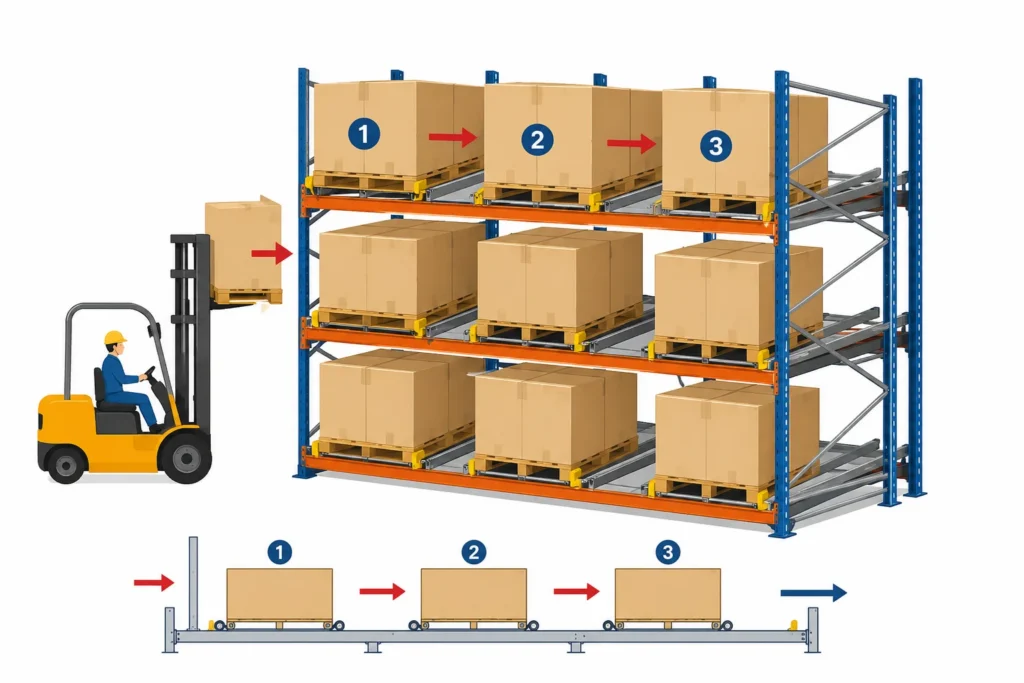
Push back racking works much like beverage cans on a convenience store shelf.
When you place a new can at the front, the existing cans move backward. When one can is removed, the others automatically roll forward. The same principle applies on a larger scale.
When a forklift places the first pallet, it sits on the front cart. As the second pallet is inserted, the forklift pushes the first pallet backward, bringing the next cart into position.
This process continues until the lane is full. When the front pallet is removed, the pallets behind it automatically move forward.
5. Pallet Flow Racking
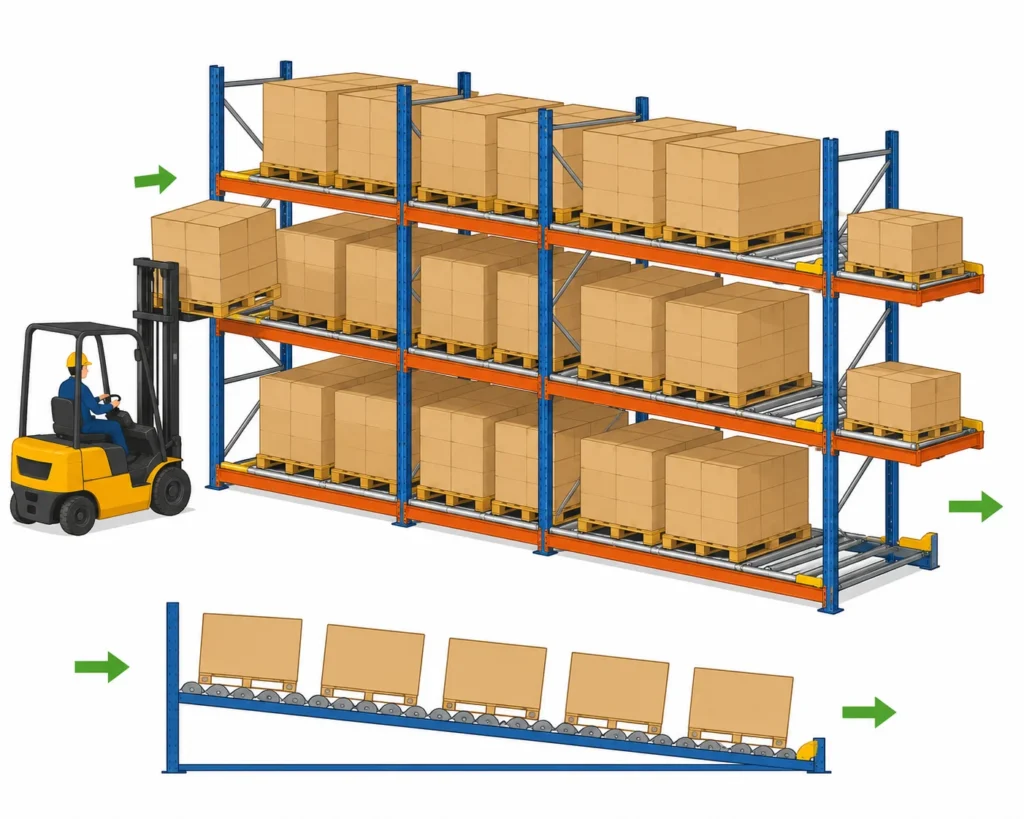
Pallet flow racking allows pallets to move automatically from the loading side to the picking side using gravity, without requiring forklifts to push them.
By utilizing inclined rails and gravity, pallets naturally roll toward the retrieval position. Pallets are loaded from the higher rear side and travel along roller tracks toward the lower front side.
Brake rollers installed along the lanes ensure that pallets do not move too quickly, maintaining safety. When the front pallet is removed, the next pallet automatically advances into position.
Each rack lane accommodates only one product type (SKU), although different lanes can store different SKUs. Each lane can also accommodate significant storage depth, holding up to 20 pallets or more in a single row.
6. Cantilever Racking
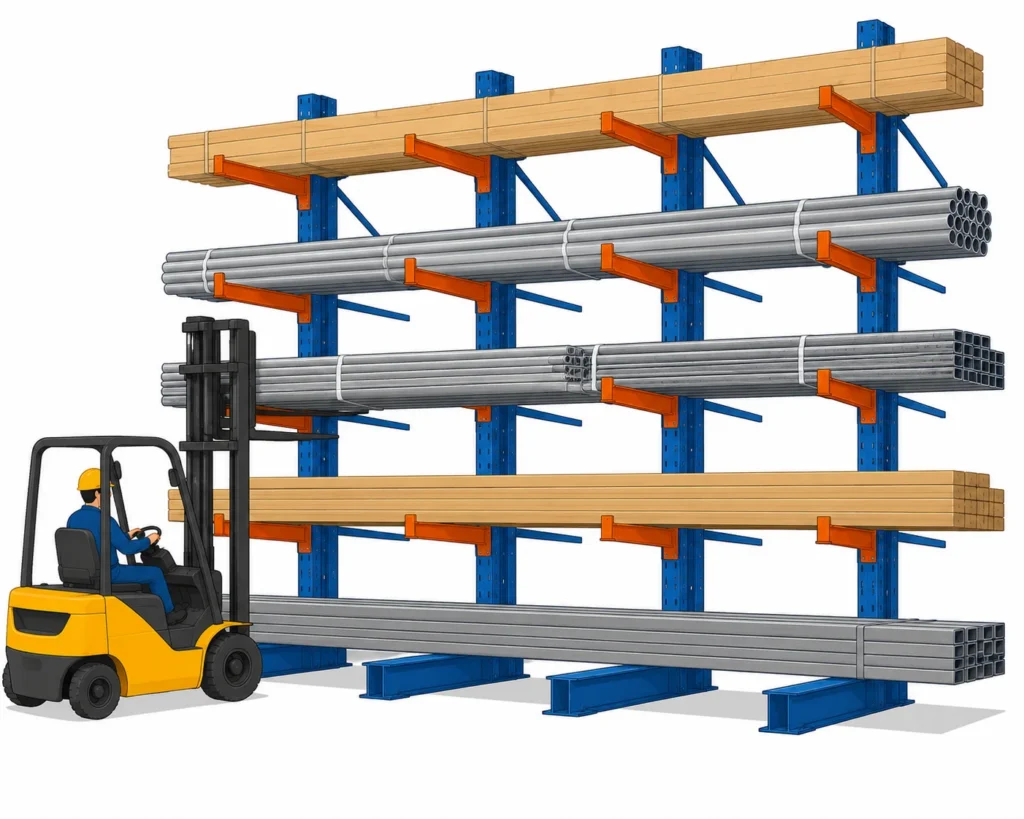
A cantilever racking system is a type of storage rack that uses horizontal arms extending outward from vertical columns. These arms are securely attached at one end and remain open at the other, with no obstructions at the front of the rack.
Goods are placed directly onto these arms from the front using forklifts or cranes. Since there are no front posts or cross beams blocking access, products of virtually any length can be loaded and retrieved freely without obstruction.
Cantilever racking is specifically designed to store long, bulky, and irregularly shaped items that cannot be accommodated by conventional pallet racks. Examples include steel pipes, timber, boards, metal sheets, carpets, and other construction materials.
7. Mezzanine Racking
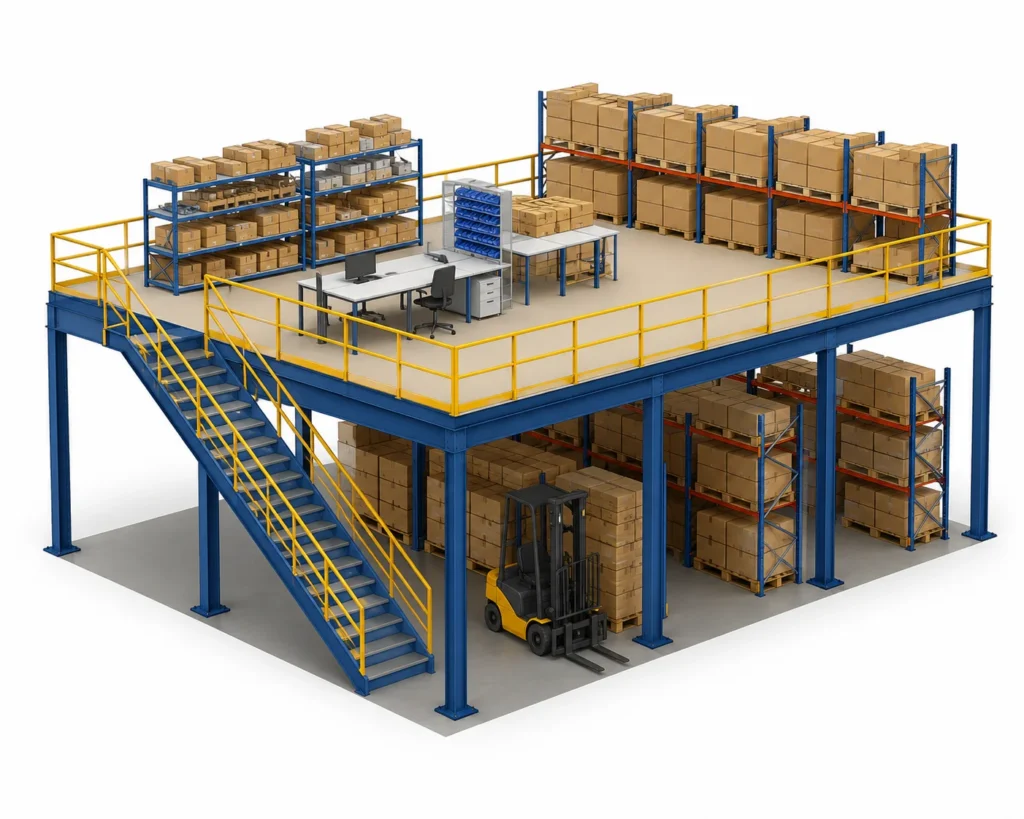
A mezzanine floor is an elevated platform structure built within an existing warehouse.
The structure is supported by steel columns and features flooring made from various materials, such as wood, perforated steel grating (Tramex), or concrete. Access between levels is provided by staircases, and handrails are installed along the edges for safety.
Interestingly, the upper level of a mezzanine floor can serve multiple functions, including a workspace, office area, packing station, order-picking area, or even an employee break room.
How to Choose the Right Racking System
With so many types of racking systems available, choosing the right one should not be based solely on price or appearance. At the very least, the following factors should be evaluated objectively.
1. Type and Size of Goods
Lightweight products with a wide variety of SKUs require a different system from heavy, homogeneous products. The size and weight of the goods determine the rack’s load capacity, as well as the type of pallets or containers required.
2. Product Volume
How many items move in and out of the warehouse each day? Warehouses with high throughput require systems that allow quick and easy access, while warehouses with lower turnover rates can prioritize storage density.
3. FIFO or LIFO Operational System
Do your products need to be rotated based on their arrival sequence? The answer to this question greatly influences the type of racking system you should choose.
For example, you may require pallet flow racking to support a FIFO system or drive-in racking for a LIFO system.
4. Warehouse Area and Height
Warehouses with high ceilings can maximize storage capacity through vertical racking systems. On the other hand, warehouses with limited floor space but lower ceilings require a different approach.
Therefore, it is highly recommended to evaluate your warehouse dimensions before deciding on a particular type of racking system.
Build the Right Racking System with ALVAboard Storage Solutions!
In addition to the rack structure itself, an effective racking system is also determined by the storage media used within it.
That is why, ALVAboard offers a range of PP board storage solutions designed to complement your warehouse racking system, including:

Bin Box: A versatile storage container that can be installed within racking systems. Available in various sizes, it can be folded when not in use and reused repeatedly for long-term efficiency.

Pigeon Hole: A storage solution that serves as a lighter and more flexible alternative to conventional steel shelving. The number of compartments can be customized to suit your warehouse requirements.
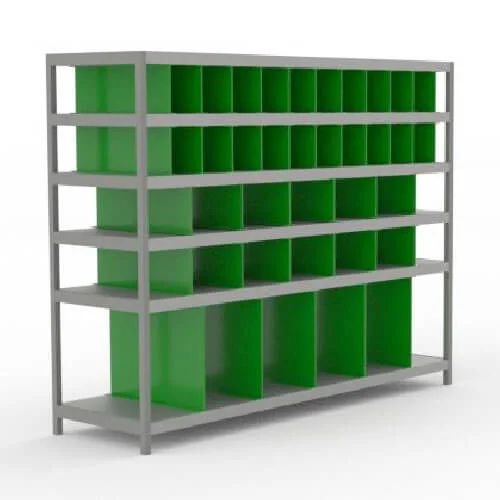
Shelf Divider: A rack divider with flexible length options that can be accessed from both sides. It is easy to remove for cleaning and durable enough for repeated use.
All products are available in various sizes and colors and can be customized to fit the specific dimensions of your warehouse racking slots. For more detailed specifications, visit the ALVAboard applications page.
Consult your bin box and warehouse storage needs with the ALVAboard team via WhatsApp at +62 877-9310-2838 today!