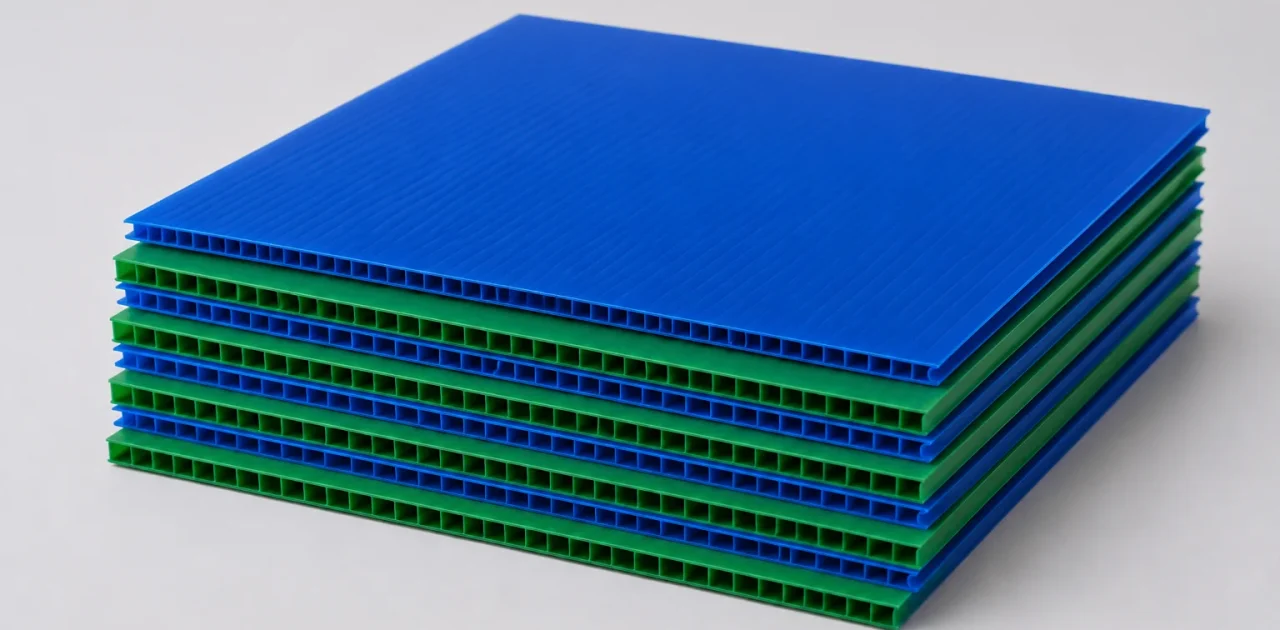
Global plastic prices have surged sharply since early 2026. Many FMCG companies are responding by finding ways to reduce packaging material costs as quickly as possible. One common approach is switching to thinner PP corrugated sheets.
The logic is simple: thinner sheets are cheaper. But does using thinner PP boards actually save costs, or does it end up increasing expenses in the long run?
Why Are Many Companies Switching to Thinner PP Corrugated Boards?
Pressure to reduce operational costs is coming from multiple directions at once. Raw material prices are increasing, logistics costs are rising, and profit margins are becoming tighter.
Under these conditions, it is natural for procurement teams to look for savings that can immediately appear in monthly reports.
Switching from 5mm PP sheets to 3mm sheets provides a visible reduction in purchase cost per unit. These savings are easy to explain to management and easy to feel in the short term.
As a result, many companies make this decision without first calculating the long-term impact.
The problem is that this decision is often based on unit purchase price instead of the total cost throughout the operational cycle. And that is where the calculation can change significantly.
Commonly Overlooked Problems When Choosing Thinner Sheets
1. Higher Replacement Frequency
Thinner PP boards have lower load-bearing capacity.
When used for applications requiring higher durability such as supporting heavy products or repeated use in routine distribution the material deforms more quickly.
As a result, replacement frequency increases.
A material that should last 40 cycles may only survive 15 to 20 cycles under the same conditions. These more frequent repurchasing costs are often not included in the initial savings calculation.
2. Increased Risk of Product Damage
Layer pads or dividers that are too thin for the supported load lose rigidity more quickly.
When the material can no longer provide proper structural support, pallet stack stability decreases. Products become more vulnerable to shifting or collapsing during transportation.
Every damaged product unit results in lost revenue. On top of that, there are distributor or retailer claims, replacement costs, and long-term reputational impact.
3. Handling Inefficiencies
Deformed PP corrugated boards cannot be stacked stably.
Operators need more time to adjust inconsistent material positioning. Loading and unloading processes also become slower.
4. Hidden Costs That Are Not Visible Upfront
Hidden costs usually do not appear directly in the material procurement account, but are spread across multiple expense categories.
For example, product damage costs appear under returns. Extra handling time becomes labor costs. Frequent material replacement appears as unplanned repeat purchases.
When all these components are added together, a decision that initially looked cost-saving may actually become more expensive than the alternative that was avoided.
Focus on Cost per Use, Not Initial Price
The most accurate way to compare two PP corrugated sheet thicknesses is by calculating the effective cost per use, not simply the purchase price per unit.
Consider the following illustration for a requirement of 1,000 layer pads per month:
PP Sheet 3mm:
- Price per sheet: IDR 18,000
- Estimated lifespan for medium-duty applications: 15 uses
- Effective cost per use: IDR 1,200
- Monthly replacement cost: IDR 18,000,000 (assuming routine distribution cycles)
PP Sheet 5mm:
- Price per sheet: IDR 28,000
- Estimated lifespan for medium-duty applications: 40 uses
- Effective cost per use: IDR 700
- Monthly replacement cost: IDR 7,000,000 (longer amortization period)
The price difference per sheet may make 3mm look cheaper. However, when calculated based on effective usage, 5mm delivers costs that are 42% lower.
Key Differences Between PP Corrugated Sheet 3mm vs 5mm
| Aspect | PP Sheet 3mm | PP Sheet 5mm |
| Initial unit price | Lower | Slightly lighter |
| Structural durability | Medium | High |
| Lifespan | Shorter | Longer |
| Pallet stability | Suitable for light load | Optimal for medium to heavy loads |
| Load capacity | Limited | Higher |
| Cost per use | Higher | Lower |
| Best suited for | Light and limited use | Routine, high-volume distribution |
When Should You Use 3mm PP Sheets?
3mm PP corrugated boards are the right choice under certain specific conditions not simply because they are cheaper, but because their specifications match the operational requirements.
- Lightweight Products. When the packaged or supported products are relatively light and do not create significant pressure on the layer pad, 3mm thickness is sufficient.
- Single or Limited Use. If the packaging is only needed for one shipment without plans for reuse, 3mm thickness provides better value.
- Low Distribution Volume. When the number of pallets processed per month is still limited, 3mm PP corrugated boards may be more suitable for the operation.
- Short-Term Cost Saving Focus. If there are cash flow limitations, 3mm sheets are more affordable before transitioning to more optimal specifications.
When Does 5mm Become the More Efficient Choice?
5mm PP sheets provide the greatest value when operational conditions require higher durability and consistency.
- Routine High-Volume Distribution. When hundreds or thousands of pallets are processed every month, the difference in cost per use between 3mm and 5mm generates substantial cumulative savings over time.
- High Stacking with Heavy Products. The taller the stack and the heavier the products, the greater the pressure borne by the layer pad. 5mm corrugated sheets offer more reliable load capacity under these conditions.
- Reducing Replacement Frequency. If procurement teams want to reduce purchasing frequency and simplify packaging inventory management, the longer lifespan of 5mm sheets provides operational advantages.
- Long-Term Efficiency Focus. For companies that have shifted from a “lowest price” mindset to a “best total cost” approach, 5mm becomes the financially smarter option.
How to Determine the Right Thickness for Your Distribution System
The answer is not the same for every company. The ideal thickness depends on these five operational variables:
- Shipping Volume. How many pallets are processed per month? The higher the volume, the greater the benefit of longer-lasting materials.
- Product Weight. What is the average product weight per pallet layer? This determines the minimum load capacity required from the material.
- Stacking Height. How many product layers are stacked on one pallet? The higher the stack, the greater the pressure on the bottom layer pads.
- Frequency of Use. How many times will the same material be used each month? High frequency accelerates savings accumulation from longer-lasting materials.
- Handling System. Is the handling process done manually or with forklifts? High-intensity manual handling adds extra physical stress that affects material lifespan.
If you are unsure about these variables, ALVAboard is ready to provide technical consultation to help determine the most suitable specifications for your needs.
Through various PP board product options available, including applications as layer pads and dividers, the ALVAboard team can help support your specific distribution requirements.
Contact ALVAboard now via WhatsApp at +6287793102838 to get the best PP corrugated sheet solutions based on your required thickness specifications and business distribution needs!