Many rapidly growing businesses eventually begin facing serious warehouse challenges. Common issues include difficulty locating products, inaccurate inventory records, and frequent shipping delays.
In most cases, these problems occur because the warehouse system fails to evolve alongside business growth.
A structured warehouse system plays a critical role in determining how efficiently the entire operational supply chain can function.
The Role of an Effective Warehouse System in Business Operations
1. Managing the Flow of Incoming and Outgoing Goods
A well-designed system ensures that every incoming item is recorded, stored in the correct location, and can be retrieved quickly when needed.
Without a clear warehouse system, these processes become disorganized and require unnecessary time and labor.
2. Maintaining Inventory Accuracy
One of the most common warehouse issues is discrepancies between physical inventory and system records. An effective warehouse system should minimize these differences through consistent documentation and regular audits.
3. Supporting Faster Distribution
An organized warehouse enables picking and packing processes to be completed more efficiently. Operators do not need to spend time searching for products because they can go directly to designated storage locations.
4. Improving Inventory Visibility
Management can monitor inventory levels in real time, identify slow-moving products, and make more accurate purchasing decisions.
Essential Elements of a Warehouse System and How to Build Them
1. Warehouse Layout
A warehouse layout refers to the arrangement of every operational area within a warehouse, including receiving, storage, picking, packing, and shipping zones. A well-planned layout helps streamline product movement and improve operational efficiency.
For example, newly received products should be transferred directly to storage without passing through multiple unnecessary areas.
Likewise, when an order is received, operators should be able to retrieve products from storage racks, move them to the packing area, and then forward them to the shipping area using the shortest possible travel distance.
Product placement should also be based on inventory turnover rates. Fast-moving products should be stored in easily accessible locations, such as near the picking area or main traffic routes.
Read our guide on how to organize warehouse inventory for a more in-depth reference.
2. Storage System
The right storage system helps maximize warehouse space while making products easier to locate and retrieve.
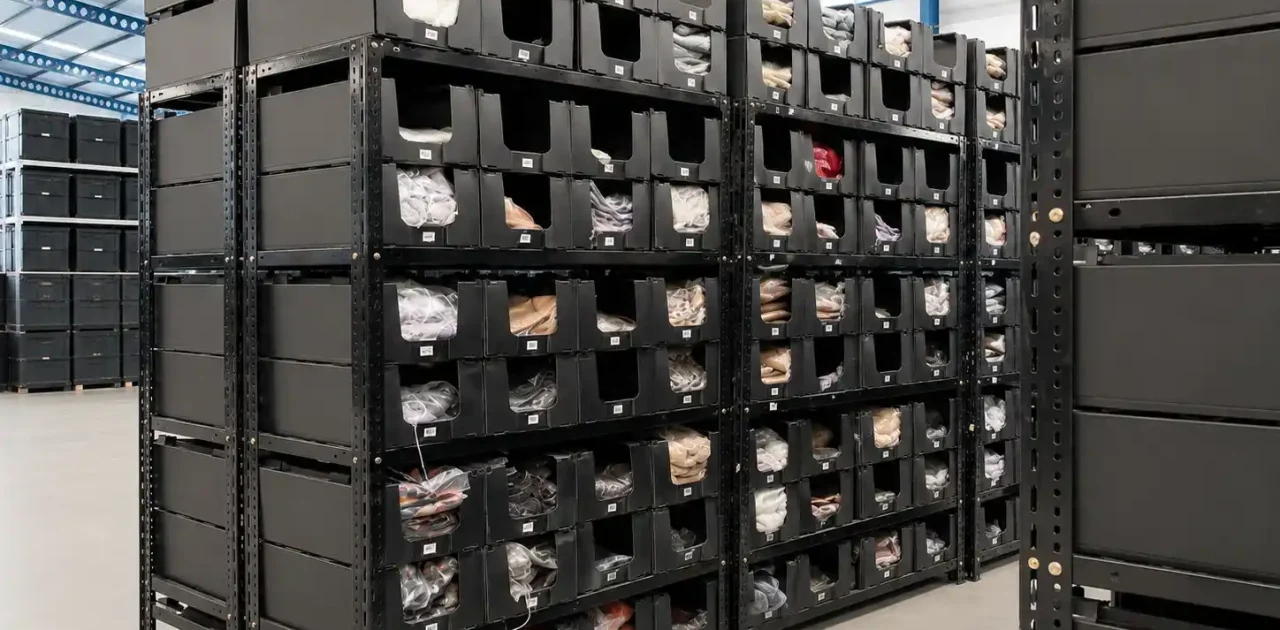
One example is the implementation of a racking system to optimize vertical space utilization. By storing products on multi-level racks, storage capacity can increase without expanding the warehouse footprint.
In addition, every rack, aisle, and storage position should be assigned clear labels or location codes to enable operators to identify product locations quickly.
Storage systems should also be selected based on product characteristics. Large and heavy items typically require pallet racking, while smaller products are better suited for bin boxes or shelving systems.
Companies should also determine the most appropriate inventory management method. For example, FIFO (First In, First Out) ensures that products received first are shipped first, making it ideal for products with limited shelf life.
Meanwhile, LIFO (Last In, First Out) may be suitable for certain products that do not face expiration risks and where the most recently stored inventory is retrieved first.
Learn more about racking systems as one of the foundations of modern warehouse storage solutions.
You can also explore storage system solutions available for your warehouse requirements.
3. Operational Processes
Every warehouse activity, including receiving, storage, picking, packing, and shipping, should follow clearly defined procedures.
For example, when products arrive, operators should verify quantities and product conditions before recording them in the system. When products are stored, they should be placed in their designated locations.
Once an order is received, operators perform picking according to the order list, while the packing team verifies that the correct products and quantities are prepared before shipment.
To ensure successful implementation, procedures should be documented in simple work instructions, such as step-by-step guides, visual references, or checklists that operators can easily access.
Regular audits and evaluations should also be conducted to ensure compliance and identify opportunities for improvement.
4. Supporting Technology
A Warehouse Management System (WMS) is software designed to manage all warehouse activities, from receiving and storage to picking and shipping. It is particularly beneficial for warehouses handling large inventory volumes and high transaction frequencies.
For example, when an operator stores products on a rack, the storage location is immediately recorded in the system. When an order is received, operators can instantly identify the product location without manually searching for it.
In addition, management can monitor available stock levels, identify low-inventory items, and plan procurement activities more accurately and efficiently.
5. Human Resources
Even the most advanced warehouse systems and facilities cannot deliver optimal results without competent personnel.
Therefore, companies must ensure that every warehouse operator understands established procedures and can perform their responsibilities correctly.
Training programs should cover receiving, storing, moving, and retrieving inventory according to operational standards.
Operators should also be proficient in using equipment such as hand pallets, forklifts, and barcode scanners.
For example, operators must understand how to place products in the correct locations, perform scanning procedures during inbound and outbound processes, and apply FIFO (First In, First Out) principles to ensure older inventory is used first.
The Role of Supporting Materials in Warehouse Systems
Even a well-designed storage system can become inefficient if the storage media used are not suitable for operational needs.
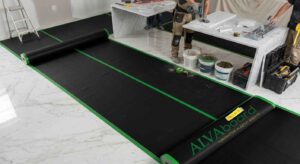
Supporting materials such as dividers, bin boxes, layer pads, and pallet liners determine how effectively each storage slot can be utilized.
ALVAboard offers a variety of PP board storage solutions designed to complement modern warehouse systems.
From bin boxes for organized SKU-based storage to dividers and shelf dividers that maximize rack compartment utilization, ALVAboard products help improve warehouse organization and efficiency.
All products are available in various sizes, can be customized according to operational requirements, and are made from lightweight, durable, and reusable materials for long-term cost efficiency.
Through its wide range of product applications ALVAboard is ready to help you optimize your warehouse system with storage media specifically tailored to your operational requirements.
Consult your warehouse storage system and racking box requirements with the ALVAboard team via WhatsApp at +62 877 9310 2838 today!