Storage boxes are often considered a supporting component in warehouse management. However, choosing the wrong storage box can reduce space efficiency, slow down picking processes, and increase replacement costs.
One of the most common mistakes is selecting storage boxes based only on price without considering operational requirements. As a result, the chosen product may only show its limitations after being used for a certain period.
This article discusses seven common mistakes when choosing storage boxes for warehouses and how to avoid them from the beginning.
7 Common Mistakes When Choosing Storage Boxes for Warehouses
1. Only Considering the Price
The lowest-priced storage box may reduce initial procurement costs, but if the material wears out quickly and needs replacement every few months, the total cost will actually become much higher.
How to avoid it:
Calculate the cost per usage cycle, not only the price per unit. A storage box that costs more initially but lasts three times longer is almost always more economical in the long run.
2. Choosing the Wrong Size for Stored Items
A box that is too large allows items to move around inside and makes organization more difficult. Meanwhile, a box that is too small forces items to be stacked improperly or distributed into more boxes than necessary, wasting storage space and increasing picking time.
How to avoid it:
Measure the actual dimensions of the items to be stored, then select a box with slightly larger internal dimensions — not just based on assumptions from catalog images.
3. Ignoring Load Capacity
Storage boxes that are not designed to support the actual weight of their contents will experience deformation more quickly. Damaged walls or a curved bottom section are signs that the box may no longer be safe to use.
How to avoid it:
Determine the average load weight per box, then select a storage box with a load capacity above that value. Avoid choosing boxes with just enough capacity because variations in actual warehouse conditions always occur.
4. Not Considering Storage Box Material
Storage boxes made from thin plastic or cardboard and used in environments with high humidity, chemical exposure, or intensive usage will deteriorate much faster than expected.
How to avoid it:
Choose materials based on actual operating conditions. For warehouses with high humidity or exposure to liquids, waterproof and chemical-resistant PP board material is one of the most suitable choices.
5. Not Considering Warehouse Rack Systems and Layout
Storage boxes with unsuitable dimensions can reduce warehouse storage efficiency. Boxes that are too large may not fit into rack slots, while boxes that are too small leave unused spaces that ultimately reduce storage capacity.
How to avoid it:
Measure rack slot dimensions before ordering and ensure the selected storage box fits perfectly. This is also the right time to consider whether a custom-sized solution is needed.
6. Ignoring Customization Requirements
Many companies choose standard catalog storage boxes because they are faster and easier to order. However, storage boxes with dimensions that do not precisely match the existing warehouse system create continuous inefficiencies in daily operations.
How to avoid it:
Do not assume customization is always more expensive or complicated. Experienced manufacturers can produce custom-sized storage boxes at competitive prices, especially for certain order volumes.
Consulting with the manufacturer before purchasing is a highly recommended step.
7. Not Calculating Long-Term Usage Costs
Storage box purchasing decisions often focus only on today’s purchase price without considering the total cost over the next one or two years.
Replacement costs, product damage caused by inadequate boxes, and longer handling times all contribute to the actual total cost.
How to avoid it:
Create a simple calculation. Estimate replacement frequency for each material option, then compare the total annual cost.
Factors to Evaluate Before Purchasing Storage Boxes
Stored Product Characteristics
Are the stored items lightweight or heavy? Are they sensitive to impact? Do they require separation between product types or can they be stored together?
The answers to these questions directly determine the most suitable storage box type, size, and features.
Usage Frequency
Storage boxes used dozens of times per day require much higher material specifications compared to boxes accessed only several times per week.
The higher the usage frequency, the more important it becomes to invest in durable materials.
Capacity and Dimensions
Measure the actual load weight and product dimensions before determining storage box specifications.
Always include a safety margin in load capacity calculations to accommodate variations that occur in real warehouse operations.
Storage Box Material
Select materials based on operational conditions.
PP board is one of the most relevant choices for industrial warehouses with high usage intensity, humidity exposure, or light chemical exposure.
Operating Environment
Dry warehouses, cold storage facilities, wet production areas, and locations with chemical exposure each require different material specifications.
Do not choose storage boxes based on ideal conditions — choose them based on the most challenging conditions that may occur in the operational area.
Stacking or Modular Requirements
Will the boxes need to be stacked? What is the maximum stacking height required?
Ensure that the selected storage boxes are designed to safely support vertical loads from stacked units above them.
Future Customization Requirements
Warehouse requirements may change as businesses grow.
Choose a supplier that can provide future customization options — different sizes, new divider configurations, or larger volumes — so you do not need to change suppliers when your operational needs expand.
Check our options for large plastic boxes as an initial reference.
Storage Box Selection Checklist
Before placing an order, make sure all of the following points have been evaluated:
☐ Product types have been clearly identified
☐ Load weight per box has been calculated
☐ Storage box dimensions match existing rack slots
☐ Material is suitable for working environment conditions
☐ Boxes can be easily labeled or barcoded for identification
☐ Material can be reused multiple times without significant degradation
☐ Supplier can provide customized solutions when required
Why Do Many Companies Choose PP Board Storage Boxes?
- Lightweight but Strong. The hollow structure of PP board creates boxes that are easy to handle while remaining strong enough to withstand loads and stacking pressure.
- Water and Moisture Resistant. PP material does not absorb liquids, making it suitable for environments that are not always dry and fully controlled.
- Long-Term Reusable Performance. PP board can be reused hundreds of times without losing its structural strength, significantly outperforming cardboard or thin plastic materials.
- Easy to Clean. The non-porous surface can be wiped or washed easily, making it a hygienic choice for food and pharmaceutical industries.
- Highly Customizable. Dimensions, thickness, colors, and divider configurations can be fully customized without requiring expensive molds.
- Supports Modern Warehouse Efficiency. Consistent dimensions make PP board storage boxes easier to integrate with rack systems, Warehouse Management Systems (WMS), and existing operational processes.
- More Economical in the Long Term. The cost per usage cycle of PP board is significantly lower compared to materials that require frequent replacement, even though the initial purchase price may be higher.
Already Know What You Need? Consult with ALVAboard!
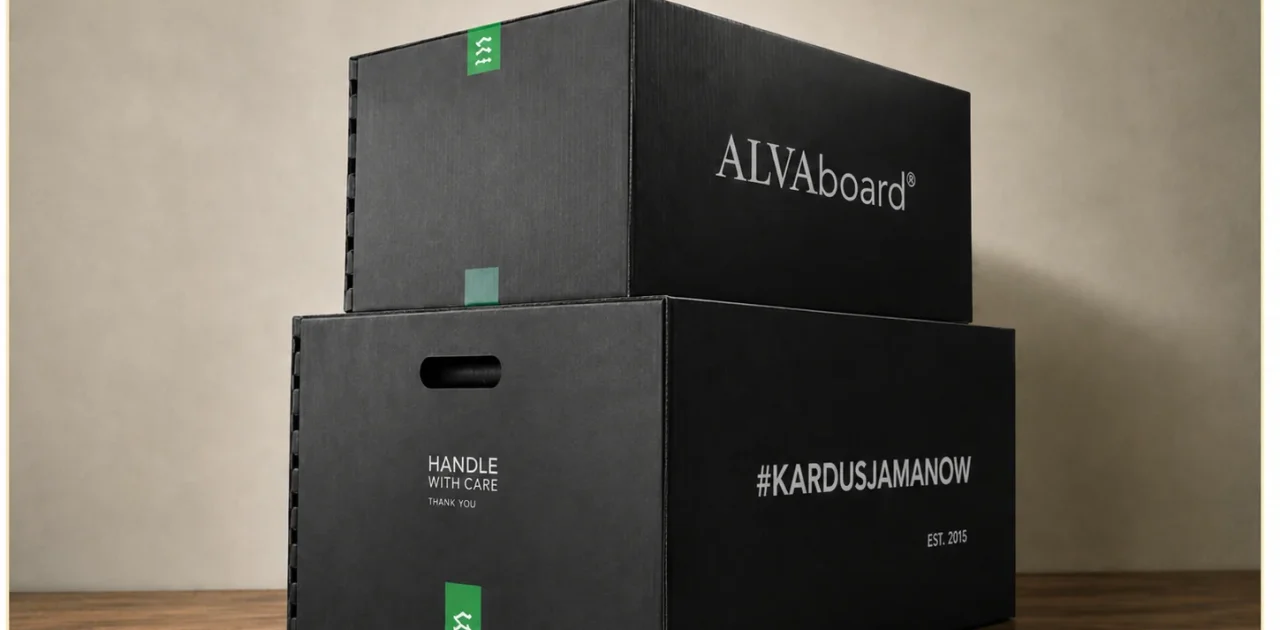
ALVAboard manufactures PP board storage boxes that can be customized according to your warehouse system requirements.
From dimensions, thickness, colors, to divider configurations, every aspect can be adjusted to ensure the storage boxes perfectly fit your actual warehouse operations.
Available through ALVAboard’s application and container solution pages, our team is ready to help you find the most suitable configuration — from requirement consultation to production and nationwide delivery.
Contact the ALVAboard team via WhatsApp +6287793102838 today and consult your warehouse storage box requirements.