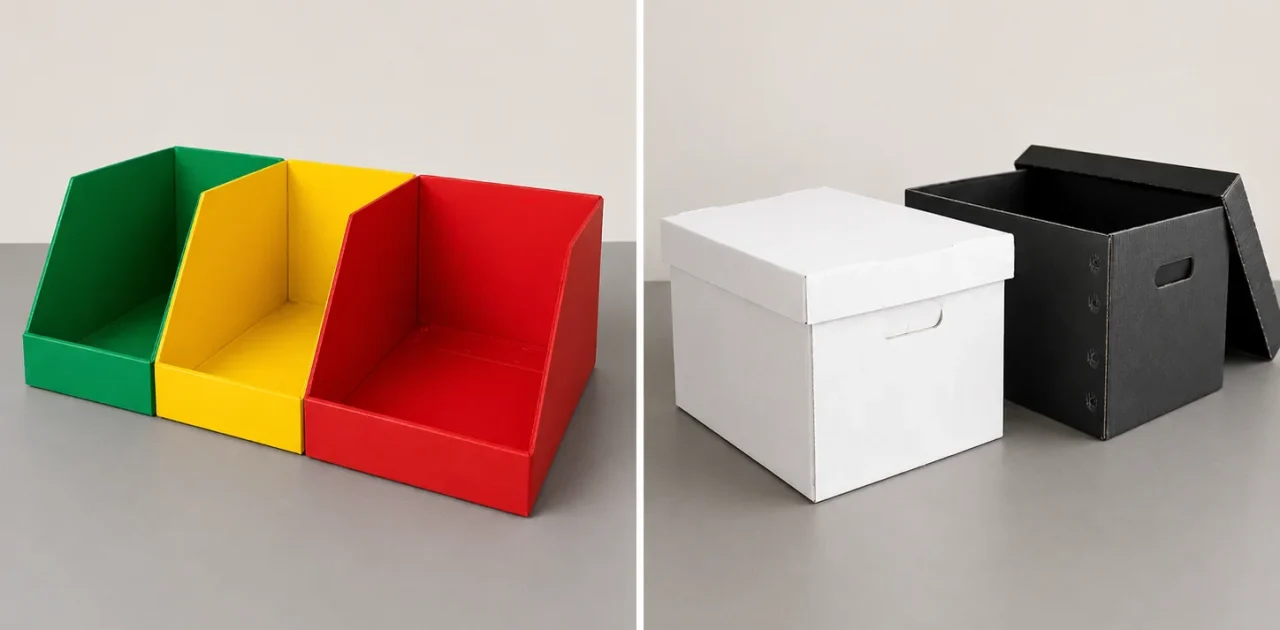
Bin boxes and storage boxes are often considered the same because they have similar shapes and are both used for storing items. However, these two types of storage containers have differences in terms of material, design, and specific applications.
Therefore, understanding the difference between bin boxes and storage boxes is important to ensure the right storage solution is selected for your needs, whether for household purposes or industrial applications. Read the complete explanation below!
What Is a Bin Box?
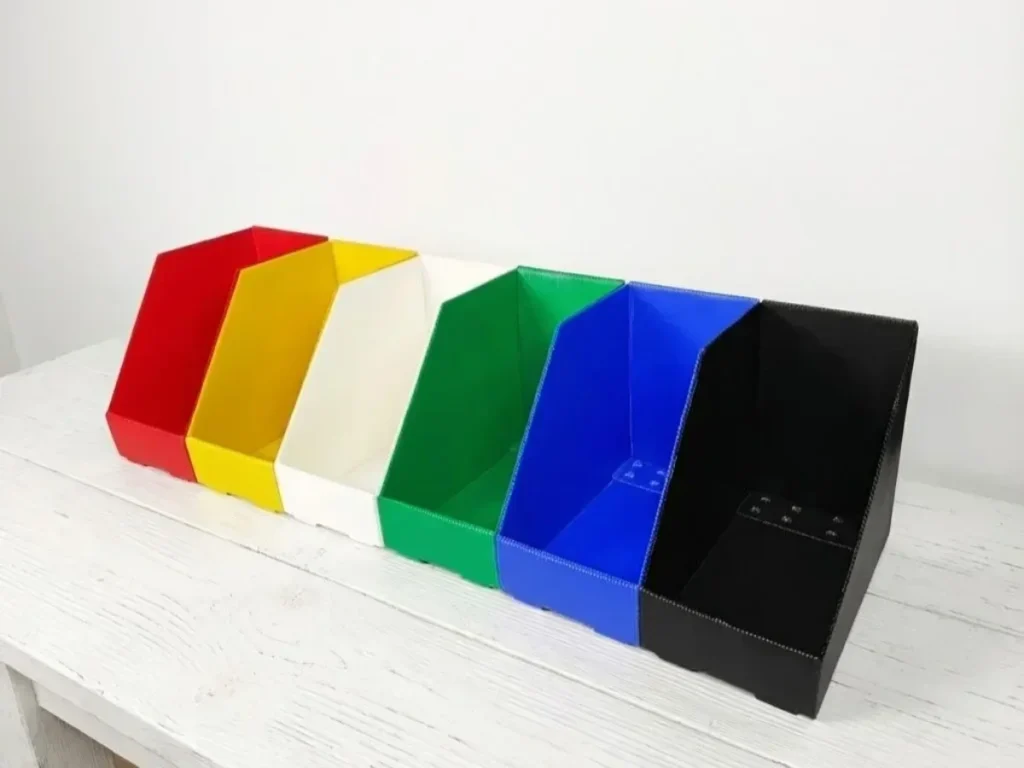
Bin box is an open storage container designed to provide quick and direct access to stored items. Its main feature is a wide front opening that allows operators to easily see and retrieve items inside without needing to open a lid or remove the box from the storage rack.
The primary characteristic of a bin box is its design focused on fast accessibility. Bin boxes are commonly installed in rack storage systems and are available in various sizes to accommodate different types of items.
Some bin boxes also include additional features to support various warehouse rack configurations, such as front label holders, internal divider slots, and hanging lips.
Bin boxes are widely used in warehouses with high picking activities, manufacturing production lines, spare parts and small component storage areas, as well as workplaces that implement visual management systems.
What Is a Storage Box?
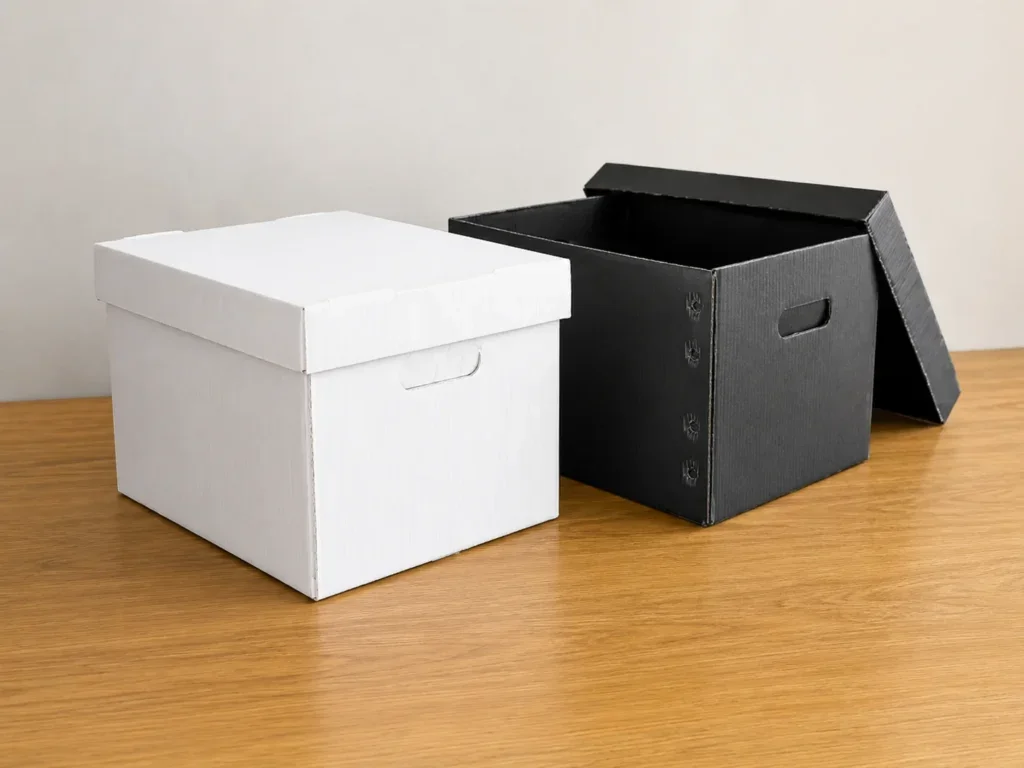
A storage box is a closed storage container designed to prioritize protection for the items stored inside. Its lid provides an additional layer of protection against dust, moisture, and other environmental contaminants.
Unlike bin boxes, which are designed for quick access, storage boxes are intended for more static storage purposes. Items stored inside typically do not require frequent access but need to remain well-protected during storage periods that may last from several months to several years.
Storage boxes are commonly used for document archives, items sensitive to dust or moisture, seasonal storage, and products shipped in large quantities.
Bin Box vs Storage Box: What Are the Differences?
| Aspect | Bin Box | Storage Box |
| Design | Open front design | Fully enclosed design |
| Main Purpose | Quick access during picking activities | Protection and long-term storage |
| Access Frequency | High | Low to moderate |
| Content Visibility | Items are directly visible | Items cannot be seen without opening the box |
| Labeling System | Front label slot | Label placed on the outside of the lid |
| Suitable For | Components, spare parts, active inventory | Archives, seasonal items, documents |
| Stackable | Yes, with specific designs | Yes, with strong and durable lids |
When Should You Use a Bin Box?
- High-Picking Activity Warehouses : The front opening of a bin box for manufacturing facilities allows operators to quickly retrieve items without removing the box from the rack. This makes it suitable for warehouses with frequent item picking activities during every shift
- Small Component Storage : Label slots and color options on bin boxes help operators quickly identify item locations through visual recognition. They are ideal for spare parts, electronic components, or products with various SKUs.
- Warehouses with Visual Management Requirements : Different bin box colors make it easier to implement visual coding systems based on zones, categories, or departments.
When Is a Storage Box a Better Choice?
- Long-Term Storage : Closed storage boxes are suitable for items that are rarely accessed but require protection for months or even years.
- Protection Against Dust and Moisture : Documents and sensitive electronic equipment require additional protection that cannot be provided by open-front bin boxes.
- Shipping and Distribution : Closed storage boxes provide better protection during transportation by reducing the impact of shocks and temperature changes.
- Archive Storage : Administrative documents and legal records require storage boxes that protect against dust, moisture, and pests.
- Large or Irregularly Shaped Items : Storage boxes are available in various sizes and can be customized to accommodate items with non-standard dimensions.
Factors to Consider Before Choosing a Storage Box
1. Type of Items Being Stored
Small items with high variety and frequent retrieval are more suitable for bin boxes. Meanwhile, items that require extra protection or are rarely accessed are better stored in storage boxes.
2. Item Retrieval Frequency
The more frequently items are accessed, the more important quick accessibility becomes. Bin boxes are ideal for daily picking activities because their open-front design allows operators to retrieve items easily. Meanwhile, storage boxes are more suitable for items accessed weekly or monthly.
3. Load Capacity
Choose a box with a load capacity higher than the weight of the items being stored. Provide an additional safety margin to accommodate possible variations in actual field conditions, rather than selecting a box based only on initial weight estimates.
4. Box Material
Material determines almost every aspect of box performance, including load durability, service life, ease of cleaning, and long-term operating costs. PP board material is suitable for both bin boxes and storage boxes because it is strong, lightweight, and durable.
5. Resistance to Moisture and Chemicals
For warehouses or production lines exposed to high humidity or mild chemicals, using non-absorbent materials should be a mandatory requirement. PP board meets these needs for both bin boxes and storage boxes due to its resistance to moisture and chemical exposure.
6. Warehouse Space Efficiency
Choose the right box based on your storage system. Bin boxes are suitable for rack storage systems to maximize vertical space utilization. Meanwhile, stackable storage boxes are more efficient for static storage areas.
Read our guide on storage systems to learn how both solutions can be combined within a single warehouse ecosystem.
Why Are Many Industries Switching to PP Board Bin Boxes?
The shift from cardboard or conventional plastic bin boxes to PP board is not just a temporary trend. There are strong reasons behind this change.
1. More Durable Than Cardboard
Cardboard bin boxes quickly lose their strength, especially in humid environments. Meanwhile, PP board maintains its shape and durability even after hundreds of uses.
The difference in cost per use between the two materials becomes significantly noticeable when calculated over the entire product lifespan.
2. Waterproof and Easy to Clean
The surface of PP board does not absorb liquids, allowing bin boxes to be wiped or washed after each use. This advantage is especially valuable for food and pharmaceutical production lines that require strict hygiene standards.
3. Lightweight Yet Strong
The hollow structure of PP board makes it much lighter than solid plastic while still providing significantly higher strength compared to cardboard. Operators can work faster without experiencing excessive fatigue.
4. Environmentally Friendly and Recyclable
PP board is a recyclable material, unlike cardboard, which is often damaged after single use and eventually becomes waste. Its longer service life also reduces replacement frequency, resulting in less waste compared to using cardboard bin boxes.
As a trusted PP board manufacturer in Indonesia, ALVAboard produces PP board bin boxes that can be customized according to your storage system requirements, including dimensions, thickness, and color options for visual management systems.
Explore various ALVAboard product applications available to optimize your warehouse storage system.
ALVAboard Bin Box, The Right Solution for Warehouses That Need Fast Access and Organized Storage!
Bin boxes and storage boxes are designed to address different storage needs. Choose a bin box when fast access and frequent picking activities are the priority, or choose a storage box when items require greater protection for long-term storage.
If you are looking for premium PP board bin boxes, ALVAboard provides fully customizable solutions, including size, thickness, and various color options to support visual coding systems in your warehouse.
ALVAboard bin boxes are also waterproof, termite-resistant, dent-resistant, and can be reused hundreds of times without frequent replacement. Learn more on the ALVAboard Shopee store!
Consult your bin box requirements with the ALVAboard team via WhatsApp +6287793102838 today!