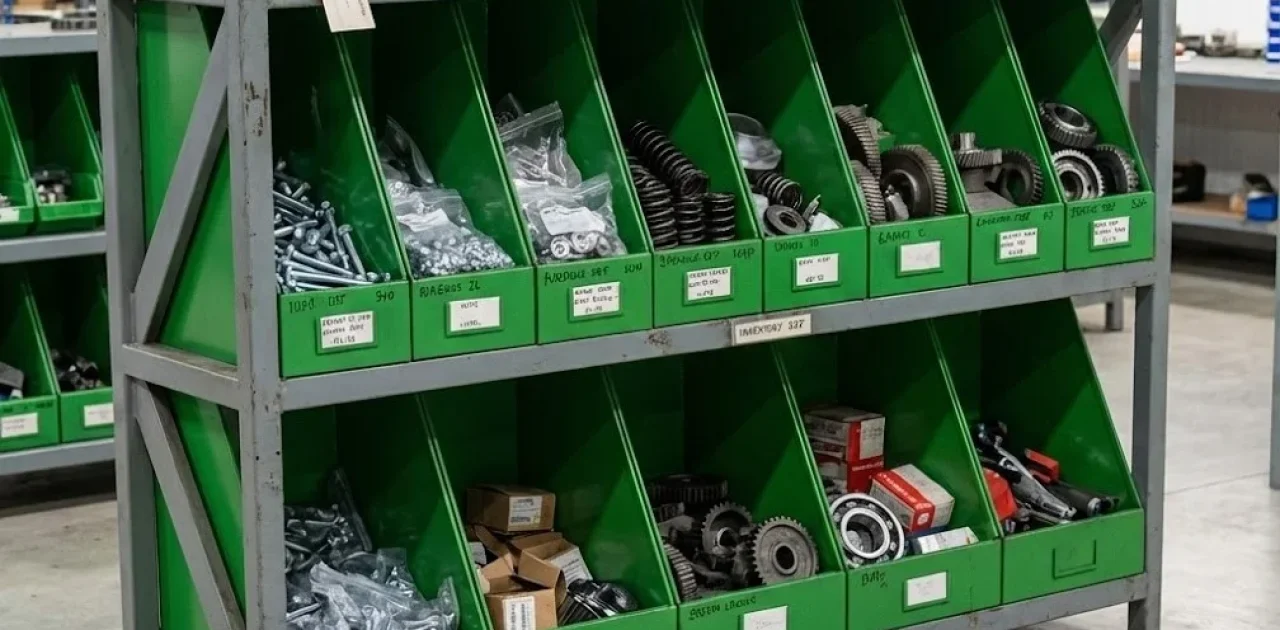
When two suppliers quote vastly different prices for WIP Boxes with seemingly identical specifications, the procurement team’s first instinct is usually to choose the cheaper option.
When two suppliers quote vastly different prices for WIP Boxes with seemingly identical specifications, the procurement team’s first instinct is usually to choose the cheaper option.
Without understanding the components of production costs, negotiations with suppliers tend to focus solely on the final price, without knowing which parts can be optimized and which truly reflect quality.
Key Components of WIP Box Production Costs
1. Material Costs
Raw material costs are the largest component in corrugated packaging production, and their prices can fluctuate based on market conditions, the quality of the base material, and global demand dynamics.
For example, in PP corrugated WIP Boxes, the main component is polypropylene resin. The quality of the resin directly determines the material’s resistance to impact, pressure, moisture, and temperature.
As a reference, the price difference between standard-grade and premium-grade PP resin can range from 15–25% per kilogram. For a box weighing around 500 grams per unit with a production volume of 1,000 units, the difference in material cost alone can be quite significant.
2. Production Process Costs
The production of PP corrugated sheets involves extrusion, forming the hollow structure, cutting, and assembling the boxes. Each stage requires machinery with a specific level of precision.
The level of automation in the production process directly affects quality consistency and cost efficiency, as automated systems reduce reliance on manual labor, which is prone to errors.
Factories with semi-manual production lines incur higher labor costs per unit compared to automated factories. For a simple example, if a manual process takes 2 minutes per unit with an operator wage of IDR 30,000 per hour, the labor cost per unit is approximately IDR 1,000.
In an automated line that produces 10 units per minute, the labor cost per unit can drop to IDR 100–200. At a monthly volume of 10,000 units, the difference can reach IDR 8–9 million from this component alone.
3. Design and Engineering Costs
WIP Boxes designed for specific requirements, such as custom sizes, particular folding systems, or additional features like handles and ventilation, require separate design and mold-making costs. These costs are usually charged upfront as setup costs and can be quite significant for the initial order.
If the mold setup cost is IDR 10 million for an initial order of 500 units, the additional cost per unit would be IDR 20,000. However, for the next order of 5,000 units using the same mold, the cost per unit drops to IDR 2,000.
This explains why custom WIP boxes for small orders can be more expensive than standard products and why order volume is a key factor in long-term cost efficiency.
4. Production Labor Costs
Labor costs include the wages and benefits of all workers involved in the production process, from machine operators and quality controllers to supervisors, and are influenced by the complexity of the process as well as regional wage standards.
The factory’s location also significantly affects this cost component. Local producers with efficient labor cost structures can offer more competitive prices compared to producers in countries with higher wages.
5. Quality Control and Compliance Costs
Furthermore, for WIP boxes used in food and beverage factories, certain standards must be met, ranging from food-grade certification to material durability testing. A strict QC process requires time, testing equipment, and trained QA personnel, all of which contribute to the production cost structure.
6. Factory Overhead Costs
Overhead costs include all operational expenses of the factory that are not directly related to production, such as facility rent, utilities, insurance, machinery maintenance, and administrative costs.
Factors Affecting Production Cost Levels
1. Production Volume
Order volume is the most direct factor affecting the price per unit. Setup costs, mold costs, and part of the overhead are fixed, meaning that the larger the production volume, the smaller the portion of these costs per unit.
In a simple simulation, with a production fixed cost of IDR 5 million per batch and a variable cost of IDR 15,000 per unit, the total cost for 500 units is IDR 12.5 million, or IDR 25,000 per unit. For 2,000 units with the same fixed cost, the total cost becomes IDR 35 million, or IDR 17,500 per unit.
The difference of IDR 7,500 per unit is purely a volume effect, not a difference in quality. This explains why suppliers often offer better prices for larger orders.
2. Design Complexity
Boxes with standard designs are cheaper to produce compared to boxes with custom features, such as non-standard sizes, specific locking systems, or additional accessories. Each extra element means a longer production process, additional molds, and extended production time.
3. Durability Specifications
Material thickness, resin grade, and the targeted durability standards (impact, pressure, temperature, moisture) directly determine material and process costs. For example, a box that must withstand temperatures up to 130°C requires a special PP resin grade, which is priced differently from standard resin.
As a rough comparison, increasing the material thickness from 3 mm to 4 mm can raise the material cost per unit by approximately 20–30%, while upgrading the temperature resistance to a higher grade can add 15–25% to the resin cost.
4. Industry Standards and Regulations
In the F&B industry, boxes that come into contact with food products must meet food-grade standards. To comply with these standards, manufacturers need to use verified materials, conduct additional testing, and prepare regularly updated certification documentation. All of these processes contribute to the product’s sel
5. Production Location and Supply Chain
Transportation and logistics costs, including the delivery of raw materials to the factory and the distribution of finished products to customers, heavily depend on distance, fuel prices, and the available logistics infrastructure.
Why Supplier Prices Can Vary Significantly
After understanding the cost components above, differences in supplier prices become easier to interpret.
Supplier A, offering a lower price, may be using lower-grade materials, reducing QC steps, or operating with minimal overhead due to simpler facilities.
Supplier B, with a higher price, may use premium PP resin, conduct strict batch-by-batch QC, and maintain regularly updated food-grade certifications.
Both can produce boxes that look physically similar, but their performance in the field can differ significantly after several months of use. This difference won’t be apparent if evaluation is based solely on the price per unit.
How to Evaluate WIP Box Prices Objectively
1. Supplier Cost Breakdown Analysis
Ask suppliers to explain how their quoted prices are composed. Suppliers who are transparent about their cost structure are generally more trustworthy and likely to maintain consistent quality compared to those who only provide the final price without explanation.
2. Compare Technical Specifications, Not Just Price
Compare material thickness, resin grade, actual dimensions, durability standards, and certifications. Two boxes with different prices but truly equivalent specifications can be compared based on price. However, two boxes with different specifications cannot be compared on a true “apples-to-apples” basis using price alone.
3. Calculating Total Cost of Ownership (TCO)
The purchase price is just a starting point, not the final conclusion. Also consider the estimated lifespan, replacement frequency per year, cleaning time per unit, and potential downtime related to the box’s condition.
A box that is more expensive upfront but lasts three times longer will be much cheaper in terms of TCO. A more detailed guide on this evaluation is available in the article on common mistakes in selecting WIP Boxes..
4. Operational Risk Evaluation
Also consider the consequences if a box fails during production. For example, in F&B lines with strict hygiene standards, a box that easily cracks or is difficult to clean is not just an operational issue but also a product quality risk, with costs exceeding the price difference of the box itself.
Conclusion
The price of WIP Boxes is influenced by numerous technical and operational variables, including material grade, design complexity, order volume, and the QC standards applied by the manufacturer. Understanding these cost components helps procurement teams evaluate quotations objectively and negotiate from a strong foundation.
For more information on how to order WIP Boxes according to your specific requirements, you can refer to the WIP Box ordering guide. To explore WIP Box PP corrugated products from local manufacturers, ALVAboard can serve as a relevant starting reference.