ALT Text:
Organic waste is the type of waste most commonly generated in daily life. From food scraps, fruit peels to dried leaves in the yard, all of these fall into this category. Although the amount is considerable, many people still do not fully understand what organic waste is, how to distinguish it from non-organic waste, or why separating it is an important step in maintaining a clean environment.
When organic waste is mixed with other types of waste, the management process becomes more complicated, and the potential for recycling is reduced. On the other hand, when it is separated at the source, organic waste can be processed into compost or reused, preventing all of it from ending up in landfills.
Definition of Organic Waste and Its Main Characteristics
Organic waste is defined as waste derived from living organisms, including plants and animals, and can naturally decompose through the action of microorganisms over time. Because it decomposes easily, organic waste requires different handling from non-organic waste to prevent unpleasant odors and pest infestations.
One of the main characteristics of organic waste is its natural composition, which allows it to decompose easily. When managed properly, these materials can be transformed into compost that helps improve soil fertility. This is why separating organic waste at home is an important part of a more sustainable waste management system.
In daily life, examples of organic waste are easy to find. Leftover rice, banana peels, coffee grounds, wilted vegetables, eggshells, dried leaves, and grass clippings are some of the most common types of household organic waste. If all of these are mixed directly with plastic or metal waste, the processing process becomes less effective, and the opportunity to reuse these materials is significantly reduced.
Types of Organic Waste Around Us
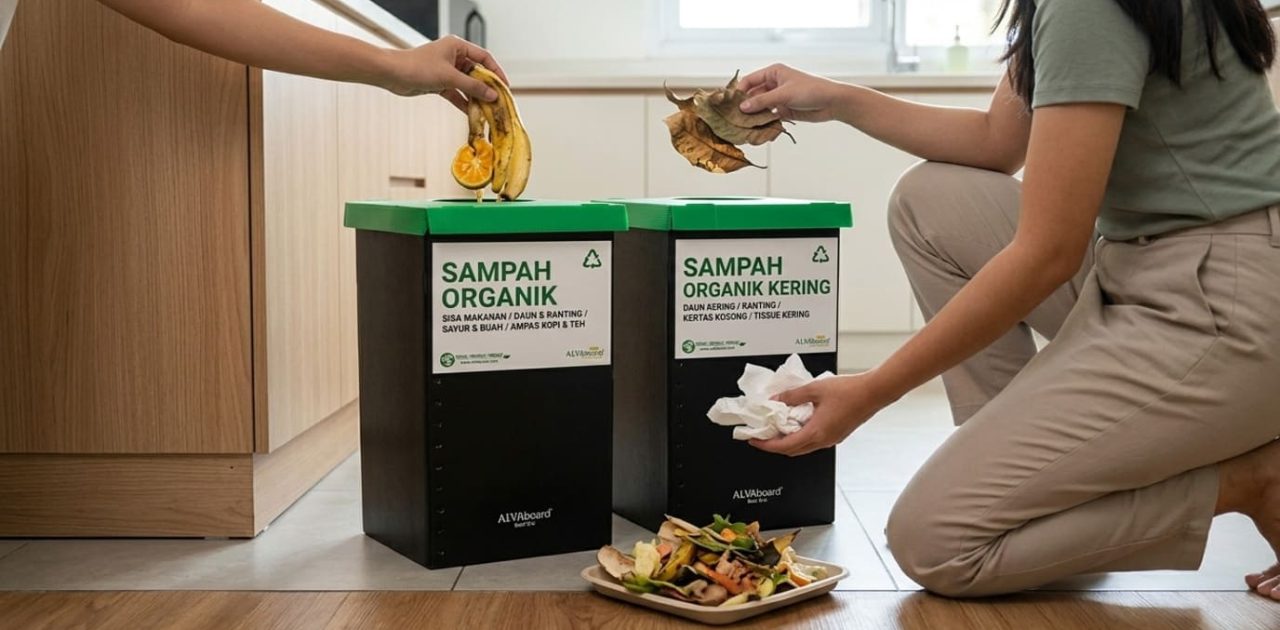
In general, organic waste can be divided into two main categories: wet organic waste and dry organic waste. Both originate from natural materials, but they have different characteristics, so their handling methods can be adjusted accordingly.
Wet Organic Waste
Wet organic waste has a high moisture content, causing it to decompose more quickly. This type of waste generally comes from cooking activities and everyday food leftovers. Since it breaks down relatively fast, wet organic waste should not be allowed to accumulate inside the house for an extended period.
Some examples of household wet organic waste include food scraps, fruit peels, vegetables, used tea leaves, coffee grounds, shrimp shells, fish bones, and eggshells. These materials are ideal for composting when separated from the beginning so they do not become mixed with other types of waste.
Dry Organic Waste
Unlike wet organic waste, dry organic waste contains less moisture, so it decomposes more slowly. Nevertheless, this type of waste can still decompose naturally and be reused as compost or mulch for plants.
Examples of dry organic waste include dried leaves, small branches, wood offcuts, fallen flowers, straw, coconut husks, and sawdust from natural wood. When collected separately, dry organic waste can help produce higher-quality compost by balancing moisture levels during the decomposition process.
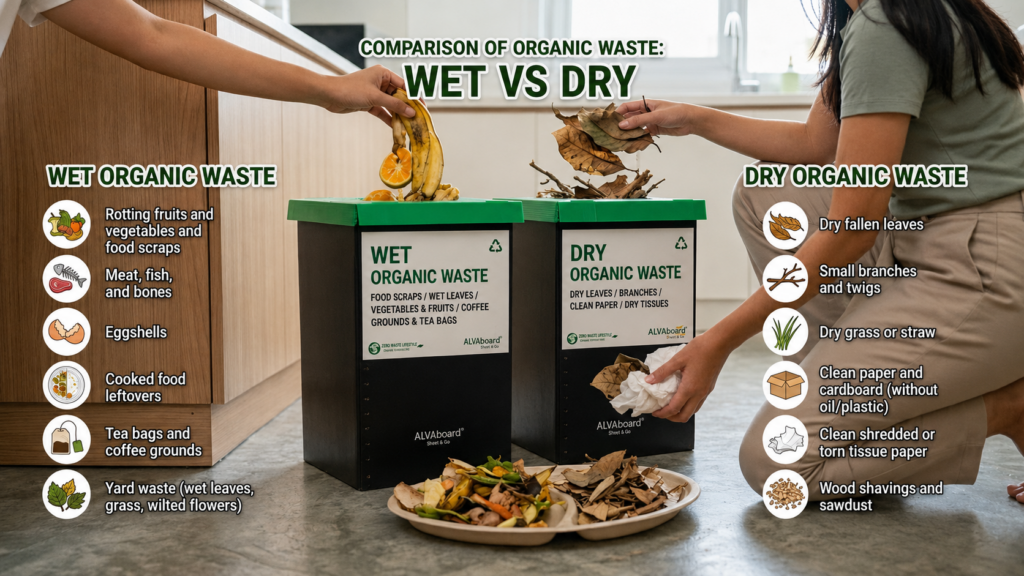
Understanding the types of organic waste is the first step toward making waste sorting at home easier. When every family member understands the difference between wet and dry organic waste, waste management becomes more practical, the environment stays cleaner, and the resulting organic materials can be reused more effectively.
In the next section, we will discuss the differences between organic and non-organic waste, practical ways to manage household organic waste, and how to choose waste sorting bins that are waterproof, hygienic, and easy to clean.
The Fundamental Difference Between Organic and non-organic Waste
Many people still assume that all household waste can be disposed of in a single bin. In fact, understanding the difference between organic and non-organic waste is the first step toward creating a more effective waste management system.
Organic waste comes from natural materials that can be easily decomposed by microorganisms. Materials such as food scraps, leaves, fruit peels, and vegetables naturally break down and can potentially be processed into compost or organic fertilizer. In contrast, non-organic waste comes from materials that are difficult to decompose, such as plastic, glass, metal, and various types of packaging. Most non-organic waste still has economic value because it can be recycled into new products when properly sorted.
Mixing these two types of waste reduces their potential for reuse. Organic waste mixed with plastic or metal is more difficult to process into compost, meanwhile non-organic waste contaminated with food residue tends to lose its quality, making the recycling process less effective. Therefore, sorting waste at home is a simple habit that provides significant benefits for the environment.
Practical Ways to Manage Household Organic Waste
Managing organic waste does not have to begin with complicated equipment. The simplest step is to provide a dedicated bin for organic waste so that it does not mix with other types of waste. This habit will simplify the waste management process while maintaining the kitchen and yard clean.
Once separated, organic waste can be processed into compost using simple methods. The resulting compost can be used to enrich ornamental plants, vegetable gardens, and green spaces around the home. In this way, the amount of waste sent to landfills can also be significantly reduced.
To make storage more convenient, organic waste bins should be cleaned regularly. Organic waste with a high moisture content can produce unpleasant odors if left for too long. Emptying the bin every day and keeping it clean will help create a healthier and more hygienic environment.
The Importance of Choosing Waterproof and Hygienic Organic Waste Sorting Bins
One of the challenges in managing organic waste is choosing the right bin. Many bins made of cardboard or other water-absorbent materials quickly become damaged when used to hold wet organic waste. This condition can cause leaks, unpleasant odors, and accelerate the growth of mold and bacteria.
For this reason, using a waterproof and odor-resistant organic waste bin is a more suitable choice, especially for long-term use in homes, schools, restaurants, and commercial areas. Materials that do not absorb water are easier to clean, helping maintain the cleanliness of the bin every day.
The Advantages of ALVAboard Polypropylene Material for Custom Waste Bins
For waste sorting bin applications, corrugated polypropylene plastic material offers greater durability than conventional materials. This material is waterproof, resistant to decay, hygienic, lightweight, and easy to clean after being used to hold organic waste.
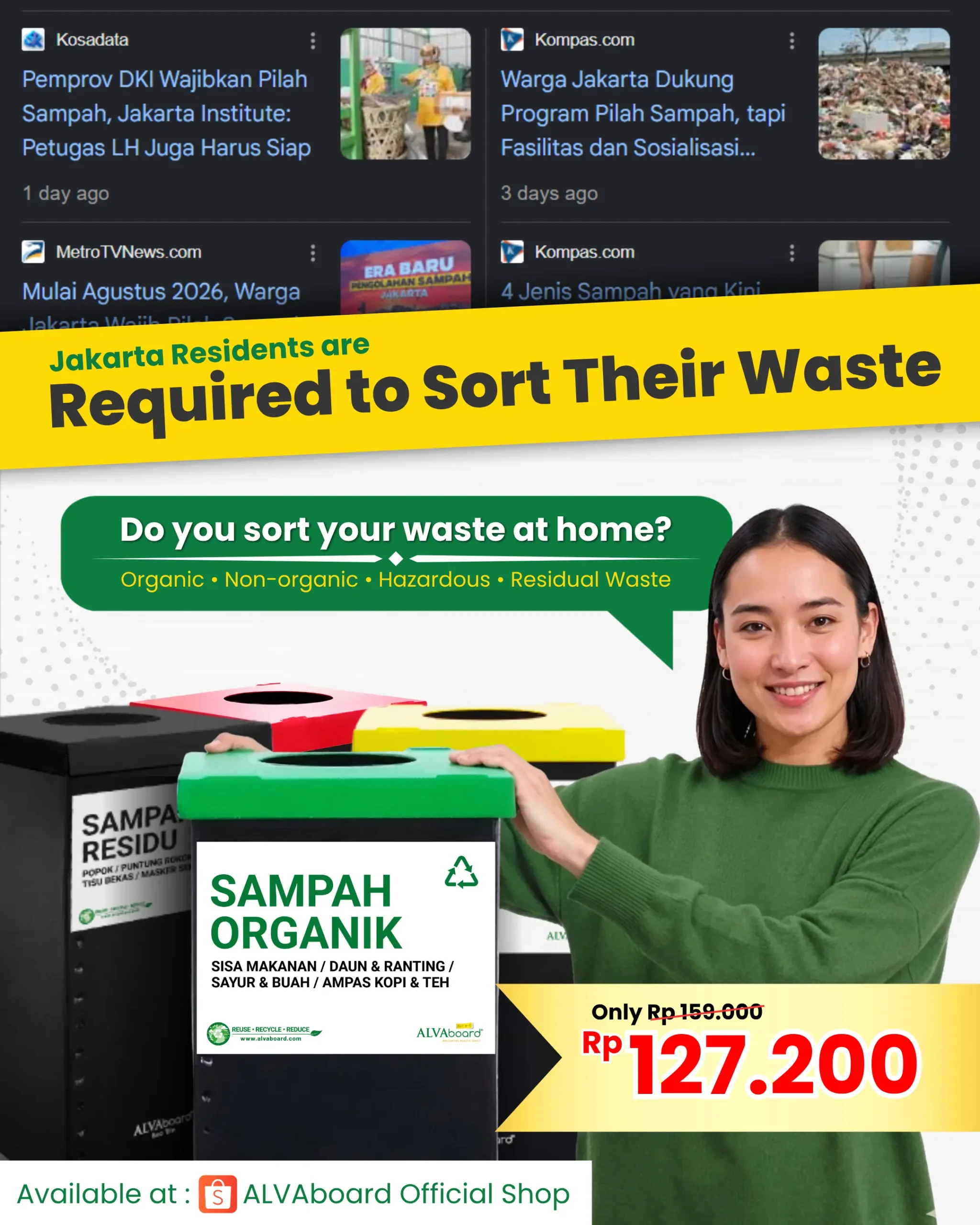
With ALVAboard corrugated plastic sheets, various types of waste bins can be custom-made according to the required capacity, color, and visual identity. The material also has a printable surface, allowing labels such as “Organic,” “non-organic,” and other categories to remain clearly visible during everyday use.
Because it is food-grade, moisture-resistant, termite-resistant, and environmentally friendly, ALVAboard is an ideal material solution for various waste sorting needs in homes, offices, schools, public facilities, and industrial areas.
Make Organic Waste Management Easier with the Right Bin
Understanding what organic waste is, is the first step toward building better waste sorting habits. By recognizing its types, examples, and proper management methods, every household can reduce the amount of waste ending up in landfills while generating environmental benefits through composting.
To make the sorting process more effective, using bins that are waterproof, hygienic, and easy to clean is an important factor. ALVAboard offers high-quality corrugated polypropylene plastic that is durable, waterproof, food-grade, termite-resistant, and flexible enough to be customized into various waste sorting bin solutions for household and industrial needs.
[Contact Us] for custom organic waste bins, waste sorting containers, or ALVAboard sheet materials that can be tailored to meet your specific requirements.