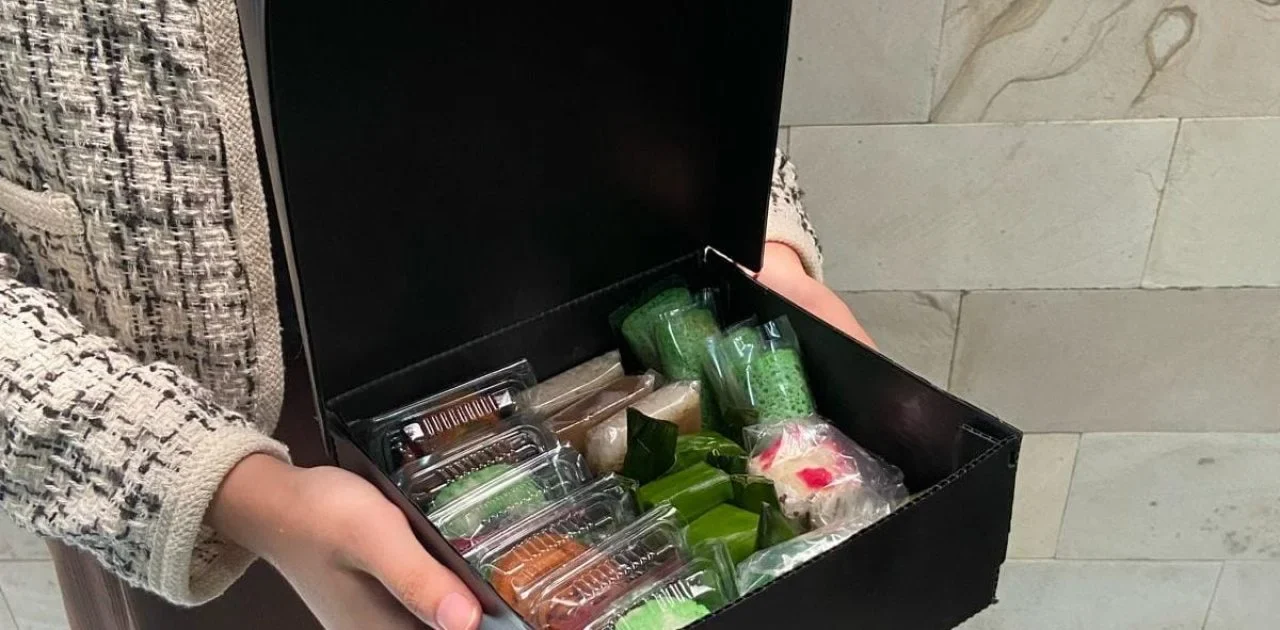
For premium brands, the box is the first thing recipients see and hold before they even know what is inside. The first impression is formed at that moment, and if the box does not meet the expected standards, the perception of the entire hampers can decline as well.
The problem is that many brands are already very serious about their product quality but are less careful when selecting a box supplier. As a result, issues arise that could have been prevented from the beginning.
For example, boxes may arrive dented when they reach customers, print colors may be inconsistent between batches, or packaging stock may suddenly run out in the middle of peak season because the supplier is unable to handle the surge in orders.
Choosing the wrong supplier can affect a brand’s reputation, disrupt distribution schedules, and reduce the customer trust that has been built with great effort.
Why Is Choosing the Right Supplier So Crucial for Premium Brands?
If a product is sold on store shelves, damaged packaging can still be replaced before it reaches the consumer.
However, hampers are delivered directly to the recipient, often going through a long journey with multiple handling points.
That is why the standards for premium hampers boxes are different from those of ordinary product packaging.
The box must be able to withstand pressure during shipping, maintain a neat appearance even after being handled multiple times, and still look premium when it is finally opened.
All of this depends on the quality of the materials and the precision of production from the supplier you choose.
Beyond quality, capacity is an equally important factor. The volume of hampers orders can increase sharply during peak seasons, such as Eid, Christmas, or the end-of-year holidays.
Suppliers that do not have sufficient production capacity will become overwhelmed. You will bear the consequences in the form of delays or declining quality at a time when demand is at its peak.
7 Tips for Choosing the Right Food Hampers Box Supplier
1. Evaluate the Quality of the Materials and Box Structure
Understand the materials used and whether they are suitable for shipping food hampers. PP corrugated board is often chosen because it offers stronger structural durability and a neater appearance compared to regular cardboard.
Do not forget to request the technical specifications in writing, including thickness, compression strength, and resistance to moisture. It is also important to request physical samples and test them yourself before making a decision.
2. Make Sure the Supplier Understands the Needs of Food Products
Food hampers boxes have specific requirements. The materials must be food-grade or at least not release harmful substances that could affect the products inside.
Ask directly whether the materials used meet food safety standards. Suppliers with experience in the food packaging segment are usually familiar with this question and can provide a convincing answer.
3. Check Large-Scale Production Capacity
A supplier that performs well for an order of 500 pcs is not necessarily capable of fulfilling an order of 10,000 pcs with consistent quality.
Ask about their maximum monthly production capacity, minimum order quantity (MOQ), and how they handle demand surges during peak seasons. If possible, visit their production facility to see their capacity and operational standards firsthand.
4. Review Custom Design Flexibility
Premium brands almost always require packaging that aligns with their visual identity. Therefore, make sure the supplier has adequate printing capabilities and can accommodate custom design requirements.
Ask for a portfolio of their previous custom projects and pay attention to the color accuracy and the neatness of the print results. Also ask about the cost for new designs and whether there are additional charges for certain colors or finishing options.
5. Evaluate Lead Time Stability and Supply Chain Reliability
For premium packaging with complex production processes, lead time can reach 3–6 weeks. If you only place an order one month before peak season, you will likely fall behind schedule and risk delays.
It is best to ask about the normal lead time for regular orders and large orders, as well as their commitment to meeting agreed-upon deadlines.
6. Cost Structure Transparency
A lower price at the beginning does not necessarily mean the total cost will also be low. Many suppliers offer attractive unit prices but hide additional charges such as design setup fees, surcharges for urgent orders, or costs related to claims for defective products.
To make it clearer, take a look at this simple simulation.
For example, you find a supplier offering boxes at Rp30,000 per unit for an order of 1,000 pcs. On paper, the total packaging cost would be Rp30,000,000.
However, after the deal is finalized, additional costs appear that were not mentioned at the beginning. There is a design setup fee of Rp2,500,000, a sample shipping cost of Rp300,000, and it turns out that 3 percent of the total production is defective and unusable, equivalent to about 30 boxes or Rp900,000.
Not to mention that one batch arrives 5 days late just before peak season, forcing you to place an emergency order with another supplier at Rp42,000 per unit for 200 pcs, adding Rp2,400,000 in extra costs.
The actual total cost you end up paying becomes around Rp36,100,000, or approximately Rp36,100 per unit, not Rp30,000 as stated in the initial quotation.
A 20 percent difference from the price you initially thought was already fixed.
This is what is meant by total cost of ownership.
For that reason, request a complete and transparent cost breakdown before agreeing to any deal. Then, calculate all potential additional costs that may arise throughout the collaboration process.
7. Supplier Experience and Track Record
Suppliers who have worked for years on hampers boxes for premium brands have gone through various unpredictable scenarios.
Therefore, if possible, ask for client references that you can contact, especially those who have worked with them on large-volume orders or during peak seasons.
Do not forget to also evaluate the supplier’s previous project portfolio.
Important Questions to Ask the Supplier
Before deciding to work together, several of these questions should be answered directly by the supplier.
- What is the maximum load capacity of their boxes?
- Is there a shipping durability test available?
- How is the quality control system implemented on their production line?
- What is the realistic lead time for mass production?
- And are physical samples available before entering mass production?
The answers to these questions will help you assess how well the supplier is prepared to meet your actual box packaging needs.
How to Compare Suppliers Objectively
Compare the technical material specifications on an apple-to-apple basis, not just the unit price. One way to do this is to send box samples to several addresses with contents similar to your actual hampers and observe their condition upon arrival. This method is the most accurate way to assess box durability under real shipping conditions.
Next, calculate the total cost of ownership for each candidate. It is often better to choose a supplier that has a slightly higher unit price but has a good track record of delivery accuracy.
Finally, review the physical sample quality carefully because small details reflect the production standard you will receive at a larger scale.
Conclusion
Now you understand that the right hampers box supplier helps ensure product safety, maintain consistent brand visual quality, and support smooth distribution even when demand is at its peak.
In the context of large-scale shipping, it is also important to understand the special considerations for packaging used in Eid hampers distribution, which involves long-distance delivery and repeated handling.
A thorough evaluation at the beginning does require more time, but it is far more efficient than having to change suppliers midway or bear reputational losses due to packaging that does not meet standards.
If you are looking for hampers boxes that meet all the criteria above, ALVAboard can be considered as one of the options worth exploring.
ALVAboard hampers boxes are made from 3mm-thick polypropylene (PP), which is water-resistant, termite-resistant, and anti-fungal, and safe for direct contact with food.
The appearance is premium, it is foldable for easy storage, and it can be reused as storage after the Eid season ends since it is not a single-use product.
Available in two types, namely AB Ramadan Handle with dimensions of 30 x 20 x 32.5 cm and AB Ramadan Gift Box measuring 35 x 25 x 15 cm, both can be adjusted to suit your hamper contents.
Let’s contact ALVAboard now and consult your custom hamper box needs for your business!