
Peak seasons such as Harbolnas, Lebaran, or the end-of-year holidays always bring a surge in shipping volume. For many brands, the main focus is usually on fulfillment capacity, how quickly orders can be packed and how many orders can be processed per day.
However, what is often overlooked is the packaging protection system itself. Product damage during shipping is not just an operational issue. It also leads to replacement costs, reshipping expenses, customer complaints, and the most costly of all, a decline in brand reputation.
During peak season, this number can be even higher because the surge in volume amplifies every weak point in the existing packaging system.
Why Does Conventional Packaging Fail More Easily During Peak Season?
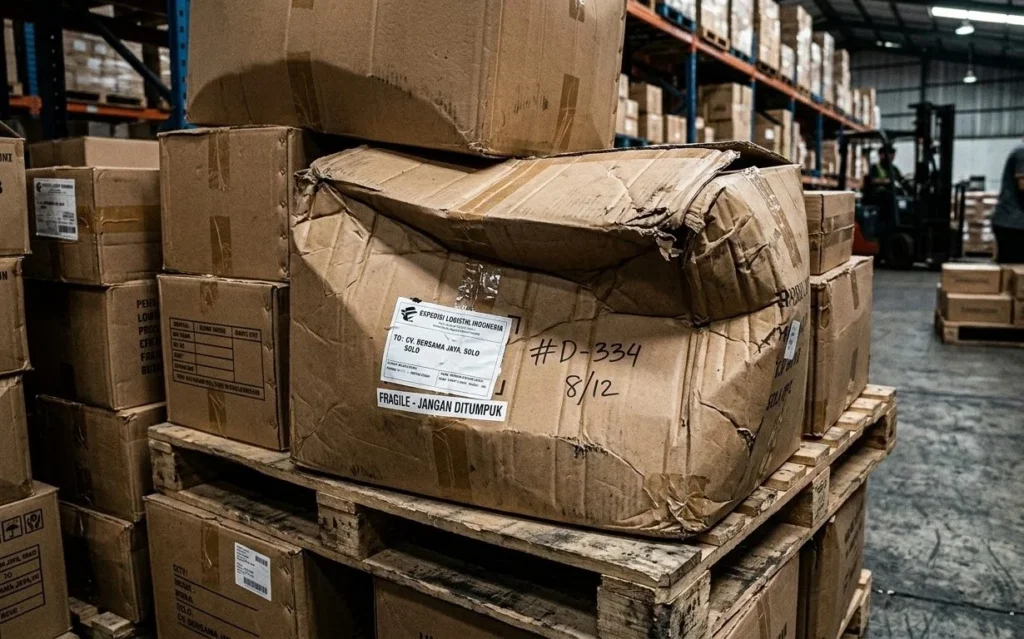
Regular cardboard or standard packaging has several weaknesses that become more apparent when distribution volumes are high.
- The structure is easily deformed when stacked. In warehouses that are crowded during peak season, packages are stacked higher than usual. Cardboard without sufficient compressive strength will start to dent from the third or fourth layer of stacking.
- Absorbs moisture. During the rainy season or when shipments pass through areas with high humidity, cardboard exposed to moisture can lose up to 70–80% of its structural strength.
- Limited impact resistance. Faster and less careful loading and unloading processes during peak season increase the frequency of impacts. Conventional cardboard distributes this pressure directly to the products inside.
- Material weaknesses are triggered more frequently. Packaging that is “adequately safe” under normal conditions can fail much more often when it goes through handling processes that are five times more frequent in a short period of time.
Characteristics of PP Corrugated Relevant for High-Volume Distribution
PP corrugated, or polypropylene corrugated, is a plastic packaging material with a hollow structured design. Several of its characteristics help address the weaknesses of conventional packaging, including:
- High compressive strength per unit weight. The hollow structure of PP corrugated reinforces the packaging to withstand stacking loads without permanent deformation, even when stacked in large quantities.
- Does not absorb water or moisture. PP material is highly water-resistant, allowing its structural strength to remain consistent even when exposed to humid conditions, rain, or long-distance shipping.
- Resistant to repeated impacts. Its flexible yet strong plastic properties allow the packaging to withstand light to moderate impacts without cracking or tearing during the handling process.
- Can be reused without significant degradation. Unlike cardboard that begins to deteriorate after several uses, PP corrugated maintains its structural integrity even after repeated use.
How Does PP Corrugated Protect Products During Distribution?

1. Protection Against Vertical Pressure (Stacking)
PP corrugated packaging is designed to distribute loads evenly across its structure. When stacked, the pressure from above is not directly transferred to the product but is absorbed by the hollow walls of the packaging.
2. Protection Against Impact and Handling
Polypropylene material has higher impact resistance compared to cardboard. When a package is dropped or hit during the sorting and loading process, PP corrugated packaging absorbs the impact energy more effectively before it reaches the product inside.
3. Stability During Long-Distance Transport
Furthermore, for intercity or inter-island shipments that take 3–7 days, material stability becomes very important. PP corrugated can maintain its shape and strength throughout the journey, not just at the initial stage of shipping.
4. Resistance to Distribution Environments
Warehouse conditions and delivery vehicles in Indonesia are not always ideal. High temperatures, humidity, and exposure to sunlight are part of everyday distribution realities. PP corrugated is designed to remain stable in these various environmental conditions without significant material degradation.
Estimated Reduction in Product Damage with PP Corrugated Packaging
Consider this simple example:
A skincare brand that regularly ships 200 orders per week using conventional cardboard. The normal damage rate is around 3%, which means about 6 products are damaged per week.
During peak season, the volume increases to 1,000 orders. Assuming the damage rate rises to 8% due to rougher handling and higher stacking, about 80 products could be damaged in just one week.
Now, with PP board packaging, the structural weaknesses triggered by peak season conditions are no longer present. The damage rate can be maintained close to the normal level, around 3–4%. Out of 1,000 orders, this means 40–50 fewer products need to be replaced each week during the peak season.
For hampers products, for example, understanding common mistakes in hampers packaging from the beginning can help calculate potential savings more accurately before deciding to upgrade the packaging material.
Peak Season Operational Scenario Case Study
Suppose there is a gift and hampers brand that typically processes 500 orders per week under normal conditions. During the Lebaran peak season, the volume increases to 3,000–4,000 orders per week.
With PP corrugated, the packaging structure remains stable even when handling becomes rougher. The damage rate can be maintained close to the normal level because the structural weaknesses triggered by high shipping volumes are no longer present.
The difference in replacement costs for hundreds of products, when calculated annually including regular peak seasons, is often more than enough to cover the investment in upgrading the packaging.
For a more detailed reference on material specifications, PP board hampers boxes can be a good starting point when choosing the right specifications according to product needs.
Conclusion
PP corrugated board packaging provides consistent structural protection regardless of handling conditions, humidity, or distribution intensity. Reducing product damage leads to cost savings and a better customer experience.
If you are currently evaluating your packaging system to handle the next surge in distribution volume, ALVAboard offers PP board packaging solutions that can be tailored to your product’s specific needs and distribution scale.
Want to learn more about PP board packaging from ALVAboard? Contact ALVAboard now to consult on your business box packaging needs!