Operational cost pressures in the manufacturing and logistics sectors continue to rise. Amid the many cost components that must be managed, packaging often does not receive attention proportional to its contribution to overall operational expenses.
Many companies focus primarily on production efficiency or logistics optimization, while recurring packaging material costs run in the background without ever being thoroughly evaluated.
In fact, for industries with high shipping volumes and repetitive distribution cycles, annual packaging costs can become highly significant. A large portion of these costs can be reduced by choosing the right materials.
This is what drives more industries to adopt PP corrugated sheet as their primary packaging material.
Packaging Cost Challenges in Today’s Industry
1. Rising Packaging Material Prices
Paper and cardboard based packaging materials are closely tied to global pulp and paper commodity prices. In recent years, these prices have shown an upward trend that is not always predictable.
Companies that rely entirely on carton packaging must absorb this price volatility. In many cases, they have limited negotiating power due to a lack of viable alternatives.
2. High Replacement Costs
Single-use packaging materials such as cartons generate recurring costs for every shipping cycle. For operations with high shipping frequency, these replacement costs accumulate into a substantial component of annual operational expenses.
Often overlooked are indirect costs associated with packaging replacement, including time spent on reordering, supplier management, goods receiving, and waste handling.
3. Impact of Packaging on Logistics Costs
The weight and dimensions of packaging directly affect shipping costs. Heavier packaging increases freight costs per shipment, and for large shipping volumes, even small weight differences per unit can lead to significant annual logistics expenses.
Beyond weight, packaging durability during transportation also plays a critical role. Product damage caused by inadequate packaging leads to claims, returns, and replacement costs.
What Is PP Sheet in Industrial Packaging?
PP sheet, or polypropylene sheet, is a plastic-based material available in various forms for industrial packaging applications.
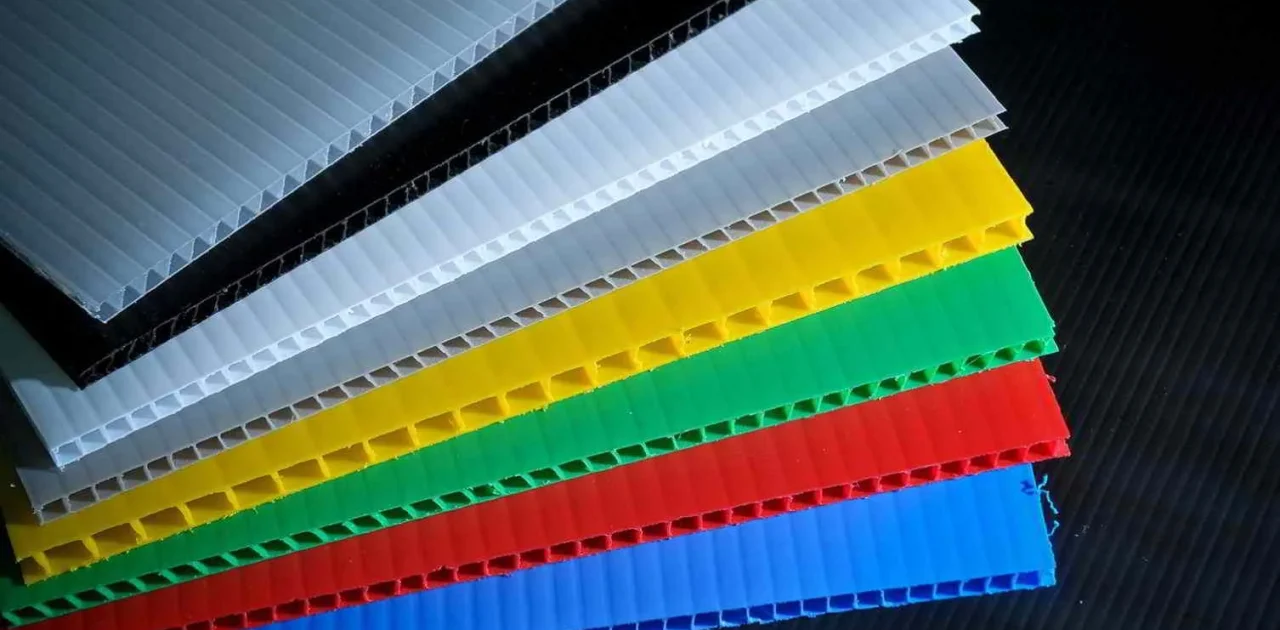
The most commonly used variant is PP corrugated sheet, a layered structure consisting of two flat surfaces with a fluted middle layer.
PP corrugated sheets can be cut, folded, and formed according to packaging design requirements, and are available in various thicknesses to meet different strength needs.
Key characteristics that differentiate PP sheets from paper-based materials include moisture resistance, durability under repeated mechanical stress, and the ability to be reused across multiple cycles.
Why PP Sheet Can Reduce Packaging Costs
1. Longer Durability
PP corrugated sheets offer structural durability that significantly exceeds cartons under similar conditions. They are resistant to dents, do not tear under light to moderate impact, and maintain structural integrity even when exposed to moisture.
This durability extends the usage lifecycle before replacement is needed, directly reducing cost per shipment over time.
2. Reduced Replacement Costs
Single-use carton packaging must be replaced for every shipping cycle. In contrast, PP corrugated sheets designed for reuse can typically last for 5–20 cycles or more, depending on operational conditions.
As a result, packaging procurement costs per cycle can drop significantly. For companies with hundreds or thousands of annual shipping cycles, the savings from reduced replacement frequency can be substantial.
3. Lighter Weight for Logistics Efficiency
PP corrugated sheets provide strong structural performance with relatively lower weight compared to alternative materials of similar strength.
Lighter packaging reduces freight costs per shipment. In high-volume operations, these savings can become highly significant over time.
Additionally, lighter packaging is easier to handle in warehouse operations, reducing workload and the risk of handling-related injuries.
4. Compatibility with Reusable Packaging Systems
PP sheets are well-suited for returnable or reusable packaging systems due to their durability in industrial conditions.
In returnable systems, packaging is sent back after delivery to be reused, making it an effective strategy for reducing long-term packaging costs.
Read also: reusable layer pads as a complement to reusable packaging systems.
Applications of PP Sheet Across Industries
1. Automotive Industry
The automotive sector is one of the largest users of PP corrugated sheets for packaging spare parts and components.
With irregular shapes, scratch-sensitive surfaces, and varying weights, automotive components require highly customizable packaging solutions.
PP sheets can be used to create dividers, trays, and boxes that protect components throughout storage and transportation.
Their resistance to oils and light chemicals makes them superior to cartons in this environment.
See ALVAboard’s divider applications for further reference.
2. Electronics Industry
Electronic components are highly sensitive to physical damage, vibration, and moisture. PP sheets provide more reliable protection than cartons, especially for components that go through long distribution chains with multiple handling points.
Kemasan PP corrugated bisa dikustomisasi untuk menghasilkan desain presisi sesuai dimensi komponen elektronik, sehingga mengurangi pergerakan produk di dalam kemasan yang menjadi sumber kerusakan utama selama transportasi.
3. Industri Logistik dan Warehouse
In logistics and warehouse operations, handling efficiency and packaging consistency are key priorities. PP sheets support standardized packaging dimensions, improving stacking efficiency, space utilization, and sorting processes.
Reusable PP packaging also helps reduce packaging waste within warehouse facilities. Read also: layer pads for safety and logistics efficiency to better understand how supporting packaging materials contribute to overall operational efficiency.
4. FMCG Industry
In FMCG industries with fast distribution cycles and high volumes, cost efficiency per unit is critical.
PP sheets can be used as trays, dividers, and secondary protective packaging that withstand moisture exposure and rough handling during mass distribution.
PP Sheet as a More Sustainable Packaging Solution
1. Reducing Packaging Waste
Each reuse of PP sheet packaging reduces the need for single use carton packaging. At scale, this transition significantly lowers overall packaging waste.
2. Supporting Returnable Packaging Systems
With PP corrugated-based returnable systems, packaging can be returned to the origin for reuse.
This reduces the need for continuous production of new packaging and improves resource efficiency throughout the lifecycle.
For a more comprehensive understanding, read: layer pad suppliers: what they are, their benefits, and how to choose the right one..
3. Supporting Corporate Sustainability Targets
For companies with ESG commitments, transitioning to reusable packaging provides a measurable and communicable sustainability initiative.
Reduced packaging waste and lower resource consumption per shipment become clear sustainability metrics.
When Should Companies Consider Using PP Sheet?
Several operational conditions indicate that switching to PP sheet is worth serious consideration:
- High shipping volumes indicate strong cost-saving potential with reusable PP sheets. The higher the volume, the greater the accumulated savings from reduced packaging replacement frequency.
- Repetitive supply chains with stable routes and partners make it easier to implement returnable packaging systems, as the return process can be managed at a controlled cost.
- A need for durable packaging for sensitive or heavy products that cannot be adequately protected by standard carton packaging.
- A long-term cost efficiency focus from management especially an understanding of the trade off between higher upfront procurement costs and lower total cost of ownership will drive a more serious evaluation of PP sheet as a strategic alternative.
Conclusion
The impact of packaging costs is often greater than it appears, especially for industries with high shipping volumes and repetitive distribution cycles.
Choosing the right packaging material can reduce procurement costs, improve logistics efficiency, minimize product damage, and support sustainability goals.
PP corrugated sheet is increasingly adopted due to its durability, logistics efficiency, and reusability advantages not typically found in conventional packaging materials.
Consult your packaging needs with ALVAboard to find the most suitable materials and specifications for your operational requirements. Explore ALVAboard’s product range to discover available packaging solutions.