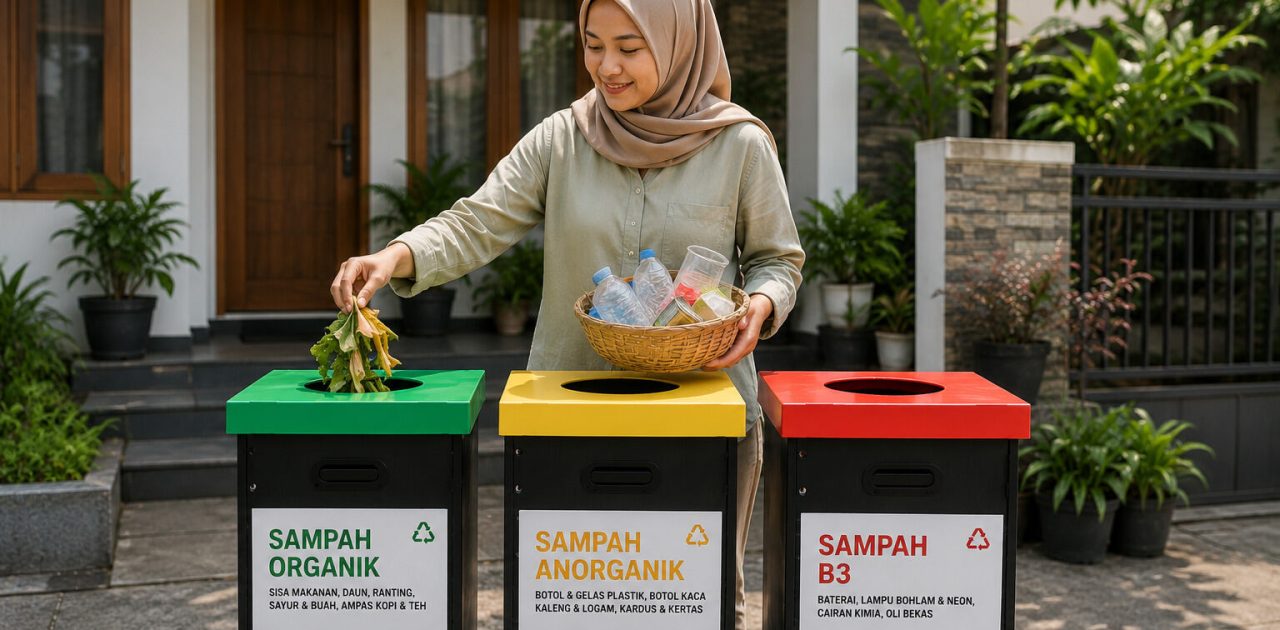
The Bandung City Government continues to encourage residents to make waste sorting at home a daily habit as a concrete step to reduce the burden on final disposal sites while improving the effectiveness of waste management. Through various policies and educational initiatives, residents are now encouraged to understand the proper way to sort waste in Bandung so that organic waste, non-organic waste, and household waste can be managed according to their respective categories.
For many residents, this regulation may feel like a new habit. In fact, waste sorting is a simple step that has a significant impact on environmental cleanliness, collection efficiency, and the success of recycling processes. The more households sort their waste at the source, the less waste ends up at the Final Processing Site (TPA).
Why Must Bandung Residents Sort Waste from Home?
Sorting waste at home is not merely a recommendation but part of a collective effort to create a more effective waste management system. When all types of waste are mixed in one container, the processes of collection, re-sorting, and processing become much more difficult. As a result, many materials that could actually be recycled end up in final disposal sites.
The habit of sorting waste also helps reduce environmental pollution. Organic waste that is separated from the beginning is easier to process into compost, while non-organic waste such as plastic bottles, paper, metal, and cardboard can be returned to the recycling chain. Meanwhile, household waste classified as hazardous waste (B3) requires special handling to prevent contamination of soil and water sources.
This simple step provides broader benefits than many people realize. The environment becomes cleaner, the volume of collected waste decreases, waste management costs become more efficient, and the economic potential of recycled materials increases. That is why the Bandung City waste sorting regulation continues to be promoted through various educational programs.
Considering the Condition of the Final Processing Site and the Bandung Mayor’s Policy
One of the key foundations of Bandung Mayor’s Circular Letter Number 023-DLH/2026 is the increasing daily volume of waste that is no longer proportional to the capacity of the final processing site. This condition requires waste reduction starting from the source, including households, offices, and businesses. By sorting waste from the beginning, recyclable materials are not mixed with other waste, making them easier to process through the city’s waste management system.
The circular letter emphasizes that waste management is not solely the government’s responsibility but also requires active participation from all levels of society. Households, schools, businesses, and environmental communities all play a role in ensuring waste is sorted according to its type before disposal. This approach is a strategic step to reduce the burden on the final processing site while improving the effectiveness of Bandung City’s recycling system.
In its implementation, this policy also encourages the use of more organized supporting facilities, such as clearly categorized and easy to understand. In both residential areas and public facilities, consistent waste sorting helps create a more organized, hygienic, and sustainable waste management system.
In the following section, residents can gain a better understanding of practical waste sorting guidelines in Bandung City, including the classification of organic waste, non-organic waste, and household hazardous waste (B3), so that this policy can be implemented more effectively in daily life.
Practical Guide to Sorting Waste into Three Main Categories
Understanding how to sort waste is actually quite simple. The Bandung City Government encourages residents to separate waste into three main categories: organic waste, non-organic waste, and household hazardous waste (B3). By sorting waste at home, the processes of collection, processing, and recycling can be carried out more effectively.
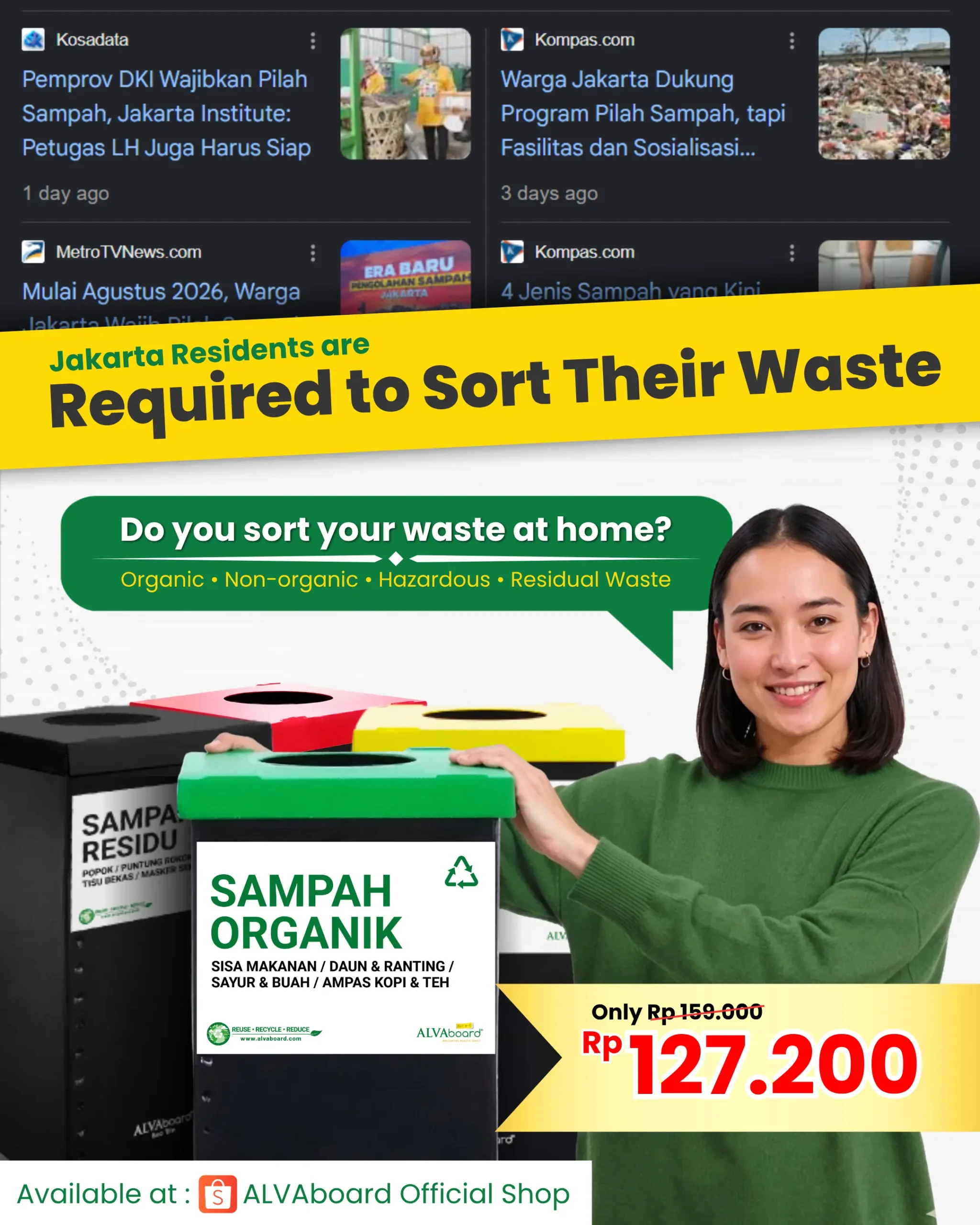
Many households still mix all types of waste into a single container. This habit causes recyclable waste to become contaminated and eventually end up at the final processing site. In fact, simply providing several waste bins labeled according to each category can make waste sorting an easy habit for every family member.
Organic Waste
Organic waste is a type of waste that comes from living organisms and can naturally decompose. This type of waste dominates daily household waste, making its separation an important step in reducing the amount of waste sent to final disposal sites.
Examples of organic waste include leftover rice, vegetables, fruits, dried leaves, coffee grounds, eggshells, and other food scraps. When separated from the beginning, organic waste can be processed into compost that is beneficial for home gardens and green open spaces.
Organic waste bins should be equipped with lids to help prevent insects from being attracted and minimize unpleasant odors. Regular cleaning of the bins also helps keep the surrounding environment clean.
Non-organic Waste
Non-organic waste consists of materials that are difficult to decompose naturally, but still have economic value because most of them can be recycled. Sorting this type of waste makes collection easier for waste banks and recycling industries.
Examples of non-organic waste include plastic bottles, plastic cups, beverage cans, cardboard, paper, glass, metal, and various types of clean packaging. Before placing them into the waste bin, packaging should be rinsed first to prevent contamination from food residue or liquids that could reduce the quality of recyclable materials.
By making it a habit to separate non-organic waste at home, residents help support the reuse of valuable materials while reducing the need for new raw materials.
Household Hazardous Waste (B3)
The next category is hazardous and toxic waste (B3), which requires special handling. This type of waste must not be mixed with organic or non-organic waste because it has the potential to pollute the environment and endanger human health.
Examples of household hazardous waste include used batteries, lamps, expired medicines, paint, motor oil, pesticides, certain cleaning liquids, and small electronic devices that are no longer in use.
Household hazardous waste should be stored in sealed containers with clear labels before being delivered to designated collection facilities. This simple step helps prevent chemical leaks while making further handling easier.
Making a habit of sorting waste into these three categories is the first step every household can take. When all family members understand the purpose of each waste bin, waste management becomes more organized, and more materials have the opportunity to be reused.
In the next section, the discussion will focus on waste collection regulations in Bandung City, including the requirements that residents need to understand and the sanctions for those who fail to sort their waste according to the applicable regulations.
Waste Collection Regulations and Sanctions for Failing to Sort Waste
In line with the policy requiring Bandung residents to sort their waste, the Bandung City Government continues to strengthen its waste management system, starting from households to the collection process. Waste that has been separated according to its category is easier to manage, making the processes of collection, transportation, and processing more effective.
Residents should also be aware of the waste collection schedule in their respective areas of Bandung. The schedule may vary from one neighborhood to another, depending on the service system implemented by the local government or community waste management authorities. Knowing the collection schedule helps residents prepare their waste for collection on time while keeping the surrounding environment clean.
Sorting waste at home is an essential part of supporting the success of this system. When organic waste, non-organic waste, and household hazardous waste (B3) have been properly separated, sanitation workers no longer need additional time to sort the waste again. The processing becomes more efficient, and materials that still have value can be directly sent to recycling or further processing.
The Bandung City Government has also introduced various measures to oversee the implementation of waste management regulations. Residents who do not comply with waste sorting requirements may face sanctions in accordance with applicable local regulations and government policies. Therefore, understanding Bandung’s waste sorting regulations not only contributes to environmental protection but also forms part of compliance with the established regulatory framework.
A Water-Resistant Waste and Rot-Resistant Waste Sorting Bin Solutions for Communities
The success of a waste sorting program depends not only on public awareness, but also on the use of appropriate waste bins. Many temporary waste bins in residential areas, schools, offices, and neighborhood communities (RT and RW) are still made from materials that are easily damaged when exposed to rain, humidity, or long-term use. As a result, waste category labels fade quickly, the bins deteriorate, and the sorting process becomes ineffective because the facilities are no longer suitable for use.
Using water-resistant waste sorting bins is one solution that helps maintain the consistency of waste sorting programs. Materials that can withstand changing weather conditions, are easy to clean, and have a durable surface provide a longer service life compared to conventional materials. Waste bins with clear labels also help people distinguish waste categories at a glance, making the habit of sorting waste easier to adopt every day.
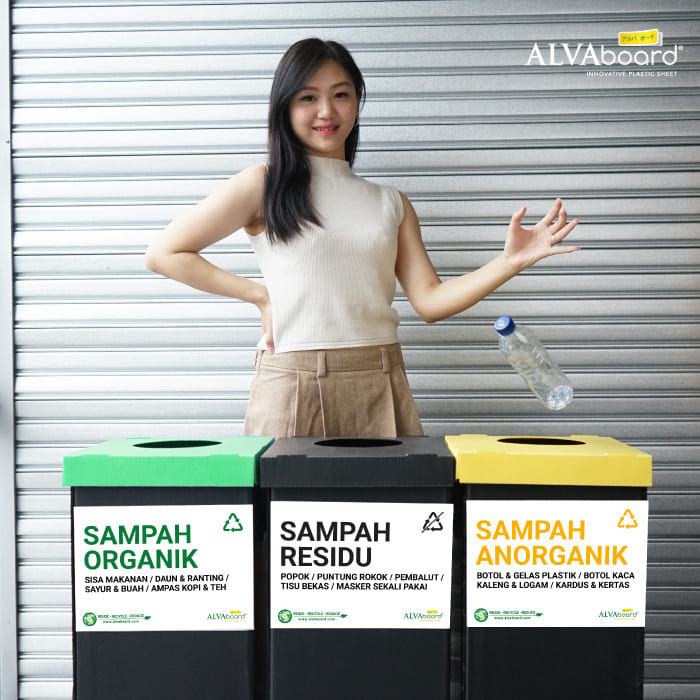
Advantages of Custom Waste Bins Made from Polypropylene Material
One of the materials widely used for information boards, signage, and waste sorting bins is corrugated polypropylene plastic. This material is known for being lightweight, water-resistant, rot-resistant, and durable for outdoor use.
Using ALVAboard corrugated plastic sheets, waste sorting bins can be custom-made to meet the needs of homes, schools, offices, public facilities, and neighborhood communities (RT and RW). The material features a printable surface, allowing organic, non-organic, and hazardous waste labels to remain clear and visible. It is also easy to clean when exposed to dust or water splashes.
ALVAboard’s moisture-resistant characteristics also help maintain the strength and shape of the bins even after long-term use. The material does not deteriorate easily when placed in semi-outdoor areas, making it a practical choice for supporting sustainable waste sorting programs.
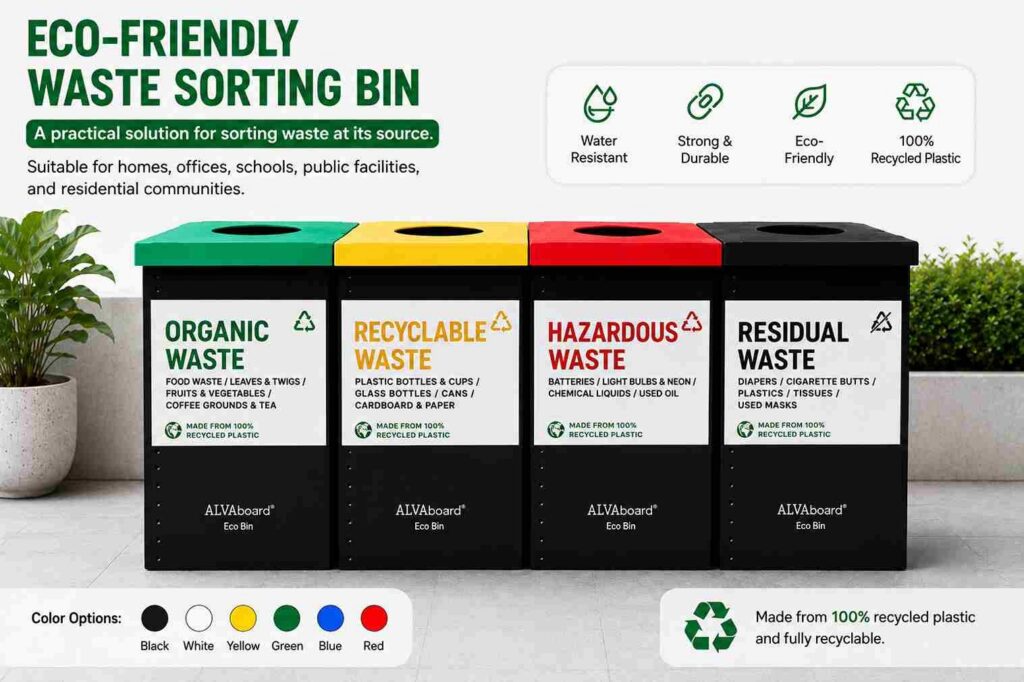
Discover environmentally friendly waste sorting solutions through the ALVAboard Eco Bin collection, designed to be customized for both small-scale operational needs and B2B procurement.
Let’s Support Bandung City’s Waste Sorting Program
Making waste sorting a habit at home is a simple step that creates a significant impact on the cleanliness of Bandung City. By understanding the categories of organic waste, non-organic waste, and household hazardous waste (B3), residents can support a more effective waste management process while reducing the burden on final processing sites. This habit also plays an important role in supporting the success of the Kang Pisman Program and creating a cleaner, healthier, and more comfortable environment for future generations.
As a manufacturer of corrugated polypropylene plastic, ALVAboard offers materials that are water-resistant, food-grade, termite-resistant, durable, and recyclable. These characteristics make the material highly flexible for customization into waste sorting bins, information boards, educational signage, and various public facility applications that require strong and easy to maintain materials.
[Contact Us] for customized waste sorting bins, environmental information boards, or ALVAboard material sheets that can be tailored to the needs of homes, offices, schools, and neighborhood communities (RT and RW).