A WIP box that deteriorates quickly can create a variety of operational problems. For example, when a box becomes dented during production, material flow can be disrupted, products may be damaged, and operators are forced to stop work to handle a situation that should never have occurred.
Fortunately, WIP box damage can be prevented. The root cause is often not the box quality alone, but rather a combination of material specifications, load capacity, and improper usage in the production environment.
Let’s take a closer look at the common causes and solutions.
Common Causes of Damaged or Dented WIP Boxes
1. The Material Does Not Match Operational Requirements
Boxes manufactured from materials that do not meet operational demands will deteriorate faster than expected.
Cardboard boxes, for example, are not designed for humid environments or repeated high-frequency use. When forced to operate under conditions beyond their intended specifications, cardboard boxes quickly lose their structural integrity.
Therefore, material selection should consider product weight, usage frequency per shift, production environment conditions, and the expected number of reuse cycles.
2. Loads Exceeding Capacity
Every WIP box has a maximum load capacity determined by its manufacturer.
When operators fill the box beyond this limit, the walls and base are subjected to stress beyond their structural capacity.
Over time, deformation accumulates until the box can no longer perform its intended function effectively.
3. Improper Stacking Practices
Stacking WIP boxes beyond safe heights, or placing loaded boxes on top of empty boxes that are not designed to support vertical loads, creates excessive pressure throughout the structure. In addition to damaging the boxes, unstable stacks significantly increase workplace safety risks.
4. Production Environment Conditions
High humidity, exposure to mild chemicals, extreme temperatures, and industrial dust all contribute to accelerated material degradation.
Cardboard boxes are particularly vulnerable to moisture. Even low-quality plastic boxes can deteriorate rapidly when consistently exposed to demanding environmental conditions.
Signs That a WIP Box Is No Longer Suitable for Use
Identifying early signs of damage can help prevent larger operational issues. Watch for the following indicators:
- Visible dents in specific areas. Consistent deformation in one location indicates excessive stress on that section.
- Cracks or tears. Structural damage on corners or side walls suggests the material can no longer safely support loads.
- Instability when stacked. Deformed boxes cannot be stacked securely and increase the risk of collapse.
- Material weakening or discoloration. Changes in color or surface texture may indicate environmental degradation over time.
Once these signs appear, continuing to use the box may put the WIP products inside at risk. Damaged boxes should be removed from circulation immediately.
For a more comprehensive evaluation guide, read our article on the characteristics of inefficient WIP boxes.
How to Prevent WIP Boxes from Getting Damaged Quickly
1. Use Materials That Match Your Requirements
WIP boxes are available in various materials, including cardboard, wood, solid plastic, and PP board.
For intensive production environments with high usage frequency, Polypropylene (PP) Board is one of the most recommended materials.
PP board boxes are strong, impact-resistant, waterproof, resistant to termites and mold, reusable, and capable of maintaining their shape even after dozens of usage cycles.
Learn more about PP corrugated plastic WIP boxes to better understand the advantages of this material.
2. Match Capacity to Actual Load Requirements
Determine the maximum weight of the products to be stored and select a box with a load capacity that exceeds that requirement.
Avoid choosing boxes based solely on minimum capacity. Always include a safety margin to accommodate potential load variations in real-world operations.
3. Implement Clear Handling SOPs
To ensure safe operation and maximize box lifespan, establish detailed handling procedures, including Proper lifting techniques, Prohibition of throwing or dropping boxes, and Maximum safe stacking heights
If necessary, provide training to ensure all operators understand and follow these procedures. Compliance should be evaluated periodically through direct observation on the production floor.
4. Establish Safe Stacking Systems
Set maximum stacking limits for each box type based on its technical specifications. For example, a 3 mm thick box may safely support stacking up to five loaded layers.
Clearly mark maximum stacking heights in temporary storage areas so operators can easily identify the limits without guesswork.
5. Evaluate Production Environment Conditions
Identify production areas with high humidity, chemical exposure, or extreme temperatures. Ensure that the WIP boxes used in these areas have material specifications suitable for actual operating conditions.
For example, beverage and wet-food production lines typically require PP board boxes because they are waterproof and do not weaken when exposed to daily moisture. Cardboard boxes in such environments will almost certainly deteriorate quickly and require frequent replacement.
ALVAboard WIP Boxes: A Durable Solution for Your Manufacturing Operations
As a trusted PP board manufacturer in Indonesia, ALVAboard provides customized WIP container and storage solutions designed to meet your production requirements, including dimensions, material thickness, and design configurations.
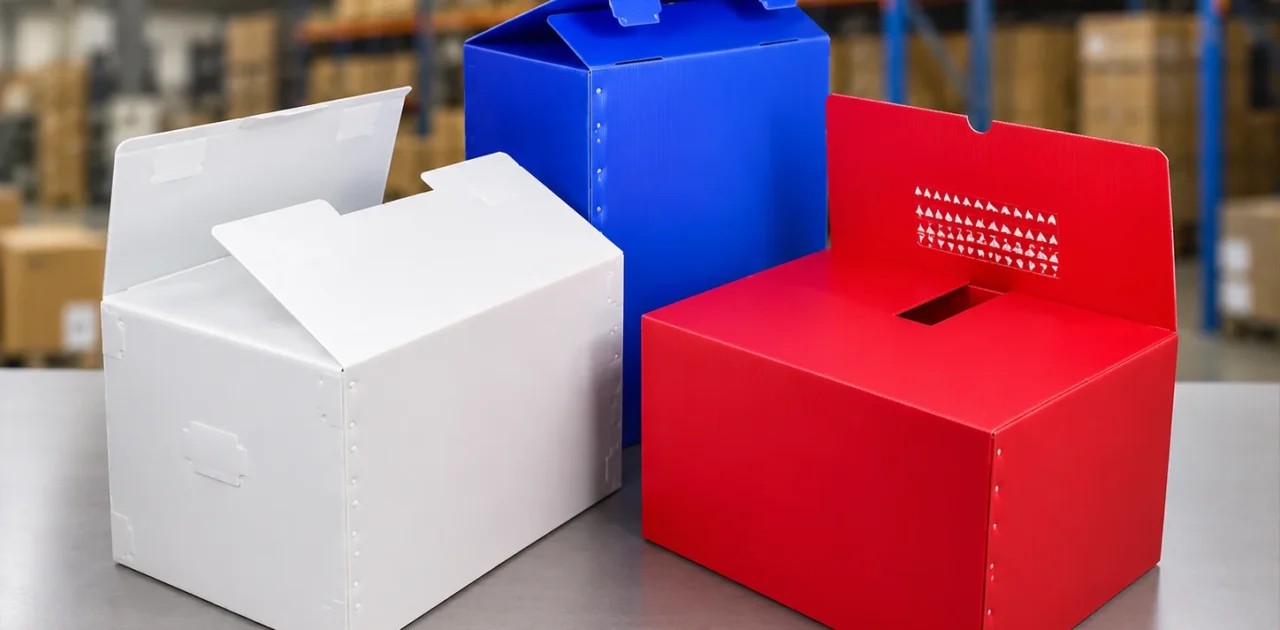
Three WIP box models are available to support different industrial applications:
WIP Box A
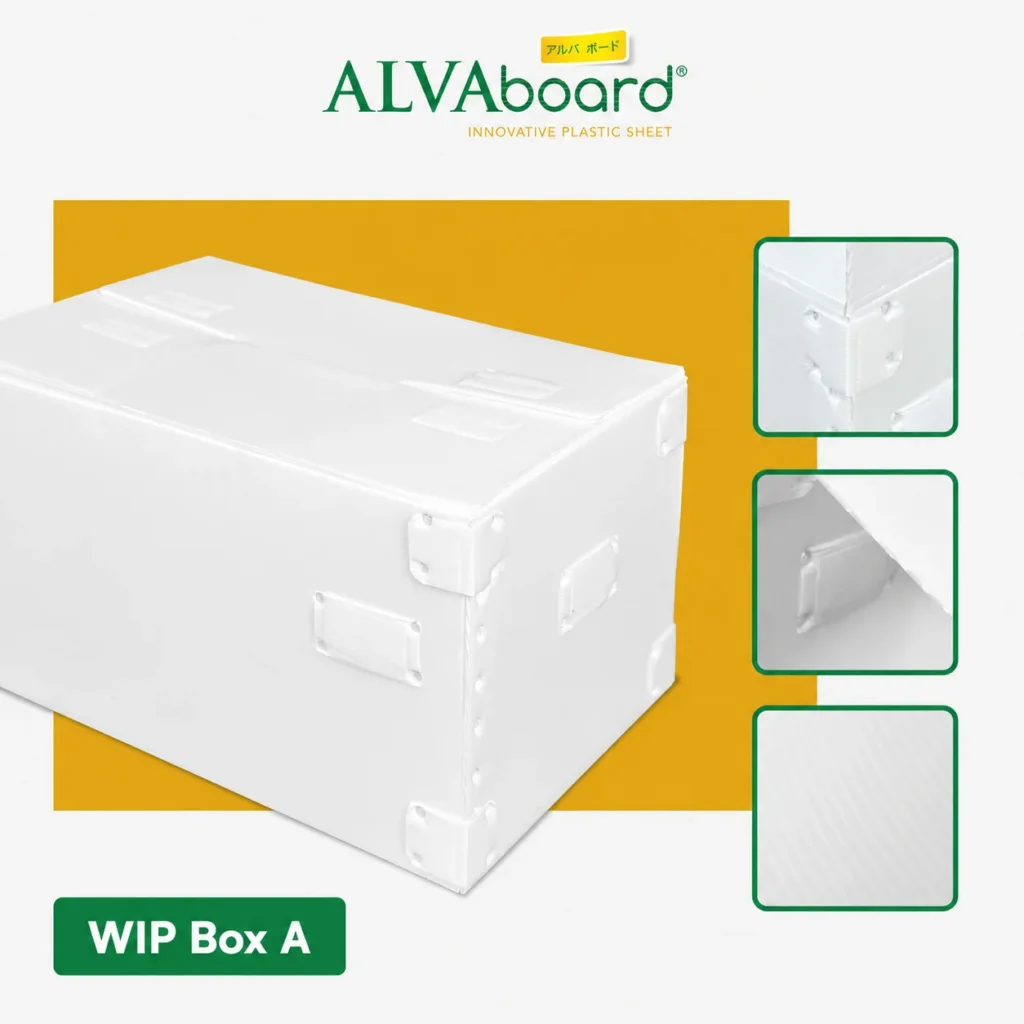
Designed for industrial applications requiring a thick and durable structure. Features including velcro lid fasteners for secure contents during transport, S/S-Rib channels for enhanced rigidity and impact resistance, and reinforced hinges for long-term durability and repeated use
WIP Box B
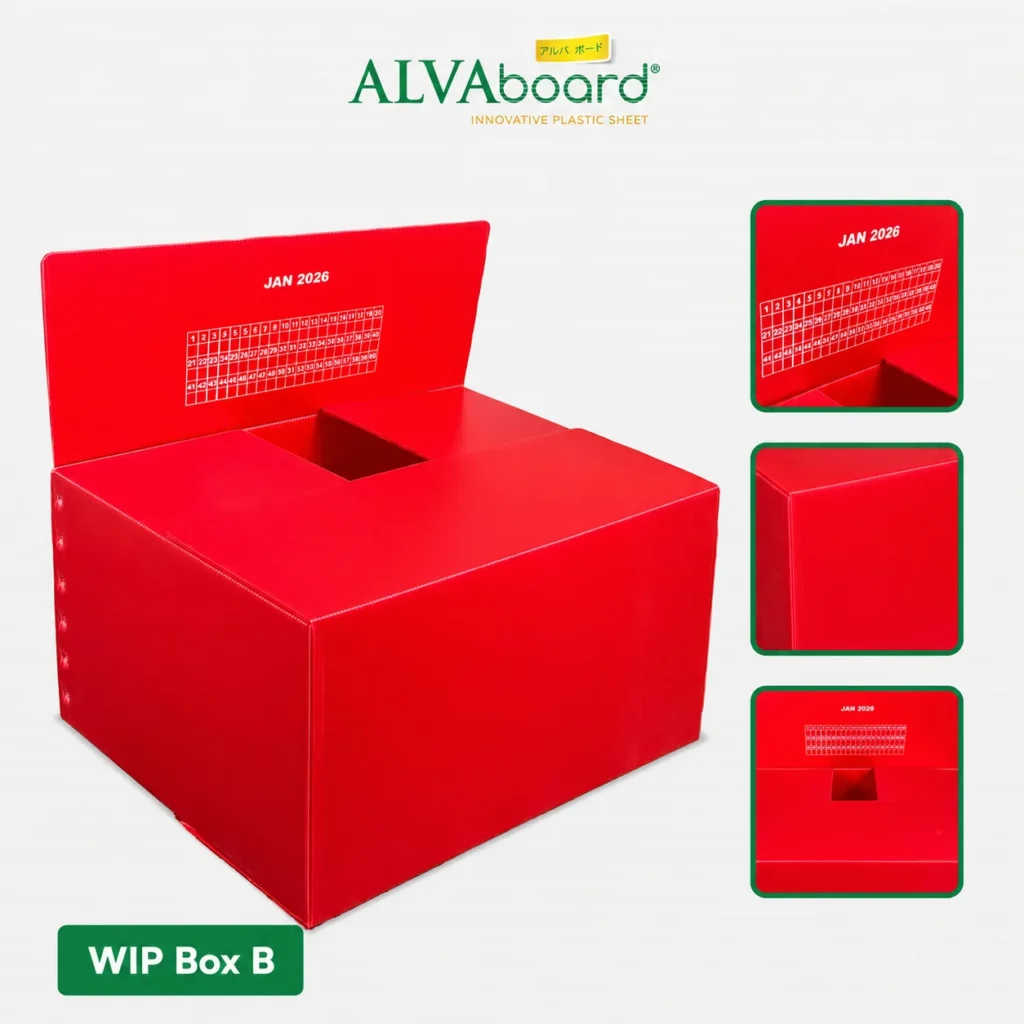
A sturdy and durable WIP box designed for large-scale production operations. It can be equipped with screen-printed markings to support visual identification systems on the production floor. Available in custom sizes and colors to meet the specific requirements of your industry.
ALVAbox Type D
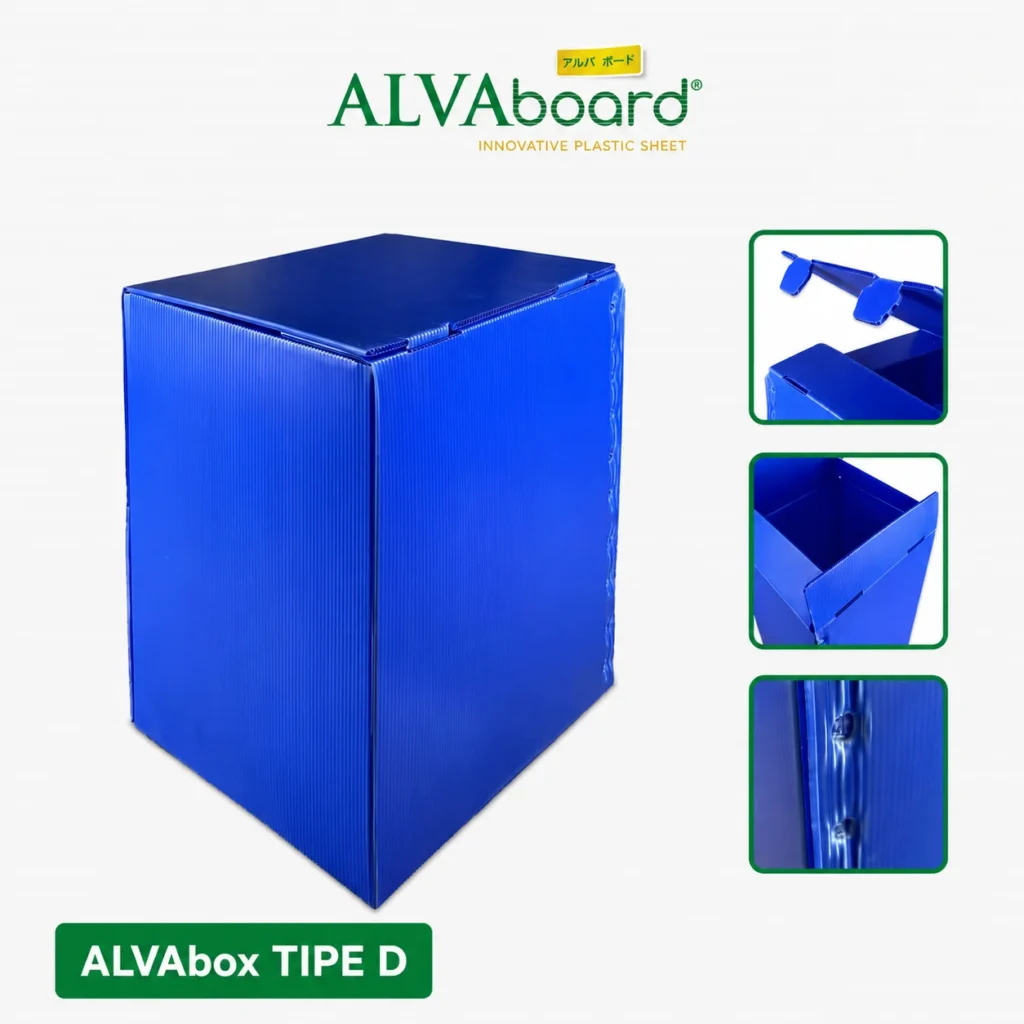
A variant designed with a corrugated-box-style structure that is significantly stronger and more durable than conventional cardboard boxes. Its foldable design helps save storage space when not in use, making it ideal for internal distribution and WIP storage with varying volume requirements.
All three variants are available in a wide range of colors and can be customized in size to seamlessly fit your existing material handling systems and production workflows.
✔️ Waterproof and moisture-resistant
✔️ Resistant to termites and mold
✔️ Stronger and more durable than ordinary cardboard
✔️ Reusable for long-term applications
✔️ Custom sizes, colors, and designs available
Consult with the ALVAboard team today via WhatsApp at +62 877-9310-2838 to find the ideal WIP box solution for your production line.