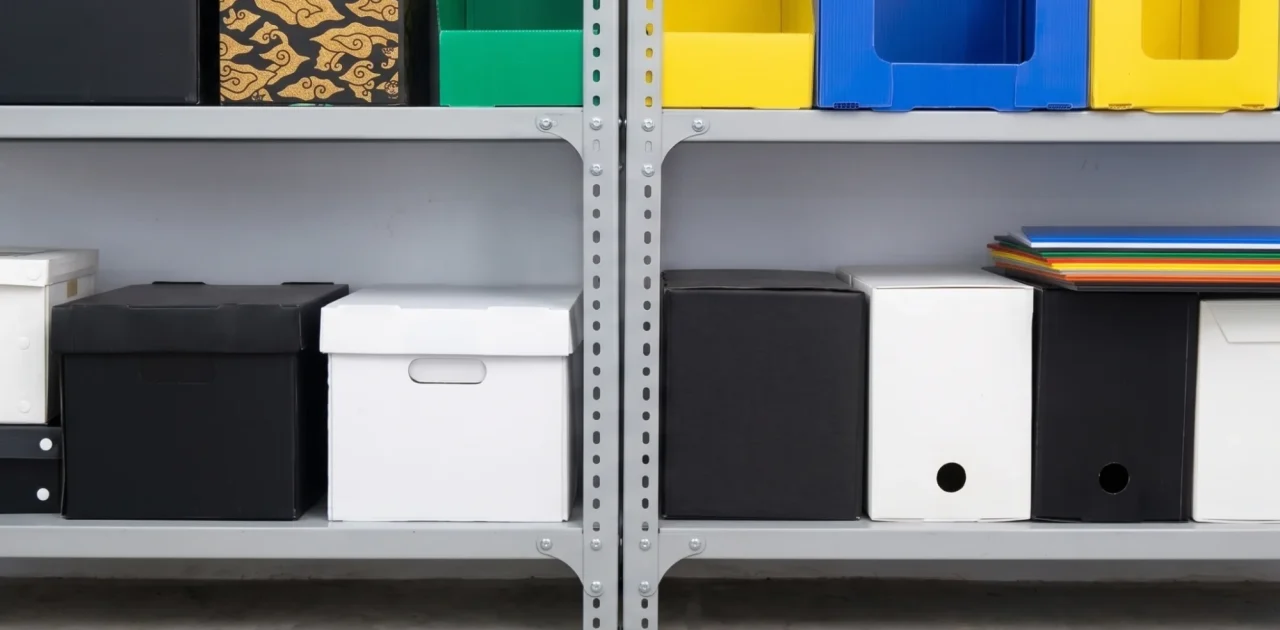
Industrial demand for packaging and logistics materials continues to evolve.
The standards used ten years ago are no longer sufficient to meet today’s operational demands.
Volume distribusi meningkat, frekuensi pengiriman lebih tinggi, dan tekanan untuk menekan biaya operasional semakin besar.
Conventional materials such as cardboard and wood are starting to show their limitations.
Cardboard is easily damaged by moisture and cannot be reused many times. Meanwhile, wood is heavy, difficult to standardize, and requires considerable maintenance costs.
These limitations are pushing industries to search for more efficient alternatives.
One material that is increasingly being adopted is polypropylene board, or PP board.
This material is widely used in FMCG, automotive, electronics, and logistics industries because it addresses needs that conventional materials cannot fulfill.
What Is a Polypropylene Board?
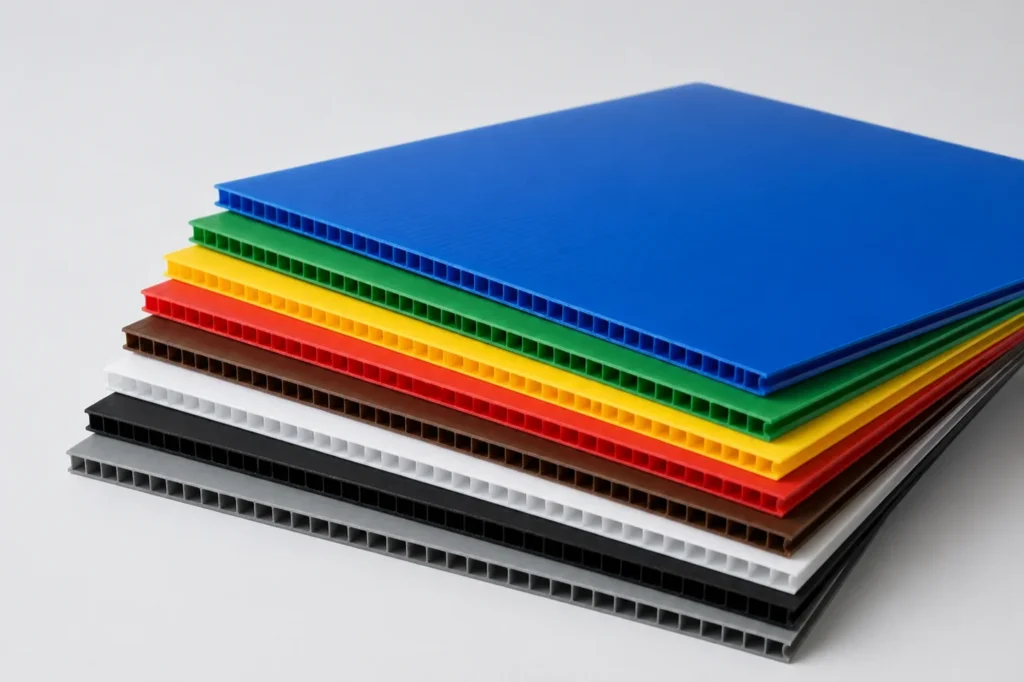
Polypropylene board is a hollow plastic sheet made from polypropylene (PP) material through an extrusion process.
Its internal structure consists of two flat outer surfaces connected by vertical walls, creating air cavities that provide high structural strength while remaining lightweight.
In industrial applications, this material is also known as PP corrugated sheet, corrugated plastic board, hollow plastic board, or polypropylene corrugated board.
All of these terms refer to the same material with similar characteristics.
Structurally, PP board resembles corrugated cardboard because of its hollow form, but there are important differences.
Cardboard is paper-based, absorbs water easily, and quickly loses strength. PP board, on the other hand, is plastic-based, water-resistant, and able to maintain its structural integrity much longer.
Compared to other common industrial materials, PP board is lighter than wood, stronger than cardboard, more moisture-resistant than both, and reusable for multiple cycles.
Why Are Industries Switching to Polypropylene Board?
1. More Durable for Repeated Use
A single PP board sheet can be reused dozens of times before replacement is needed.
Cardboard generally only lasts for one or two usage cycles before losing its structural strength.
This long-term durability changes the way companies calculate material costs. Instead of focusing on unit purchase price, businesses evaluate cost per effective usage.
When measured this way, PP board is usually far more economical than single-use materials.
2. Reduces Product Damage During Distribution
Packaging that maintains its shape and strength throughout the distribution process helps reduce product damage rates.
PP board boxes are resistant to dents, tears, and load capacity loss even after repeated loading and unloading cycles.
3. Lighter and More Efficient for Logistics
PP board has a lower density compared to wood and other rigid materials.
Its lightweight nature directly contributes to lower shipping costs and easier handling for warehouse operators.
In FMCG distribution systems handling thousands of units daily, even small handling time reductions can create significant cumulative savings.
4. Water-Resistant and Highly Durable
Polypropylene material does not absorb water or moisture from the surrounding environment.
This differs greatly from cardboard, which weakens in humid conditions, and wood, which absorbs moisture and changes dimensions.
Its water resistance allows PP boards to be used across various production and storage environments without material degradation.
Its non-porous surface is also easy to clean and sanitize, making it suitable for food-related applications.
5. Supports Efficiency and Sustainability
PP board supports sustainability goals in two important ways.
First, its reusable nature significantly reduces packaging waste generated by distribution activities.
Second, PP material is 100% recyclable. Once the product reaches the end of its lifespan, the material can enter the recycling stream instead of becoming waste.
For companies with ESG targets or sustainability commitments to international partners, PP board usage can contribute to sustainability reporting.
Applications of Polypropylene Board in FMCG and Logistics Industries
1. FMCG Industry
In the FMCG industry, PP board is commonly used for:
- Reusable distribution boxes replacing single-use cardboard in closed-loop supply systems
- layer pads between palletized product layers to improve load stability during transportation
- WIP (Work In Process) boxes for moving semi-finished products between production stations
2. Automotive Industry
PP board is used for packaging components and spare parts that are sensitive to impact and moisture.
Its durability and suitability for returnable packaging systems make it a standard solution in many automotive facilities.
3. Electronics Industry
Electronic components are highly sensitive to moisture, dust, and physical impact.
PP board offer more consistent protection than cardboard for high-value products such as PCBs, sensors, and electronic devices moving through long distribution chains.
4. Logistics and Warehouse Industry
Modern warehouses use PP board as pallet bases, product layer separators, and container dividers.
Its standardized dimensions allow seamless integration with rack systems, conveyors, and automated handling equipment.
Reusable layer pads for logistics safety and efficiency are among the most impactful applications in this sector.
5. Display and Promotional Needs
The printable surface of PP board makes it popular for retail displays, promotional signage, and exhibition partitions.
Its weather resistance and fade resistance make it suitable for both indoor and outdoor long-term use.
Advantages of PP Board Compared to Conventional Materials
| Aspect | Cardboard | Wood | PP Board |
| Water Resistance | Easily damaged | Absorbs water | Fully water resistant |
| Reusability | 1-2 times | Limited | Dozens of times |
| Weight | Lightweight | Heavy | Lightweight |
| Impact Resistance | Low | Medium | High |
| Logistic Efficiency | Low | Low | High |
| Recyclable | Yes | Difficult | 100% |
The table above shows that PP board excels not only in one aspect, but across multiple key parameters relevant to modern industrial distribution systems.
Factors to Consider Before Choosing PP Board
1. Material Thickness and Density
PP board is available in various thicknesses, ranging from 2 mm to 10 mm or more.
Thickness determines load capacity and protection level.
For light applications such as layer pads or signage, 3–4 mm thickness is usually sufficient.
For heavy industrial storage boxes or distribution systems, 5 mm or thicker is recommended.
2. Type of Application
Will the PP board be used for packaging, storage, layer pads, or display purposes?
Each application requires different specifications in terms of thickness, dimensions, and configuration.
3. Customization Requirements
Do standard market sizes meet your operational needs?
If not, suppliers offering custom cutting, printing, or product conversion services become important considerations.
Custom orders usually require a certain Minimum Order Quantity (MOQ).
4. Industry Standards and Food Grade Certification
For food-related applications, ensure the PP board material is certified food grade.
This is especially important for companies in the F&B, fisheries, agriculture, and pharmaceutical sectors.
5. Supplier Capacity and Production Consistency
Choose suppliers with stable production capacity and verified quality control systems.
For more detailed guidance on selecting the right layer pad supplier, including important technical evaluation criteria, ALVAboard provides useful references to support your supplier selection process
Start Improving Your Distribution Efficiency with PP Corrugated Sheet from ALVAboard
ALVAboard provides high-quality PP corrugated sheets that can be customized to meet your industry’s specific operational needs.
From a wide range of corrugated PP sheet products to finished applications, such as reusable layer pads and products that require layer pads in modern distribution systems
Consult your factory’s PP corrugated sheet needs with the ALVAboard team via WhatsApp at +6287793102838 today!