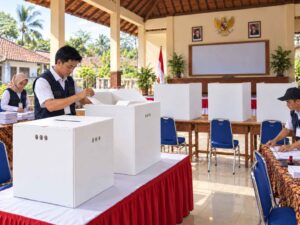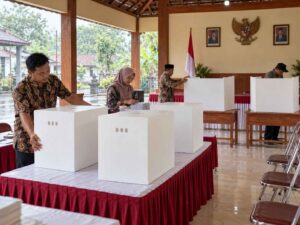
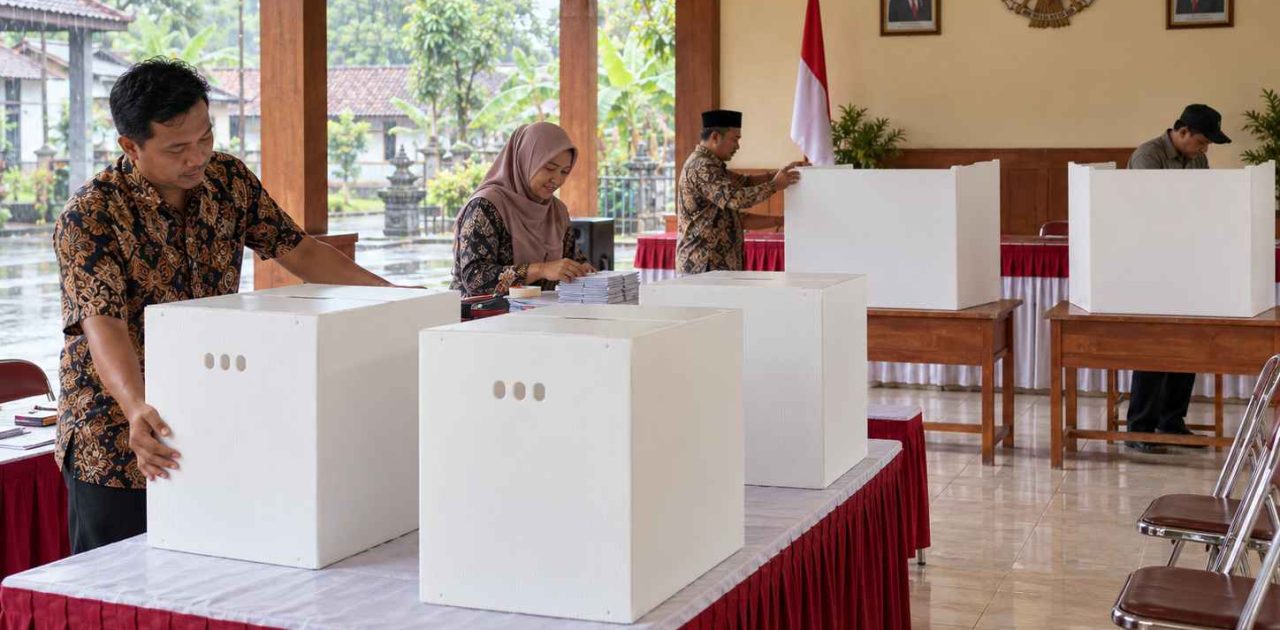
As the year draws to a close, village halls across Java are beginning preparations for village-level democratic elections. Election committees and Village Consultative Bodies (BPD) need to ensure that every stage runs smoothly, from voter registration to polling station preparations. The 2026 Village Head Election schedule across Java varies by region, with several voting dates scheduled between October and December 2026, particularly in West Java and Central Java. In addition to administrative preparations, voting booths and ballot boxes also require careful consideration, especially during the rainy season.
The 2026 Village Head Election: Eight-Year Terms and Village Regulations
Law No. 3 of 2024 on Villages stipulates that village heads serve eight-year terms from the date of inauguration, with a maximum of two terms. This provision represents one of the significant changes to village governance in Indonesia. Read the official document for Law No. 3 of 2024.
Village administration is also governed by Government Regulation No. 16 of 2026, which has been in effect since March 27, 2026. This regulation covers various provisions implementing the Village Law, including procedures for electing village heads. Further information is available through the Legal Documentation and Information Network (JDIH) of the Audit Board of Indonesia (BPK).
The stages and registration requirements for the 2026 simultaneous Village Head Elections should be verified against the regulations issued by each regency government. In general, the process may include forming an election committee, registering prospective candidates, verifying eligibility requirements, finalizing the list of candidates, conducting campaigns, holding the vote, and determining the election results.
2026 Village Head Election Schedule Across Indonesia
Below is a summary of regions with reported schedules or preparations for the 2026 Village Head Elections, based on information from local government sources and relevant agencies.
| Province | Regency | Number of Villages | Reported Schedule/Status |
| North Sumatra | Asahan | 43 | October 7, 2026; scheduled date has passed |
| North Sumatra | Humbang Hasundutan | 28 | October 22, 2026 |
| Riau | Kepulauan Meranti | 12 | October 8, 2026; voting has reportedly taken place |
| Jambi | Sarolangun | 39 | October 29, 2026 |
| Bengkulu | Mukomuko | 37 | November 2026; exact date not yet confirmed |
| Bangka Belitung Islands | Belitung | 13 | September 20, 2026; scheduled date has passed |
| West Java | Bekasi | 154 | Scheduled for September 22, 2026 |
| West Java | Cianjur | 46 | Scheduled for September 2026 |
| West Java | Sumedang | 93 | October 28, 2026 |
| West Java | Karawang | 67 | November 2026 |
| West Java | Subang | 165 | December 6, 2026 |
| Central Java | Wonosobo | 166 | November 2026; November 25 was reported as the election date |
| Central Java | Pemalang | 173 | November 8, 2026 |
| Central Java | Purbalingga | 184 | December 10, 2026 |
| Central Java | Semarang | 140 | December 14, 2026 |
| East Java | Gresik | 15 | Phase I scheduled for November 2026 |
| West Nusa Tenggara | West Sumbawa | 21 | October 25, 2026 |
Sources: antaranews.com, website.wonosobokab.go.id, purbalinggakab.go.id, jatengprov.go.id, dpmdesa.jabarprov.go.id, ortal.asahankab.go.id, tapem.merantikab.go.id, tribratanews.go.id, pemalangkab.go.id, gresikkab.go.id, ppid.sumbawabaratkab.go.id.
Note: Election schedules may change in accordance with local government decisions. Before relying on this information, please check the latest announcements from the relevant regency or village government. A scheduled date having passed does not automatically confirm that voting actually took place.
Village Election Logistics Challenges and Polling Station Equipment Requirements
Indonesia’s diverse geography means that election logistics preparations vary from region to region. Island communities require distribution plans that account for transportation constraints, while areas with high rainfall need to pay particular attention to storage conditions and equipment protection.
Ballot boxes and voting booths serve different purposes, but both are essential for a smooth voting process. Ballot boxes are used to collect ballot papers, while voting booths help maintain the secrecy of each voter’s choice.
Unsuitable materials may be more susceptible to damage when exposed to moisture, pressure, or repeated handling. Election committees should therefore consider material quality, dimensions, construction, ease of distribution, and whether the products meet the requirements established by the election organizers.
ALVAboard Voting Booths and Ballot Boxes for Polling Stations
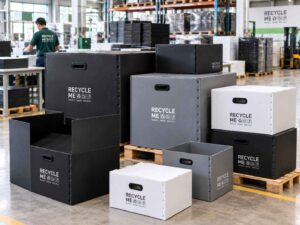
ALVAboard offers solutions made from corrugated polypropylene (PP) sheets, a lightweight, water-resistant plastic material. ALVAboard provides election ballot boxes and durable, water-resistant voting booths in a size of 40 × 40 × 55 cm. ALVAboard voting booths are designed to support polling station requirements while helping protect voter privacy. Meanwhile, ALVAboard ballot boxes are used to collect ballot papers in accordance with their specifications and intended applications.
ALVAboard develops polypropylene (PP) material solutions for a wide range of applications, including products that require water resistance and physical durability. When selecting ballot boxes and voting booths, election committees should still verify the dimensions, design, closure mechanisms, and compliance with the applicable Village Head Election requirements.
Water-resistant products can help reduce the risk of liquid exposure under appropriate conditions. However, water resistance does not guarantee that the contents will remain safe in every situation, particularly if the product is exposed to standing water, submerged, or not properly closed.
As a pioneer in sheet-plastic manufacturing, ALVAboard develops products for material protection and handling applications. With its production facility in Tangerang, ALVAboard positions itself as Indonesia’s largest PP board manufacturer and a trusted partner for material solutions. Explore more products on the official ALVAboard website.
How to Choose Ballot Boxes and Voting Booths for Village Head Elections
When selecting polling station equipment, election committees should consider its intended function, material, dimensions, and compliance with the organizer’s requirements. Ballot boxes and voting booths are not interchangeable, as each serves a different role in the voting process.
Here are five criteria to consider before purchasing polling station equipment.
1. Durable Materials That Meet Your Needs
Choose ballot boxes with a sturdy construction suitable for holding ballot papers. For voting booths, pay attention to structural stability to ensure they remain secure and functional throughout the voting process.
2. Protection Against Water and Moisture
Rainy weather can affect the storage and distribution of election equipment. Water-resistant materials are worth considering, but equipment should still be stored in a protected area and must not be left submerged in water.
3. Functional Dimensions and Design
Ballot boxes must have sufficient capacity for the expected number of ballot papers. Voting booths, meanwhile, should provide adequate space for voters to cast their ballots comfortably while maintaining privacy.
4. Easy to Transport and Store
Consider how easily the equipment can be arranged, distributed, and stored after voting concludes. This is particularly important for election committees responsible for managing equipment across multiple polling stations.
5. Compliance With Official Requirements
Ensure that ballot box and voting booth specifications meet the applicable technical requirements in each region. Products available on the market do not automatically comply with every Village Head Election requirement.
By considering these criteria, election committees can plan their logistical requirements more effectively. To explore product information and examples of their applications, visit ALVAboard’s Instagram account, @alvaboard.
Get Official ALVAboard Product Information
Every village has different logistical requirements, ranging from the number of items needed and container dimensions to distribution methods. Election committees and relevant agencies should therefore confirm product specifications before making purchasing decisions.
ALVAboard provides material solutions for a variety of applications, positioning itself as a brand that aims to deliver some of Indonesia’s best, highest-quality products tailored to specific needs. To explore available products, visit the ALVAboard Official Store on Shopee or follow @alvaboard on Instagram.
For information about product specifications and procurement, you can also contact the ALVAboard Team via WhatsApp at +626287793102838 or click the Contact Us button below.