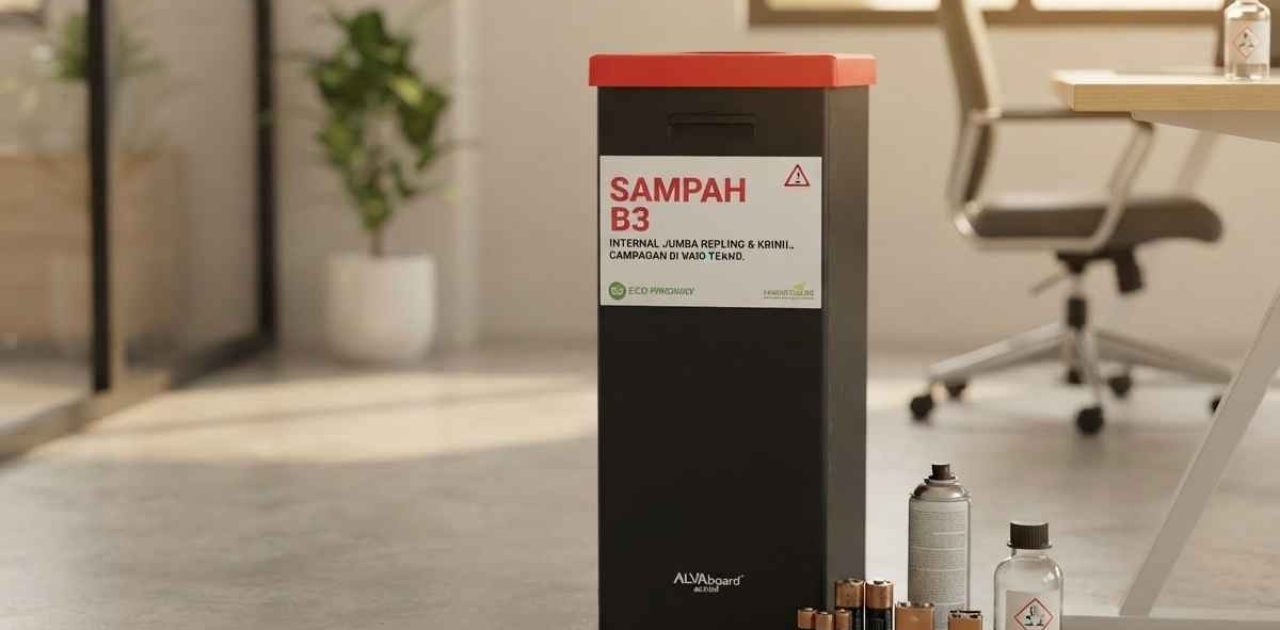
B3 waste is waste that contains Hazardous and Toxic Materials (B3) and requires special reduction and handling to prevent risks to humans and the environment. To support waste sorting at the source, ALVAboard Eco bin made from Polypropylene (PP) Corrugated Sheet can be used as a sorting container that is water-resistant, lightweight, sturdy, and easy to clean.
Understanding the Categories and Characteristics of B3 Waste
B3 waste needs to be identified based on its source, content, and characteristics, not merely by its physical form. Under Government Regulation (PP) No. 22 of 2021, the government regulates, among other things, the management of B3 Waste and non-B3 Waste as part of environmental protection and management.
For the context of household waste and public facilities, the more specific regulation is Minister of Environment and Forestry Regulation (Permen LHK) No. 9 of 2024 concerning the Management of Waste Containing Hazardous and Toxic Materials and Hazardous and Toxic Waste. This regulation stipulates that waste containing B3 may include household products containing B3 that are no longer used, their used packaging, electronic goods that are no longer used, as well as other products or packaging containing B3.
Therefore, examples of B3 waste that may be encountered in daily activities include the following groups.
1. Products Containing Hazardous Materials
Used batteries, certain cleaning products, aerosols, and household products containing hazardous materials need to be considered before disposal. Products that are no longer used should not be immediately mixed with general waste.
2. Electronic Goods That Are No Longer Used
Small electronic devices that are damaged or no longer used are included in one of the categories mentioned in Permen LHK No. 9 of 2024. Examples may include small electronic devices, certain lamps, or electronic components that are no longer used.
3. Expired or Spilled B3 Products or Materials
B3 materials that have expired, spilled, or no longer meet the specifications for use require more careful handling. Such conditions should not be treated in the same way as ordinary household waste.
It is important to distinguish waste containing B3 from B3 Waste generated from business or operations. Permen LHK No. 9 of 2024 explicitly states that waste containing B3 and/or B3 Waste within the scope of this regulation does not include waste originating from business and/or activity residues containing B3.
Risks of Mixing B3 Waste with Organic Waste
Mixing waste containing B3 with organic or general waste can increase the risk of exposure and make subsequent handling processes more difficult.
When a container contains materials that may leak, liquids can contaminate surfaces, soil, or the surrounding environment. Risks may also arise when items such as batteries or electronic components enter the waste stream and are subsequently compacted, moved, or processed without sorting.
From an occupational safety perspective, waste workers also need protection from objects whose contents are unknown. Packaging that still contains chemical residues, for example, may pose a risk when opened or when leakage occurs.
Therefore, sorting at the source is an important step. A special container does not automatically make waste safe, but it helps create a more organized sorting system before the waste is handed over to the appropriate waste management party.
Practical Sorting Solution with ALVAboard Eco bin
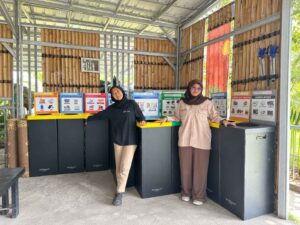
ALVAboard Eco bin is a waste sorting bin made from Polypropylene (PP) Corrugated Sheet, developed to help organize waste according to its category.
PP material is water-resistant and does not easily absorb liquids like porous materials. For operational needs, this characteristic makes the Eco bin surface easier to clean when dirt or minor spills occur.
Water and Light Chemical Resistant Material
ALVAboard Eco bin features 100% water resistance, leak resistance, moisture resistance, and resistance to light chemicals according to the product specifications. These characteristics make it relevant for areas that require an easy-to-maintain sorting container.
Polypropylene material is also lightweight, allowing the Eco bin to be moved when the layout of a work area or facility changes. For safety, hazardous chemicals must still be handled according to their characteristics and management procedures; the Eco bin serves as a sorting tool, not a replacement for specialized B3 Waste storage or processing facilities.
Compact, Modular, and Environmentally Friendly Design
ALVAboard Eco bin uses a flat-pack or knockdown concept, making it more practical to store and distribute. Once assembled, the container can be used to support a sorting system based on the waste categories established by the waste management party.
Color and label options can also help distinguish waste streams. For waste containing B3, the color red can be used as a visual identification according to the sorting system implemented at the location.
From an environmental perspective, Polypropylene material has a 100% recyclable characteristic, allowing the material to be directed to the recycling process at the end of its useful life according to the available waste management system.
To view the available products and purchasing channels, information about the Eco bin can be found through the official ALVAboard Shopee store.
ALVAboard Eco bin Specification Parameters for B3 Waste
ALVAboard Eco bin is designed with several characteristics that support everyday waste sorting needs. Its main material is PP Corrugated Sheet, featuring water resistance, lightweight construction, sturdiness, and easy mobility.
For B3 waste identification, the red color variant can be used as a visual marker within the sorting system implemented by companies, facilities, schools, or households. Labels should still be clearly displayed so users understand the types of waste that may be placed inside.
The flat-pack or knockdown system helps improve storage and shipping efficiency. Once assembled, the Eco bin can be placed in an easily accessible area while remaining protected from unnecessary access.
The material also has characteristics that make it resistant to light chemical liquids, water-resistant, and less prone to moisture. However, if there are liquid, corrosive, reactive, flammable B3 materials, or materials that require special handling, managers should not rely solely on a general-purpose container. Handling must follow applicable safety requirements and appropriate management channels.
Information about the material and various product applications can be found through the official ALVAboard website as a reference before determining sorting requirements.
Application of Eco bin for Business and Household Operations
Eco bin can be applied in various environments that require a more organized sorting system, ranging from offices, schools, healthcare facilities, and production areas to homes.
In the workplace, Eco bin can be placed at points where certain types of waste are generated, so employees do not need to mix all types of waste in a single container. For facilities with activities that have the potential to generate B3 Waste, the sorting system should be accompanied by SOPs, waste type identification, staff training, and a handover channel to the appropriate waste management party.
At home, Eco bin can be placed in areas such as garages, storage rooms, or collection points for items that are no longer used. Used batteries and small electronic goods, for example, can be separated from other household waste before being directed through the available waste management system.
ALVAboard develops Eco bin using PP Corrugated Sheet material through its production facility in Tangerang. This manufacturing experience forms part of ALVAboard’s positioning as a trusted pioneer in Polypropylene-based solutions for various waste sorting and material management needs.
With an integrated production and product development system, ALVAboard is committed to providing high-quality solutions while considering functionality, ease of use, and sustainability aspects.
Create a Clean and Safe Environment with ALVAboard
B3 waste sorting starts with simple actions: identifying the type of waste, separating it from general waste, using an appropriate container, and ensuring that the waste is handed over through the proper management channel.
ALVAboard Eco bin can help provide a clear and easy-to-use sorting point. Its water-resistant, lightweight, sturdy, and recyclable PP Corrugated Sheet material offers characteristics that are relevant for everyday use.
However, a container is only one part of the system. For B3 Waste or materials that pose specific risks, managers must still follow applicable safety procedures, regulations, and management channels.
PP No. 22 of 2021 is one of the regulatory foundations for B3 Waste management, while Permen LHK No. 9 of 2024 provides more specific provisions regarding waste containing B3 and/or B3 Waste. Both are important to understand so that waste sorting activities are not only orderly but also comply with the applicable environmental management framework.
ALVAboard Eco bin made from Polypropylene helps provide a water-resistant, lightweight, sturdy, and easy-to-organize sorting container. It is suitable for the operational needs of companies, facilities, schools, as well as households that require a more structured waste sorting system. Contact the ALVAboard team via WhatsApp +6287793102838 or click Contact Us for customization needs for B3 waste bins, waste sorting containers, or ALVAboard material sheets that can be customized according to your needs.