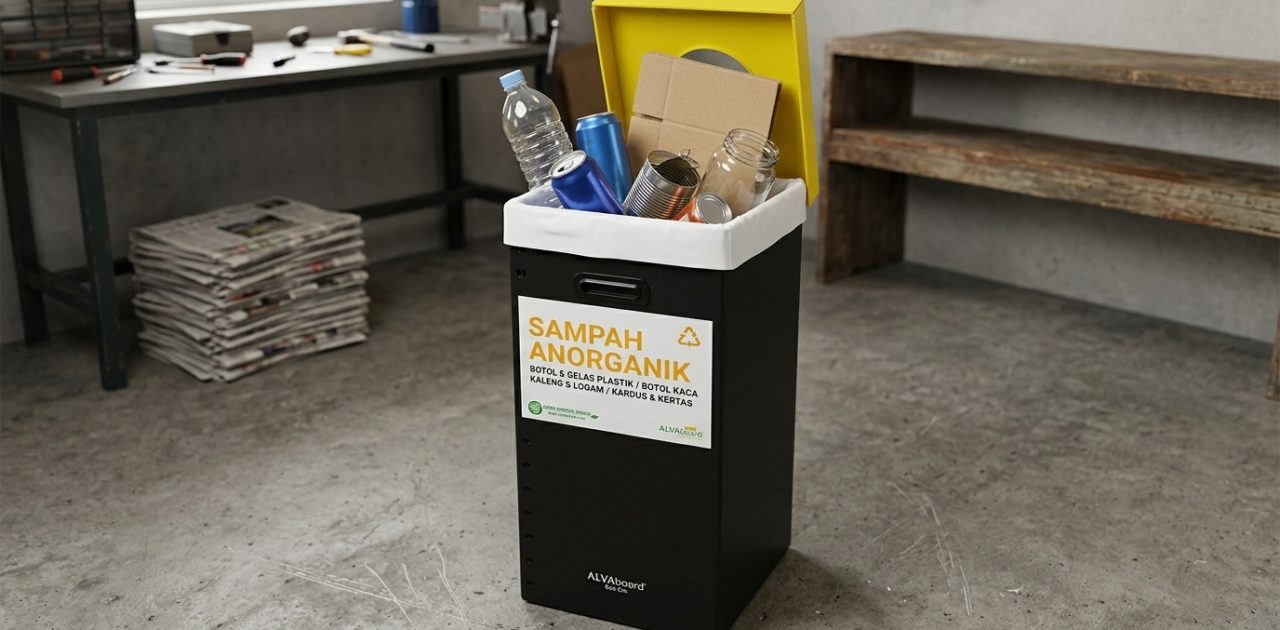
Non-organic waste is one of the most common types of waste generated from daily activities. Plastic bottles, beverage cans, food packaging, and broken glass are examples frequently found in homes and workplaces. Although the amount continues to increase, many people still do not understand what non-organic waste is, its characteristics, and why sorting it from the beginning is essential to support the recycling process.
Unlike organic waste, which can decompose naturally, non-organic waste takes a very long time to break down. If not managed properly, these materials can accumulate in landfills and potentially pollute the environment. Therefore, understanding the different types of non-organic waste and how to sort them is a simple step that provides significant benefits for environmental sustainability.
Definition of Non-organic Waste and Its Main Characteristics
The definition of non-organic waste refers to waste that originates from non-biological materials or industrially processed materials that do not decompose easily through natural processes. These materials have a stronger structure than organic materials, requiring decades or even hundreds of years to degrade if disposed of directly into the environment.
The main characteristic of non-organic waste is its resistance to decomposition. Plastic, metal, glass, and various synthetic materials do not break down in a short period, making special handling necessary. On the other hand, many types of non-organic waste still have economic value because they can be processed into raw materials for new products through recycling systems.
In daily life, examples of non-organic waste at home are highly diverse. Drinking water bottles, plastic cups, shopping bags, food cans, cardboard, paper, detergent containers, shampoo bottles, and electronic product packaging are materials commonly generated by households almost every day.
When this waste is separated according to its material type, the collection and recycling processes become much easier. On the other hand, if all waste is mixed together in the same container with food scraps or organic waste, the quality of the recyclable materials decreases, reducing their potential for reuse.
Types of Non-Organic Waste Commonly Found
Not all non-organic waste has the same characteristics. Some materials can still be processed into new products, while others require special handling because they are difficult or not yet economically feasible to recycle.
Recyclable Non-Organic Waste
This type of waste still has high value, making it widely collected by waste banks and recycling industries. Materials such as PET plastic bottles, cardboard, paper, aluminum cans, iron, glass, and certain types of plastic can be processed into various new products.
Separating these materials at home helps keep them clean and maintain their quality. Packaging that has been rinsed and dried is also more easily accepted by recycling facilities, allowing the recycling process to run more effectively.
Non-Recyclable Non-Organic Waste
Not all non-organic materials can be easily recycled. Certain types of multilayer plastics, specific types of styrofoam, packaging combined with other materials, and severely damaged materials often require special handling because their recycling process is more complex.
Even so, sorting remains necessary so that these types of waste do not contaminate other materials that are still recyclable. In this way, waste management efficiency can continue to improve while reducing the amount of waste that ends up in landfills.
Understanding the types of non-organic waste makes the sorting process easier at home and in the workplace. This simple step serves as an important foundation for supporting recycling activities while reducing the amount of waste that ends up in landfills.
In the next section, the discussion will explain the fundamental differences between non-organic and organic waste, how to manage non-organic waste wisely, and choosing sturdy waste sorting bins, long-lasting, and suitable for long-term use.
Fundamental Differences Between Non-Organic and Organic Waste
Many people still assume that all waste should be managed in the same way. In fact, understanding the difference between organic and non-organic waste is the first step toward developing more effective waste sorting habits.
Organic waste comes from natural materials such as food scraps, leaves, or fruit peels that can decompose naturally within a relatively short period. In contrast, non-organic waste comes from industrially processed materials or non-biological materials that require a very long time to decompose. Plastic bottles, cans, glass, and metal are examples of materials that can remain in the environment for decades or even hundreds of years if not properly managed.
These differences in characteristics also result in different management methods. Organic waste is better suited for composting, while non-organic waste has significant potential to be recycled into raw materials for new products. When these two types of waste are separated at home, the waste management process becomes more efficient, and their economic value can be better preserved.
Smart Ways to Manage and Recycle Non-Organic Waste
Managing non-organic waste begins with a simple habit: separating it from organic waste as soon as it is discarded. This step helps maintain the quality of the materials so they remain suitable for processing through recycling systems.
Plastic bottles, beverage cans, cardboard, and metal packaging should be cleaned before being placed in sorting containers. Packaging that is free from food residue or liquids is more easily accepted by waste banks and recycling facilities.
Many non-organic materials still have economic value. Plastic can be processed into various new products, metals can be melted down and reused, while cardboard and paper can be processed into raw materials for industry. By consistently sorting waste, communities help reduce the use of natural resources while supporting a more sustainable circular economy.
Durable and Sturdy Non-Organic Waste Sorting Container Solutions
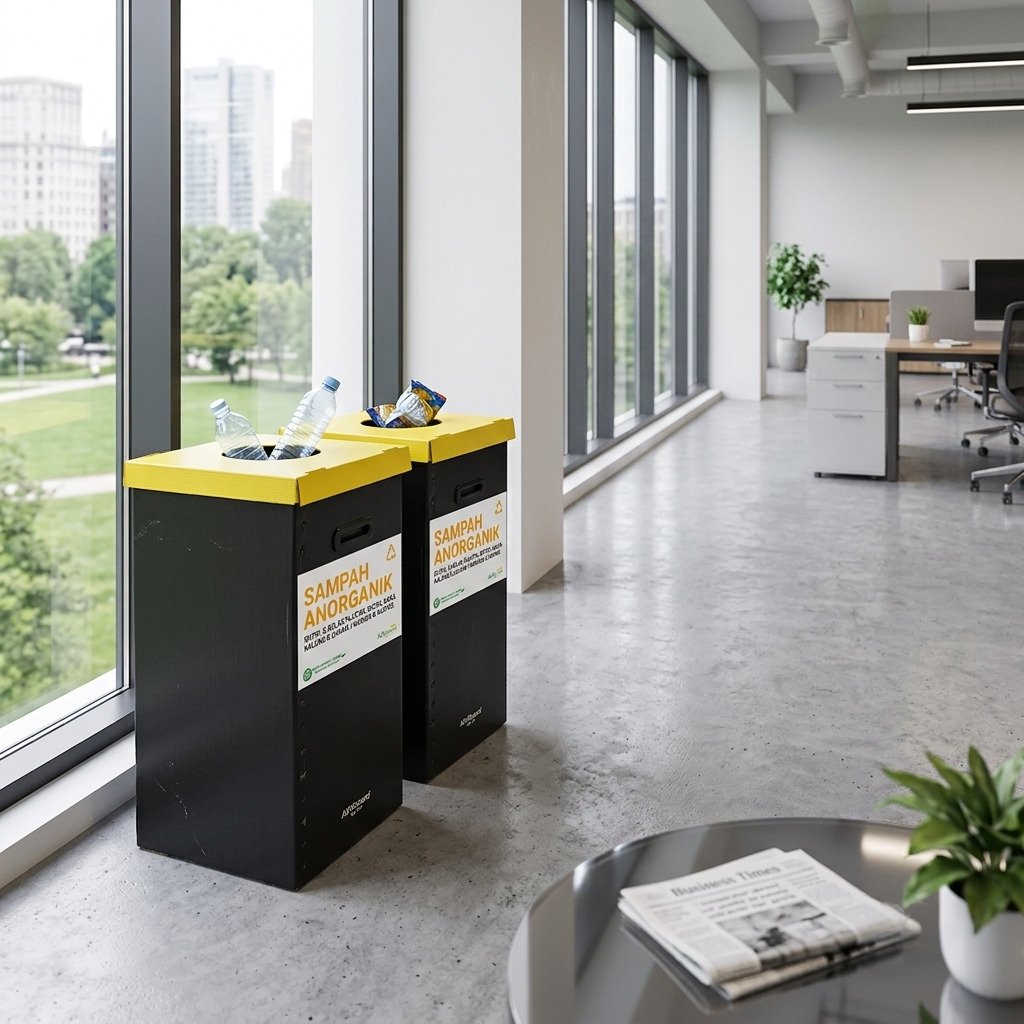
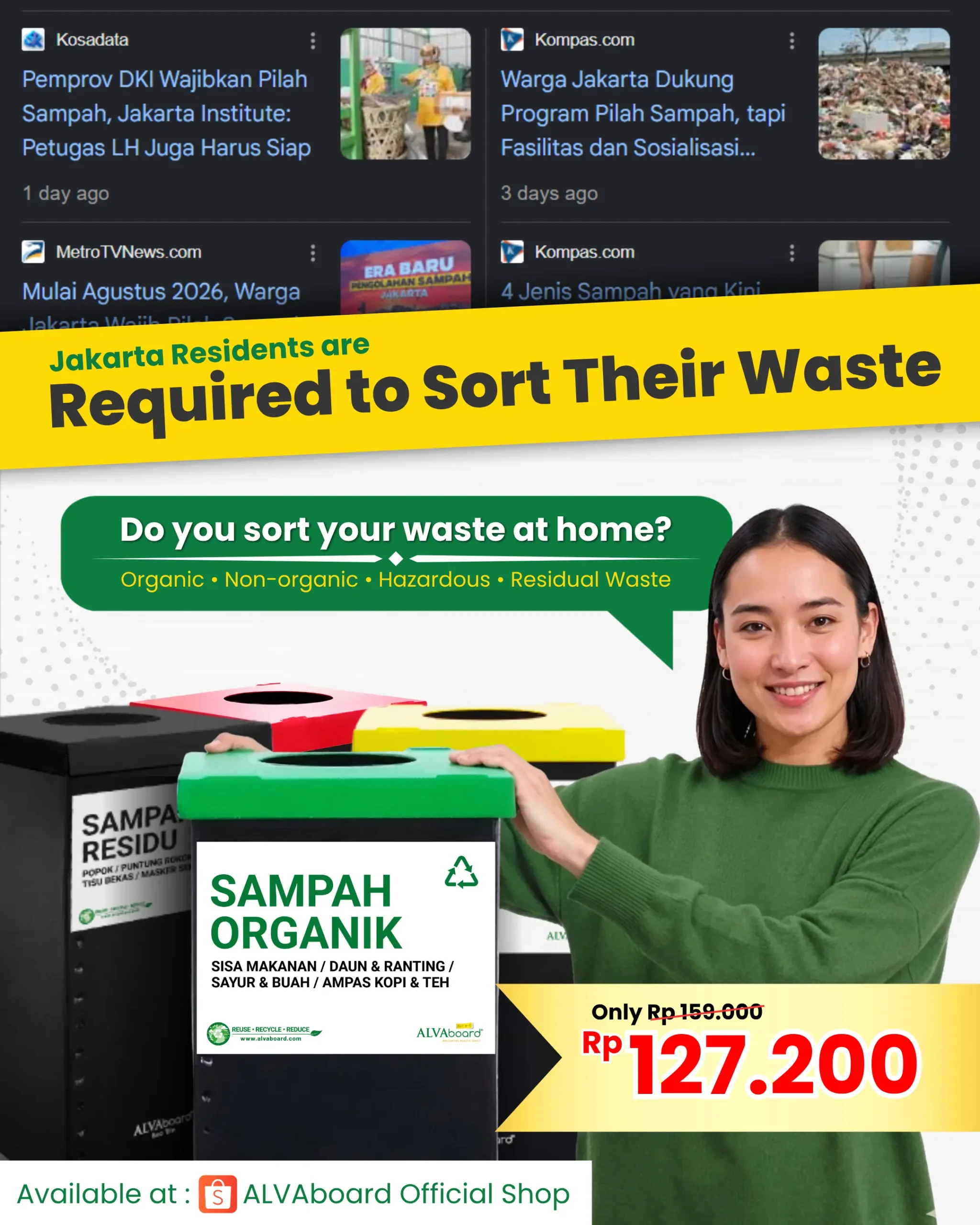
ALVAboard corrugated plastic non-organic waste sorting container that is waterproof, durable, and recyclable.
The waste sorting process becomes more effective when supported by appropriate containers. Non-organic waste such as glass bottles, cans, or rigid packaging is often heavier than organic waste. If cardboard or other easily damaged materials are used, they may tear, dent, or even collapse due to impact and moisture.
Therefore, using durable non-organic waste sorting containers is a more practical solution for long-term use. Durable material, waterproof, and easy to clean help maintain the cleanliness of the sorting area while reducing the need for frequent container replacements.
Advantages of ALVAboard Polypropylene Material for Custom Waste Bins
The material used to manufacture waste bins plays an important role in maintaining durability, cleanliness, and ease of maintenance, especially for long-term use. Compared to conventional materials that easily absorb water or become damaged by impact, ALVAboard polypropylene corrugated plastic offers a stronger and more practical solution for waste sorting needs in homes, offices, schools, and public facilities.
One of its main advantages is that it is waterproof, making it resistant to damage when used to hold damp waste or when exposed to rain in outdoor areas. Its surface also does not absorb liquids, making it easier to clean and helping keep waste bins hygienic.
ALVAboard polypropylene material also features a lightweight yet sturdy structure. This characteristic enables it to support the weight of plastic bottles, cans, cardboard, and various types of non-organic waste without denting, tearing, or breaking easily. Its lightweight design also makes the waste bin easier to move whenever needed.
In terms of durability, ALVAboard is designed to be long-lasting, termite-resistant, and highly resistant to moisture and changing weather conditions. This makes it suitable for use as a waste sorting bin in both indoor and outdoor areas with high usage frequency.
Another advantage is its smooth surface, which makes it easy to print on or apply labels as needed. Waste bins can be customized with colors, logos, and category labels such as organic, non-organic, and hazardous waste (B3), making the waste sorting process easier while supporting a more organized waste management program.
As an added value, ALVAboard is manufactured using food-grade, hygienic, recyclable polypropylene material designed for long-term repeated use. These characteristics make it an ideal choice for anyone looking to implement a cleaner, more durable, and environmentally friendly waste sorting system.
If you need polypropylene corrugated plastic sheets to manufacture waste sorting bins, educational boards, or various other custom applications, ALVAboard also offers products that can be conveniently ordered through the ALVAboard Official Store on Shopee. This solution makes it easier for you to obtain high-quality materials for household, school, office, or business projects through a simpler and more secure ordering process.
Manage Non-Organic Waste with Proper Sorting
Understanding what non-organic waste is, is the first step toward developing more responsible waste management habits. By recognizing its characteristics, types, and recycling methods, every household can help reduce the amount of waste that ends up in landfills while increasing the reuse of valuable materials.
Effective waste sorting also requires the right supporting facilities. ALVAboard offers high-quality polypropylene corrugated plastic materials that are strong, impact-resistant, waterproof, hygienic, recyclable, and easy to customize into various waste sorting bin solutions for homes, offices, schools, and industrial areas.
[Contact Us] for custom non-organic waste bins, waste sorting containers, or ALVAboard material sheets designed to meet your project requirements.