Plastic waste is one of the most common types of waste generated by households every day. It comes from various sources, including food packaging, beverage bottles, and shopping bags.
If not managed properly, plastic waste accumulates and becomes difficult to decompose. The good news is that much of the plastic waste generated at home can still be reused or recycled, as long as it is properly separated and managed.
Overview of the Plastic Waste Issue
The plastic waste problem in Indonesia is not a small issue. Based on a study by researchers from the University of Leeds published in the journal Nature in September 2024, Indonesia produces 3.4 million metric tons of plastic pollution annually and ranks as the third-largest plastic pollution contributor in the world.
At the household level, SIPSN 2024 data shows that plastic waste accounts for 19.64% of the total national waste composition, making it the second-largest waste category after food waste. Even more concerning, 350,000 tons of plastic waste entered Indonesian oceans during 2024 alone.
Poorly managed plastic waste contaminates soil, water, and marine environments, and can eventually return to humans through the food chain. Learn more about non-biodegradable waste and its long-term environmental impacts.
Why Does Plastic Waste Need to Be Managed Properly?
There are several reasons, including:
- Plastic takes a very long time to decompose.
Plastic bottles can remain in the environment for hundreds of years. During this time, plastic does not completely disappear but breaks down into smaller particles known as microplastics. Unfortunately, microplastics are much harder to remove and can easily enter the food chain. - Indonesia produces a very large amount of plastic waste.
Based on SIPSN 2024 data, plastic waste contributes 19.64% of Indonesia’s total annual waste generation, which reaches 31.9 million tons per year. This means approximately 6.2 million tons of plastic waste are generated annually, or more than 500,000 tons every month.
From this amount, around 350,000 tons enter Indonesian oceans every year, polluting marine ecosystems and threatening aquatic life.
- Mixed plastic waste is difficult to recycle.
Plastic contaminated with food residue or mixed with other types of waste becomes difficult for recycling facilities to process. As a result, plastic materials that could actually be reused often end up in landfills. - Plastic still has economic value when properly separated.
Plastic bottles, plastic cups, and certain packaging materials can be collected through waste banks and generate economic value. However, this is only possible when plastic waste is clean and separated from other waste types. Read more about the importance of waste recycling to understand its broader benefits.
Easy Ways to Manage Plastic Waste at Home
1. Separate Plastic Waste from Other Types of Waste
Provide a separate waste bin specifically for plastic materials so they do not mix with food scraps or other wet waste.
Waste separation from the beginning determines whether plastic can be processed further or not.
Read the complete guide on proper waste sorting as an initial reference.
2. Clean Packaging Before Storage
Rinse plastic bottles, cups, and containers before placing them into the plastic waste bin.
Clean packaging is easier to recycle and prevents unpleasant odors or pests from appearing in storage areas.
3. Sort Plastic Based on Type Whenever Possible
Plastic consists of different types, such as PET, HDPE, PP, and others, each requiring different recycling processes.
Whenever possible, separate plastics based on the recycling codes usually printed on the bottom of packaging. This helps recycling facilities process materials more efficiently.
4. Reuse Packaging That Is Still Suitable
Before throwing plastic items away, check whether they can still be reused.
Thick plastic bottles, durable food containers, or reusable shopping bags can often be used multiple times before disposal.
5. Send Plastic Waste to Waste Banks or Recycling Facilities
Many cities in Indonesia already have waste banks or plastic recycling collection facilities.
Send separated and cleaned plastic waste to ensure these materials are recycled properly instead of ending up directly in landfills.
6. Avoid Mixing Plastic with Food Waste
This is one of the biggest factors reducing the recycling value of plastic waste.
Food residue attached to plastic packaging makes cleaning and processing much more expensive and complicated.
Make it a habit to finish or dispose of food leftovers before throwing away the packaging.
7. Reduce Single-Use Plastic Consumption
The best way to manage plastic waste is to reduce the amount generated from the beginning.
Use reusable shopping bags, refillable drinking bottles, and reusable food containers to minimize single-use plastics entering your household every day.
Types of Plastic Waste That Can Generally Be Recycled
Not all plastic materials can be recycled, but the following types are generally accepted by waste banks or recycling facilities:
- Plastic beverage bottles (PET/PETE): Mineral water bottles and soft drink bottles.
- Soap or shampoo bottles (HDPE): Thicker containers commonly used for personal care products.
- Plastic cups: Single-use beverage packaging cups.
- Certain food containers: Such as yogurt containers, margarine containers, or other food packaging made from PP plastic.
Make sure all plastic materials are cleaned before collection and recycling. Read more about inorganic waste to understand different types of recyclable materials.
Start with the Right Waste Bin Using ALVAboard Eco Bin!
One of the biggest challenges in managing plastic waste at home is the lack of an easy and consistent waste separation system.
When only one waste bin is available, all waste types become mixed, and the benefits of waste sorting are lost.
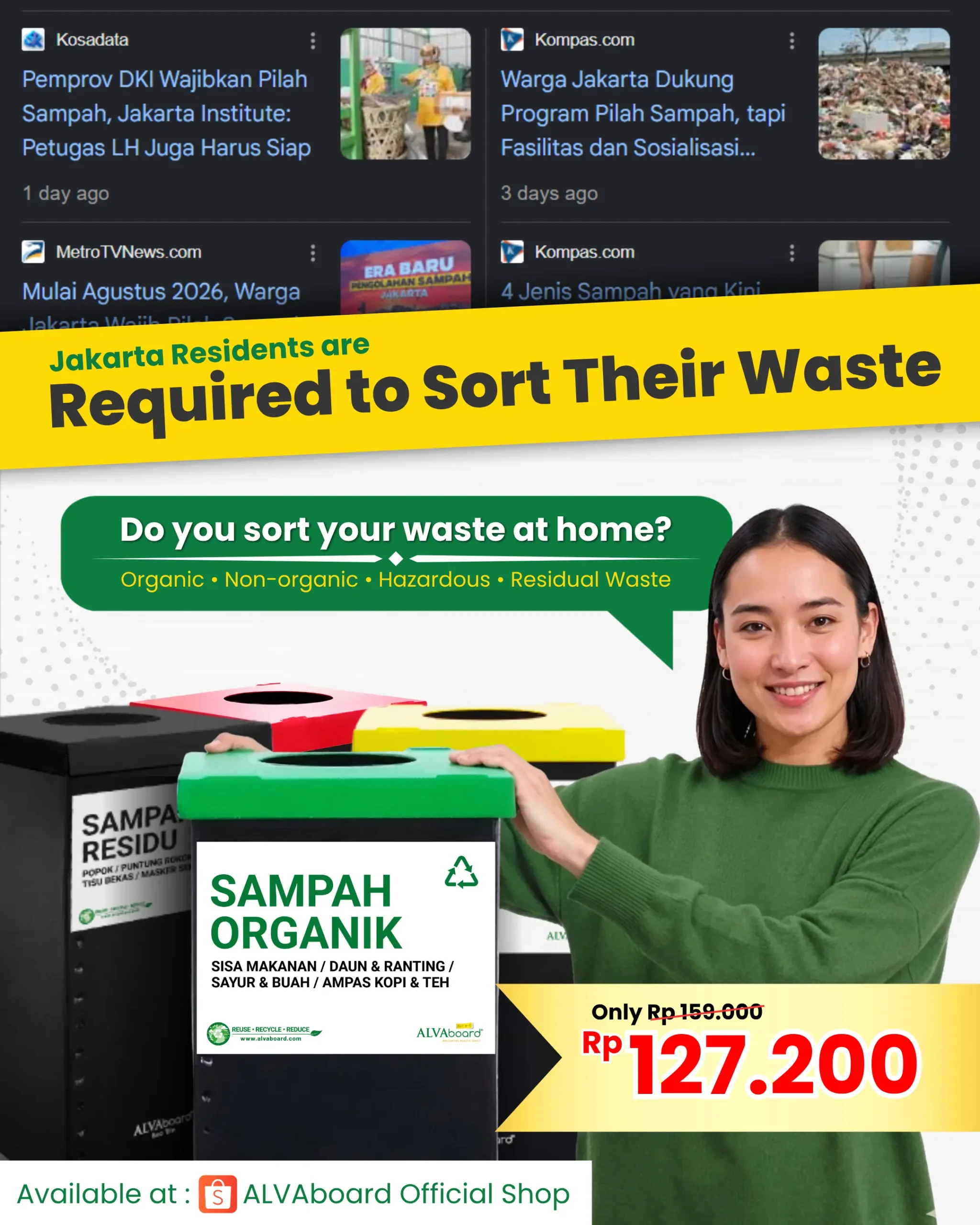
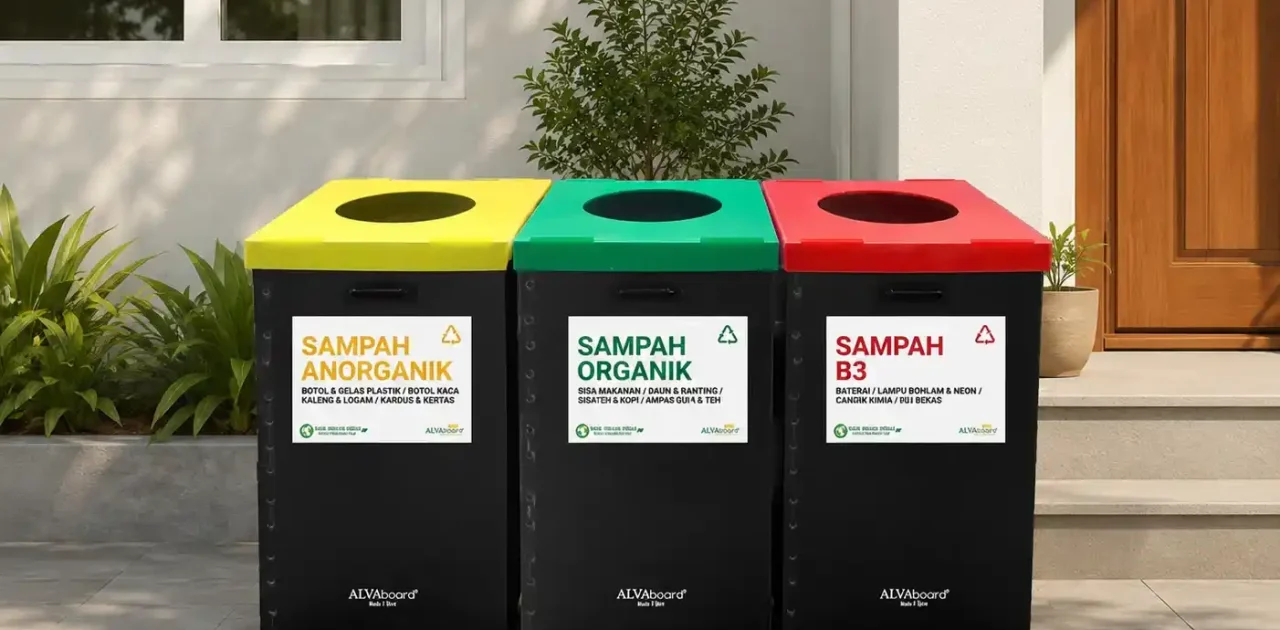
ALVAboard introduces Eco Bin, a waste separation bin made from recycled Polypropylene (PP) material that helps households sort waste directly from the source.
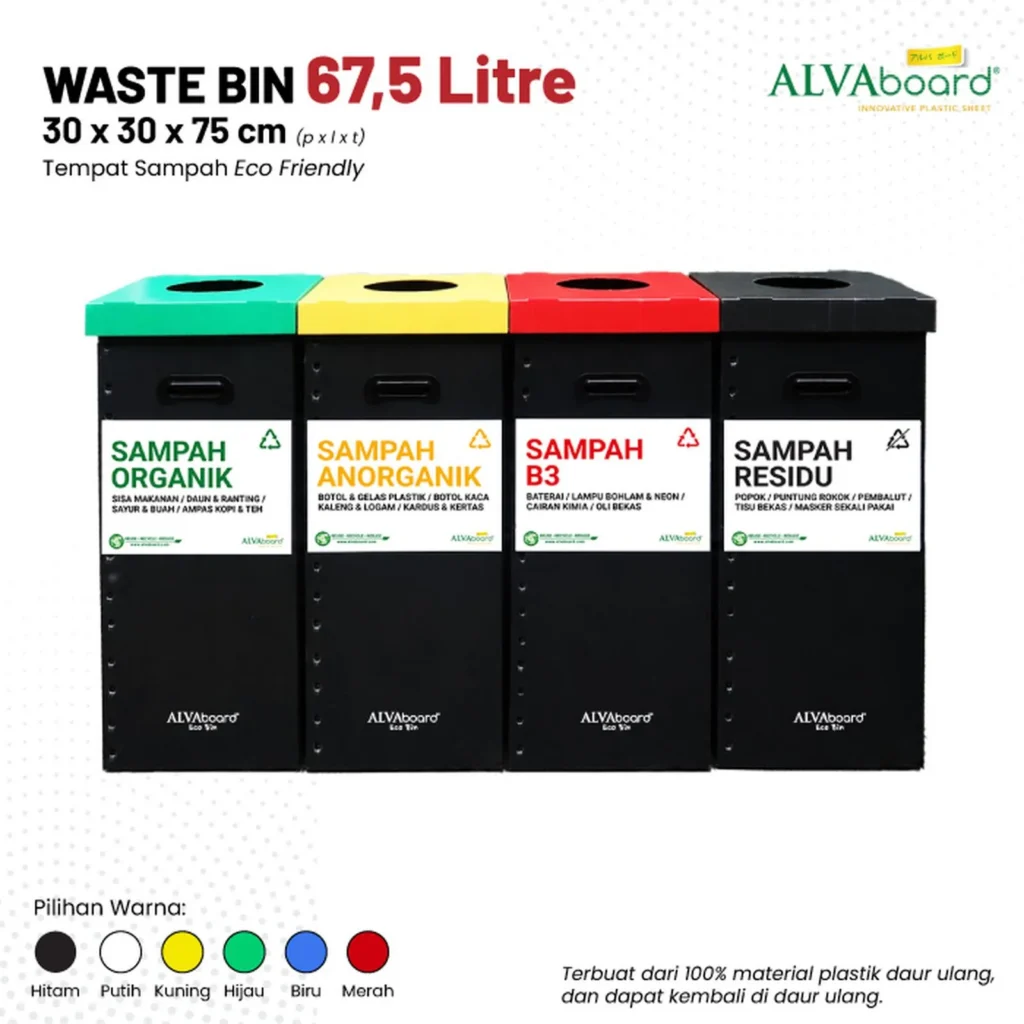
ALVAboard Eco Bin Specifications:
- Size: 30 x 30 x 75 cm (67.5 liters)
- Material: Recycled PP, 100% recyclable
- Body color: Black
- Lid colors: Green / Yellow / Red / Blue / White
- Available sizes: 30 x 30 x 60 cm and 30 x 30 x 100 cm
The color coding system makes waste sorting easier for every family member:
- Green for organic waste
- Yellow for inorganic waste (including plastic)
- Red for hazardous waste (B3)
- Other colors for residual waste
Order Now via ALVAboard Shopee!
ALVAboard Eco Bin is waterproof, foldable, easy to clean, and equipped with customizable labels.
It is suitable for homes, schools, offices, campuses, and public areas.
Start building a cleaner plastic waste sorting habit with a more organized system!
Contact the ALVAboard team via WhatsApp +62 877 9310 2838 for consultation and the best offer today.