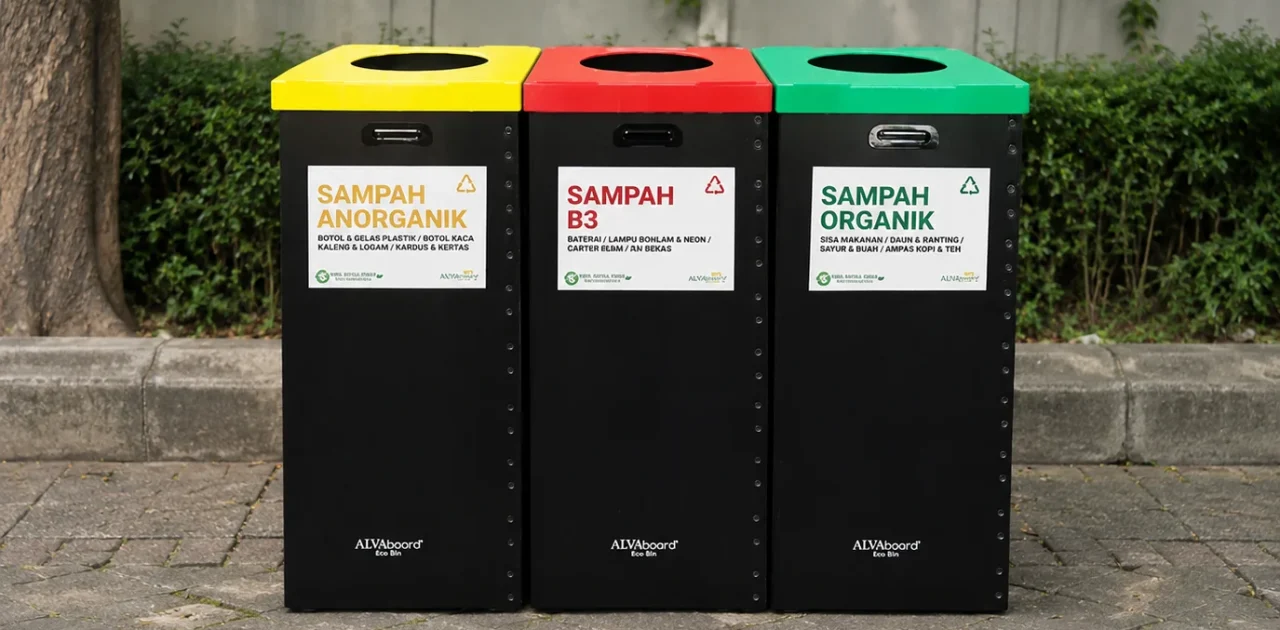
Every day, every household produces different types of waste.
From food scraps and plastic packaging to unused items that are no longer needed, waste is a part of our daily activities.
The problem is that much of this waste still has value and can be reused or recycled.
However, when all waste is mixed together in a single trash bin, its value is lost, and the management process becomes much more difficult and expensive.
That is why we should start the habit of sorting waste from home so each type of waste can be recycled, processed, or managed properly according to its characteristics.
7 Reasons Why We Should Sort Waste
There are several important reasons why we should consistently separate waste based on its type, including:
1. Makes the Recycling Process Easier
Recycling can only work effectively when the materials entering recycling facilities are clean and separated according to their categories.
Plastic contaminated with food residue or paper mixed with wet organic waste becomes much more difficult and expensive to process.
By sorting waste from home, you help ensure that recyclable materials can actually be recovered and transformed into new products.
2. Reduces the Amount of Waste Sent to Landfills
Landfills in many major cities in Indonesia are already approaching their maximum capacity.
The more waste that ends up in landfills, the greater the environmental burden, including soil pollution, groundwater contamination, and methane gas emissions that contribute to climate change.
When waste is properly separated, many types of materials can be diverted away from landfills through recycling, composting, and reuse.
This helps reduce the amount of waste that needs to be disposed of every day.
3. Reduces Odors and Prevents Pest Problems
Organic waste is the main source of unpleasant odors in households.
When mixed with other waste, these odors spread throughout the trash container and become difficult to control.
In addition, decomposing food waste attracts pests such as flies, cockroaches, and rats.
Therefore, organic waste should be placed in a separate container to control odors and reduce pest risks more effectively.
Separate bins for plastic and paper also remain cleaner and drier, reducing the need for frequent cleaning.
4. Makes It Easier to Process Organic Waste into Compost
Organic waste, including vegetable scraps, fruit waste, leaves, and coffee grounds, can be processed into nutrient-rich compost for plants.
However, composting can only work properly when organic waste is separated from plastic, metal, and other non-organic materials.
Separated organic waste can be transformed into compost, reducing the amount of waste generated while producing a natural fertilizer that benefits plants.
5. Supports Waste Bank Programs and the Circular Economy
A waste bank is a waste collection system that collects recyclable materials and provides economic value back to the community that contributes them.
This program has been implemented in many cities across Indonesia, but its effectiveness greatly depends on the quality of the waste received.
Clean and properly separated inorganic waste has higher economic value and is easier for waste banks to process.
6. Helps Build Environmental Awareness Within the Family
Good habits start at home.
When children grow up in a household where waste sorting is practiced consistently, they learn that protecting the environment is part of everyday responsibility.
Sorting waste together as a family also builds awareness about more responsible consumption habits.
Children who are familiar with waste separation tend to become more aware of the impact of the products they use and understand how to dispose of them properly.
7. Helps Prevent Global Warming
Poorly managed waste is one of the contributors to greenhouse gas emissions.
Organic waste that decomposes in landfills produces methane gas, a greenhouse gas with a much stronger warming effect than carbon dioxide over a short period.
By separating organic waste for composting and directing recyclable materials into recycling systems, emissions from the waste management sector can be reduced.
Learn more about non-biodegradable waste and its long-term environmental impacts.
What Happens If Waste Is Not Sorted?
The consequences of not sorting waste may not be immediately visible, but they accumulate over time and become increasingly serious environmental problems.
Here are some impacts that can occur:
- Valuable Recyclable Materials Become Difficult to Recycle : When plastic, paper, and metal are mixed with food waste, contamination makes the recycling process much more difficult and expensive. Many materials that could have been recycled eventually end up in landfills.
- The Amount of Waste Sent to Landfills Increases : Without waste separation, almost all waste ends up in landfills. This accelerates landfill capacity problems that are already occurring in many regions.
- Organic Waste Contaminates Other Materials : Decomposing food waste can contaminate surrounding materials. For example, wet paper becomes unusable for recycling, while recyclable plastics become contaminated and harder to process.
- Unpleasant Odors and Pest Risks Increase : A mixture of decomposing organic waste and other materials creates ideal conditions for bacteria growth and attracts flies, rats, and other pests around residential areas.
- Waste Management Becomes More Expensive : Waste management workers and facilities must spend more time, labor, and resources sorting and processing waste that arrives already mixed together.
Start Sorting Waste More Easily with ALVAboard Eco Bin!
One of the main reasons many people struggle to sort waste at home is the lack of proper waste containers.
When there is only one trash bin available, all types of waste will automatically become mixed together.
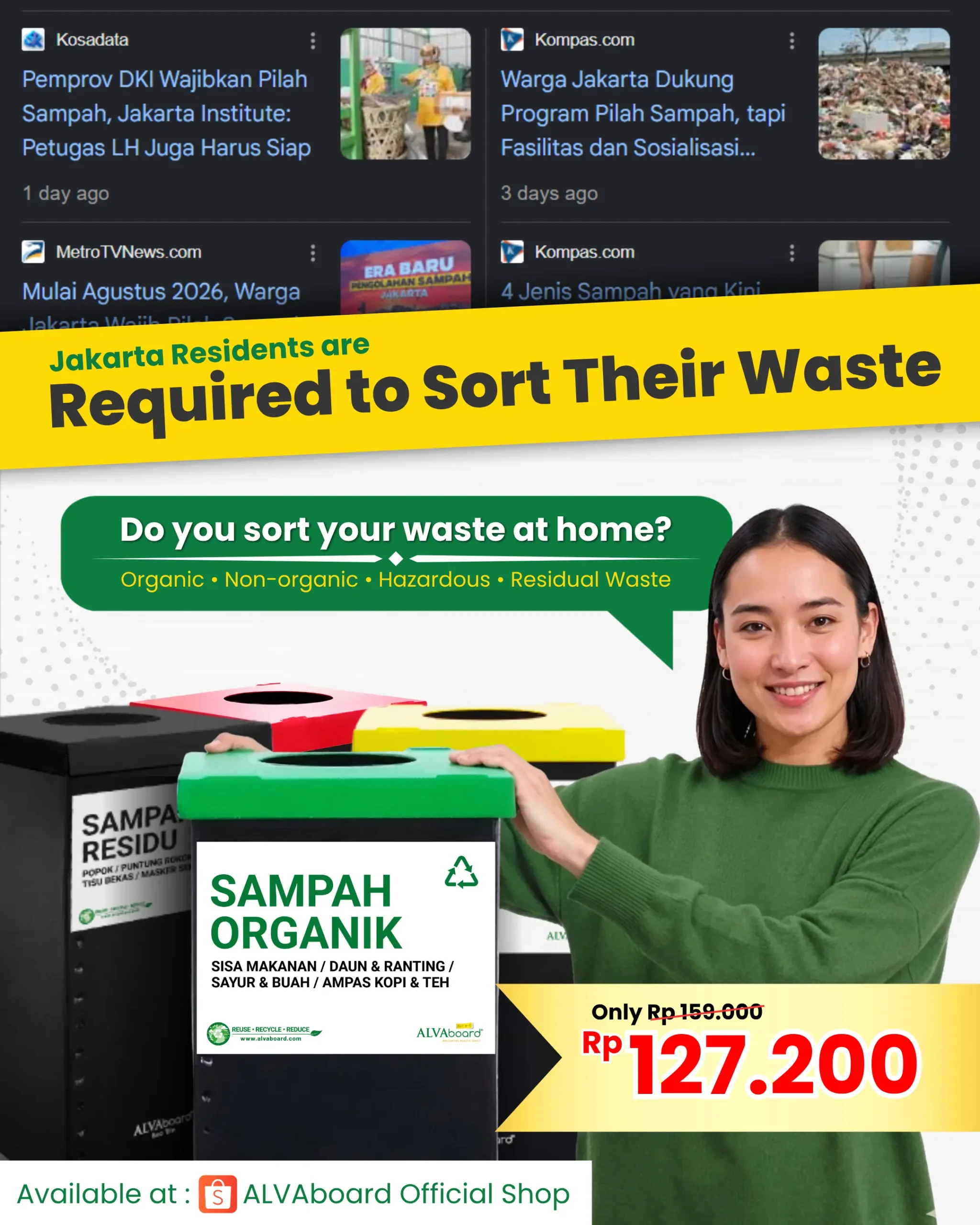
The good news is that ALVAboard introduces Eco Bin, a waste sorting bin made from recycled Polypropylene (PP) material designed to make waste separation easier at homes, schools, offices, campuses, and public areas.
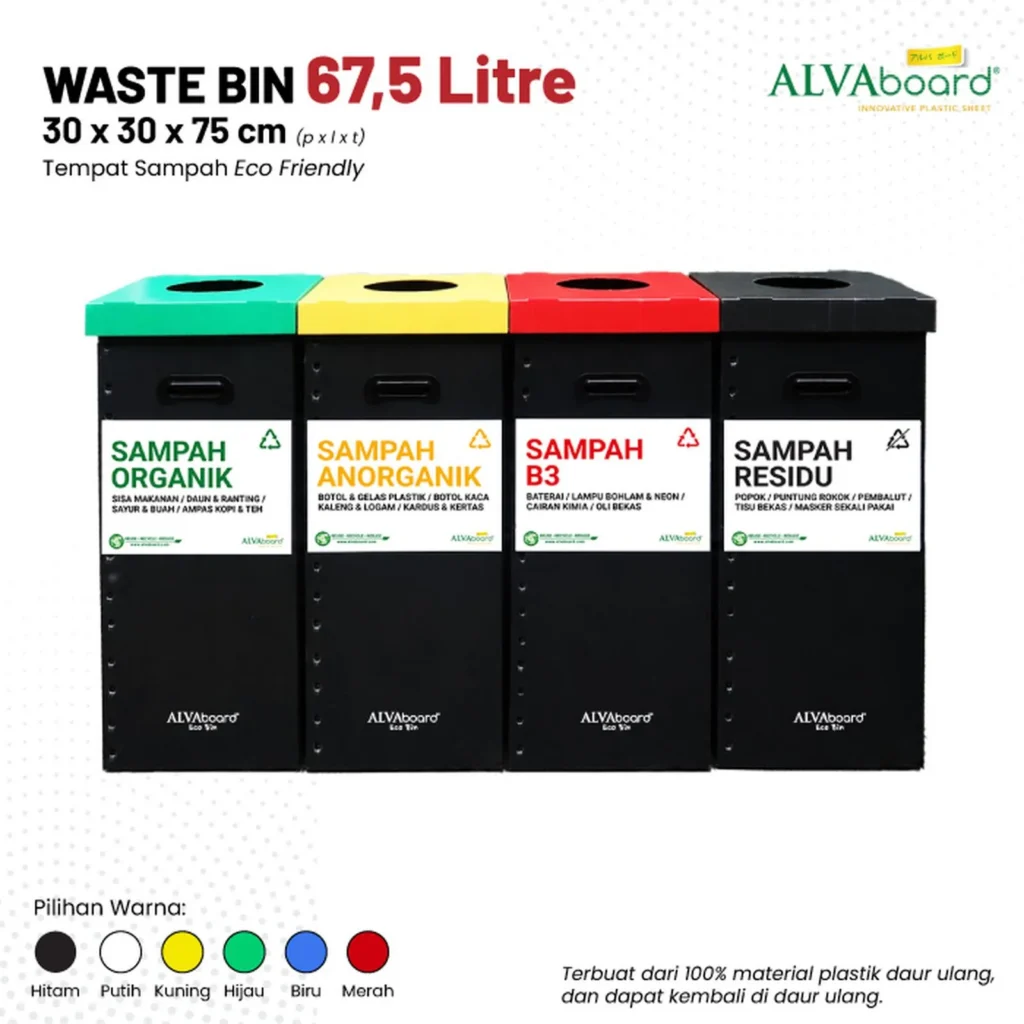
ALVAboard Eco Bin Specifications:
- Size: 30 × 30 × 75 cm (67.5 liters)
- Material: Recycled Polypropylene (PP)
- Body Thickness: 5 mm
- Lid Thickness: 2 mm
- Body Color: Black
- Lid Color Options: Green / Yellow / Red / Blue / White
Size Options:
- 30 × 30 × 60 cm
- 30 × 30 × 100 cm
Order ALVAboard Eco Bin now on Shopee.
Through a clear color-coding system, every family member can easily identify where each type of waste should be placed:
🟢 Green → Organic Waste
(Food scraps, leaves, coffee grounds)
🟡 Yellow → Inorganic Waste
(Plastic bottles, cardboard, metal)
🔴 Red → Hazardous Waste (B3 Waste)
(Batteries, lamps, chemical liquids)
⚫ Black → Residual Waste
(Diapers, used tissues, masks)
Advantages of ALVAboard Eco Bin
ALVAboard Eco Bin is designed with features that support practical and sustainable waste management:
- Water Resistant and Durable. Designed for long-term use with resistance against moisture and daily environmental exposure.
- Foldable and Easy to Assemble. Can be folded and assembled easily, making storage and transportation more efficient.
- Easy to Clean. The surface can be easily maintained by wiping or washing with water.
- Customizable Labels. Waste category labels can be customized according to your specific sorting system requirements.
- Made from 100% Recycled Plastic Material. Produced using recycled plastic materials that can be recycled again after use.
- More Energy Efficient Production Process. Requires less energy during manufacturing compared to conventional injection-molded trash bins.
- Suitable for Various Indoor Applications. Ideal for use in:
- Homes
- Schools
- Universities
- Offices
- Shopping mall events
- Public indoor areas
Make Waste Sorting a Better Habit with ALVAboard Eco Bin!
Proper waste separation starts with having the right tools.
With a practical design, durable recycled PP material, and a clear color-coded system, ALVAboard Eco Bin helps make waste sorting easier, more organized, and more sustainable.
Start building a better waste management habit today!
Contact the ALVAboard team via WhatsApp at +6287793102838 for consultation and the best offer.