Choosing the wrong WIP box material can become one of the main causes of slow FMCG production lines. In fact, the best WIP box material for FMCG factories can be determined simply by understanding several key factors.
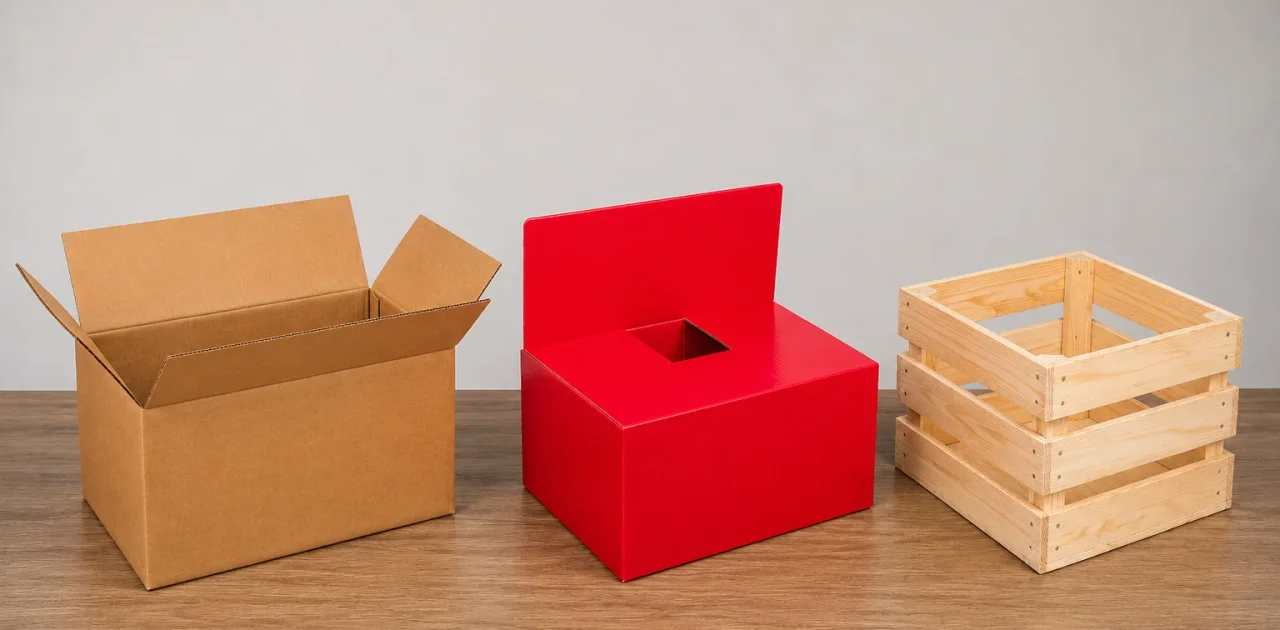
From corrugated cardboard and wood to polypropylene plastic, each material has advantages that cannot be generalized.
So, what is the best WIP box material for FMCG production lines? Let’s take a closer look below.
Common Materials Used for WIP Boxes
1. Cardboard / Corrugated Carton
Cardboard is one of the most widely used materials because it is inexpensive and easy to obtain. It is suitable for short-term WIP box needs with approximately one to two usage cycles.
However, because cardboard easily absorbs moisture and loses structural strength when exposed to humid environments, it is generally not recommended for intensive FMCG production use.
Suitable for: Single-use applications, low-volume operations, temporary needs.
Not ideal for: Intensive production, humid environments, reusable systems.
2. Wood
Wooden boxes provide strong structural support for heavy products. This material withstands pressure from stacked heavy items and offers excellent physical protection during storage.
However, wood is also heavy, which increases the physical workload for operators during every transfer cycle.
Wood also absorbs water and can become a breeding ground for mold and bacteria if not maintained properly.
Suitable for: Very heavy products, long-term storage in dry environments.
Not ideal for: Humid environments, fast material handling systems, strict hygiene standards.
3. PP Corrugated / Polypropylene Board
Corrugated polypropylene sheets are increasingly being adopted by FMCG factories. Their twin-wall corrugated structure creates a material that is lightweight yet strong enough to handle loads effectively.
Compared to cardboard, corrugated plastic boards are far more durable and do not absorb water. Compared to wood, they are significantly lighter and more hygienic.
In addition, polypropylene material is reusable for long-term use and 100% recyclable at the end of its service life.
Suitable for: Cold storage, wet environments, products requiring maximum protection.
Not ideal for: Highly flexible custom dimension requirements, limited budgets.
Why PP Corrugated Has Become the Preferred Choice for Many FMCG Factories
1. Supports Material Handling Efficiency
The lightweight nature of corrugated polypropylene sheets makes it easier for operators to move boxes between stations without adding physical strain.
In a single shift involving hundreds of transfer cycles, the difference between lightweight and heavy materials directly impacts speed and productivity.
Additionally, consistent box dimensions make integration easier with existing trolleys, conveyors, and storage racks within production facilities.
2. Reduces Product Damage Risk
The hollow structure of polypropylene plastic boards distributes pressure and impact evenly across the surface.
As a result, WIP products inside receive better protection compared to cardboard boxes that lose rigidity after repeated use.
3. More Durable for Repeated Use
Boxes made from corrugated plastic sheets can be reused dozens or even hundreds of times before replacement becomes necessary.
Unlike cardboard, which often lasts only one or two uses, polypropylene board maintains its strength and dimensions even after long-term exposure to production environments.
This durability results in lower cost per use. When calculated based on total cost of ownership, the initial investment in polypropylene board WIP boxes is often more economical than continuously purchasing new cardboard boxes.
4. Supports Production Area Hygiene
Polypropylene plastic board surfaces do not absorb liquids or environmental contaminants. The boxes can be cleaned and sanitized easily using water or disinfectant solutions.
5. Flexible for Custom Production Needs
Every production line has different dimensional requirements. Polypropylene board material is highly flexible for customization, including dimensions, thickness, colors, and design configurations.
Factors to Consider When Choosing WIP Box Materials
Before deciding on the most suitable WIP box material, there are six key factors that should be evaluated objectively:
- Product type and weight. Product characteristics determine minimum load capacity and shock absorption requirements.
- Box usage frequency. The higher the usage frequency per shift, the more important material durability and dimensional consistency become.
- Production and warehouse conditions. Humidity levels, chemical exposure, and temperature fluctuations determine which materials can withstand the environment.
- Stackability and storage requirements. Materials that fail to maintain their shape under stacking pressure create stability problems that can endanger both products and operators.
- FMCG hygiene standards. For food or pharmaceutical production, ensure the material is food-grade certified and easy to sanitize according to industry regulations.
- Long-term cost efficiency. Calculate total cost of ownership, including replacement frequency and product damage costs.
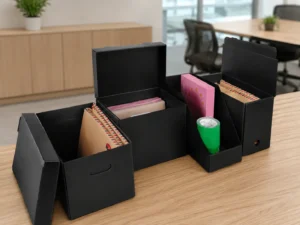
The good news is that ALVAboard provides WIP boxes made from corrugated plastic boards that can be customized according to your production line’s technical specifications.
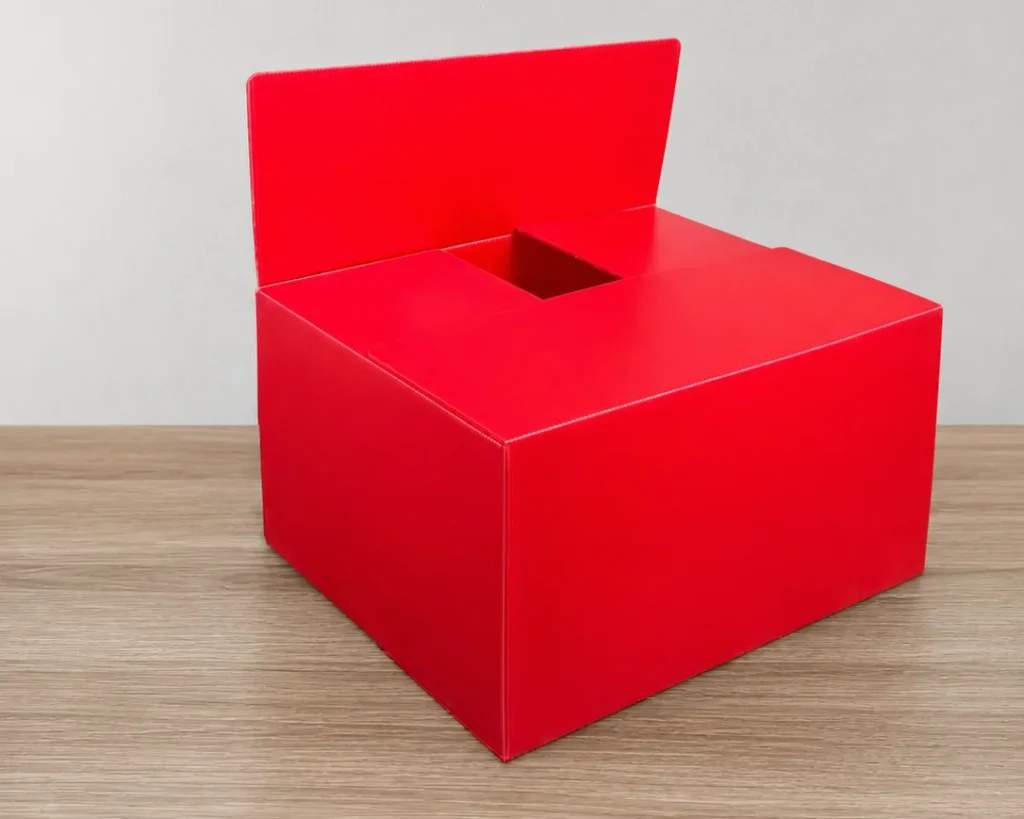
In addition, container solutions and storage systems are also available to support material handling efficiency in FMCG factories.
If you need more specific guidance regarding WIP box specifications suitable for your production flow, the ALVAboard team is ready to help determine the most appropriate design, size, and capacity.
Contact the ALVAboard team via WhatsApp at +62 877-9310-2838 today to get the best offer for polypropylene board WIP boxes tailored to your factory production line specifications and requirements!