Many FMCG factories operate below their designed production capacity without realizing the real cause. The machines are sufficient, labor is available, and raw materials are not lacking. Yet output consistently falls short of targets, delays keep recurring, and production teams struggle to explain where the issue lies.
In many cases, the biggest problem is not production capacity itself. The real issue is an undetected bottleneck that was never identified in the right place.
A bottleneck is a point in the production flow where the process speed is slower than the surrounding processes. This point becomes a constraint that limits the entire production line output, not just the process itself.
As long as the bottleneck remains unidentified, all efforts to improve capacity elsewhere will not produce significant results.
How to Identify Bottlenecks in Production Processes
1. Map the End-to-End Production Flow
Create a visual map of the entire production process from raw material intake to finished goods output. Every process, material movement, and temporary storage point should be documented.
2. Analyze Processing Time at Each Station
Once the flow is mapped, measure the time required at every workstation and during every material transfer. Record the actual cycle time, not just the cycle time stated in standard operating procedures. The gap between the two already provides an early indication of where bottlenecks occur.
Stations where actual cycle times significantly exceed standard times are strong bottleneck candidates. On the other hand, stations that frequently wait for materials from previous processes indicate that the bottleneck exists upstream.
3. Check for WIP Accumulation at Specific Points
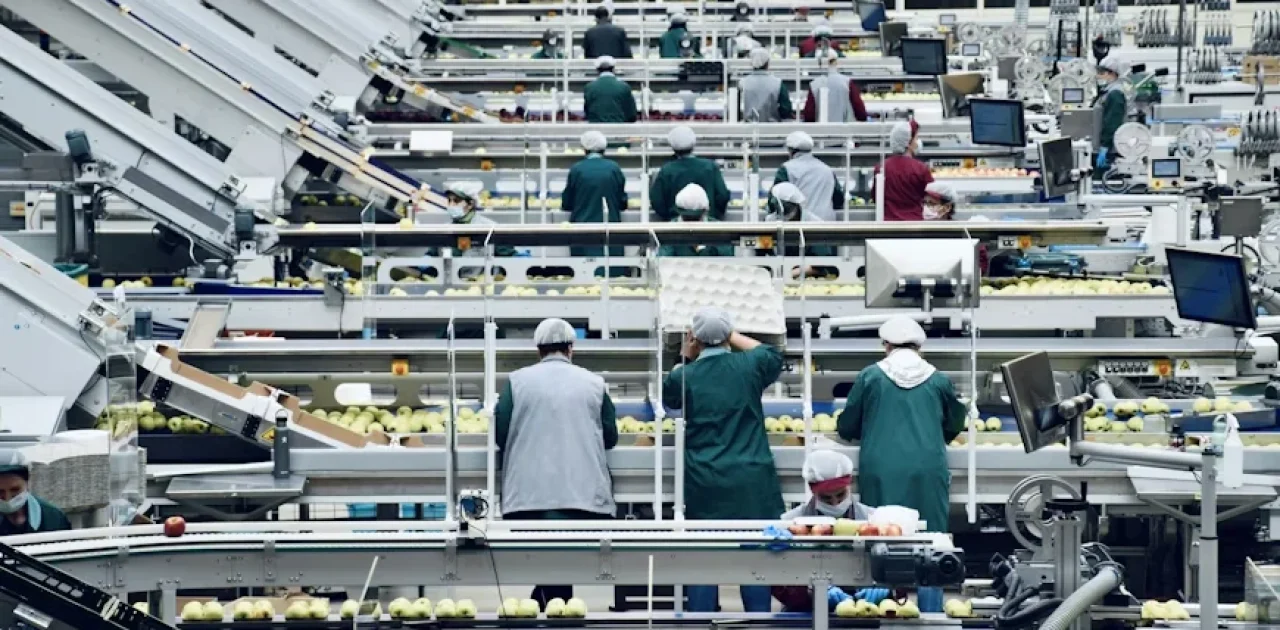
Work in Progress (WIP) accumulation in certain areas is an easily observable sign. When materials queue in front of one station while other stations lack work, the production flow becomes unbalanced and indicates a slower process point.
Document where WIP accumulation occurs, how large the volume is, and how long the condition has persisted.
4. Compare the Capacity of Each Process
Calculate the maximum throughput of every workstation under normal conditions. Compare these figures across the entire production line.
The process with the lowest throughput becomes the bottleneck limiting the capacity of the entire line, because the system output cannot exceed the output of its slowest process.
This concept is known in manufacturing theory as the Theory of Constraints. Even the fastest process becomes useless if downstream processes cannot receive output at the same speed.
5. Observe Material Flow on the Production Floor
Data alone is not always enough. Direct observation on the production floor often reveals constraints that are invisible in reports or dashboards.
Observe how materials move between stations: is the movement smooth and organized, or does it frequently stop and wait?
Also observe operator behavior. Operators who are frequently waiting, searching for materials, or performing tasks outside their main responsibilities often indicate inefficiencies in material flow that affect productivity.
Why Are Bottlenecks Often Overlooked in FMCG Factories?
There are several reasons why bottlenecks can persist for a long time without being properly identified:
- Focusing Only on Final Output. If daily targets are achieved, the system is considered normal. However, meeting targets does not necessarily mean the production system is operating at optimal capacity.
- Lack of Visibility Between Processes. Evaluations that only focus on shift output provide no visibility into what happens between workstations.
- Data Is Not Analyzed Per Stage. Many factories record total output but fail to track data at each station. Without stage-level data, bottleneck identification becomes difficult.
- Delays Are Considered “Normal”. Long-standing inefficiencies are often accepted as unavoidable operational conditions. In reality, every recurring delay should be investigated.
Signs of Bottlenecks in Production Processes
1. Accumulation in One Production Area
Growing piles of materials or WIP in front of a particular point are the easiest bottleneck indicators to spot. If every shift ends with buildup in the same area, it is not a coincidence.
2. Machines Idle on One Side, Overloaded on Another
Imbalanced machine utilization across the production line strongly indicates a bottleneck. Some machines constantly sit idle due to lack of incoming material, while others are overloaded with queues.
3. Lead Time Longer Than Estimated
When the time required from raw material intake to finished goods consistently exceeds standard estimates, something within the flow is slowing the system down. An unidentified bottleneck is one of the most common causes of extended lead times.
4. Inconsistent Output
Large output variations between shifts despite relatively similar input conditions indicate uncontrolled variability in the production flow.
Bottlenecks that shift positions or depend on external factors such as material availability commonly cause this inconsistency.
5. Excessive Waiting Time
In bottlenecked production systems, most process time is actually spent waiting instead of producing.
Operators who appear idle are often not unproductive the system simply does not provide materials or tasks that can be processed.
The Impact of Bottlenecks on Factory Operations
Unresolved bottlenecks create operational impacts that continue to grow over time.
- Reduced productivity. Actual output consistently falls below design capacity. Investments in machinery and labor fail to deliver the expected return.
- Rising Operational Costs. Idle machines still consume energy. Waiting operators still receive wages. Overhead costs continue even when productivity is not optimal.
- Delayed Distribution. Production bottlenecks lead to order fulfillment delays. In the FMCG industry, where speed is critical, this directly affects relationships with distributors and retailers.
- Inefficient Workforce Utilization. Operators trapped in inefficient systems gradually lose motivation over time.
- Uncontrolled WIP. Excessive WIP accumulation consumes production floor space, increases material damage risk, and complicates inventory management.
Bottlenecks Are Often Not in Machines, but in Material Flow
An important insight is that most FMCG factory bottlenecks do not originate from machine capacity limitations. The real source lies in how materials move between processes.
Inefficient Handling
Materials moved manually without proper tools or containers slow down transfers between stations.
Operators who must lift, reorganize, or wait for unavailable equipment lose productive time in every cycle.
Poorly Organized Storage
WIP stored without a clear system becomes difficult to locate and retrieve when needed. Time wasted searching for materials in warehouses or temporary storage areas directly contributes to longer lead times.
Non-Standardized WIP Movement
Ketika tidak ada wadah atau sistem yang standar untuk memindahkan WIP antar Without standardized containers or systems for transferring WIP between stations, every movement requires additional time and effort.
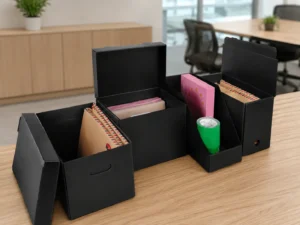
Standardizing WIP containers, such as using WIP boxes with consistent dimensions helps accelerate material flow and reduce unnecessary inefficiencies.
Production Flow Optimization to Prevent Bottlenecks
Once bottlenecks are identified, there are four key areas that should be optimized to prevent recurring problems.
- Balance workflow between stations. Adjust the capacity of each station so throughput remains balanced across the entire line. This may involve adjusting the number of operators, batch frequency, or process sequences.
- Reduce WIP Accumulation. Set maximum WIP limits for every production point. When the limit is reached, upstream processes should stop until the WIP is absorbed.
- Optimize Material Handling. Use standardized containers and appropriate handling tools for every material movement. Proper specifications that match the production flow are often overlooked, yet they significantly impact material flow speed and smoothness on the production floor.
- Improve Storage Systems. WIP storage layouts should support the production flow. An organized storage systems ensures materials are always available in the right place, in the right condition, when needed.
To support smoother material flow and WIP storage systems on the production floor, ALVAboard provides customizable container solutions designed specifically for FMCG production environments.
ALVAboard WIP boxes are made from high-quality PP corrugated sheets that are lightweight yet durable enough for repeated loads, water-resistant, impact-resistant during inter-station handling, and easy to clean to maintain production line hygiene.
Available in both standard and custom sizes based on workstation dimensions and specific factory production flows, ALVAboard WIP boxes simplify stacking, visual identification, and integration with existing rack or conveyor systems.
Consult your factory’s WIP box requirements with the ALVAboard team via WhatsApp at +6287793102838 today!