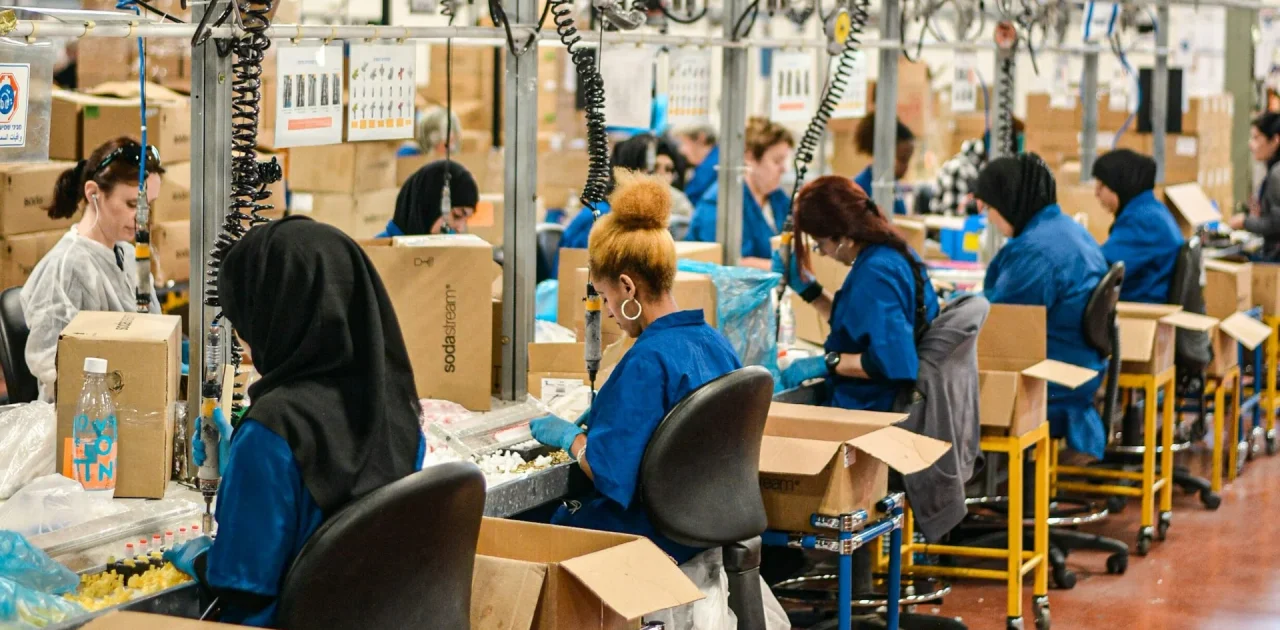
Many production managers believe their factory operations are running smoothly. Machines are operating, daily targets are achieved, and no major incidents occur. In other words, production continues and that is often considered sufficient.
However, behind what appears to be normal activity, inefficiencies can quietly grow. Operational costs may gradually increase, production time may extend without clear reasons, and output may become inconsistent from one shift to another.
FMCG manufacturing industry data shows that plants lose up to 30% of their production capacity silently in each shift. This is why it is crucial to recognize the early signs of inefficiency in your production system.
Signs of an Inefficient Production System in FMCG Factories
1. Accumulation of Work-in-Progress (WIP) on the Production Floor
One of the most visible signs is the buildup of semi-finished goods (WIP) on the production floor. When materials or WIP products are queued at one point while other processes move more slowly, it indicates a bottleneck in the production flow.
Beyond visual clutter, this accumulation consumes valuable floor space that should be used for productive activities, creating hidden costs that increase daily without notice.
2. Excessive Waiting Time Between Processes
Material movement from one station to another should be smooth and well-coordinated. If operators frequently wait for materials or for previous processes to be completed, it signals an imbalance in workflow.
3. Inefficient Material Movement
Observe how materials move within the factory. Do operators need to walk long distances to retrieve components?
Are materials moved multiple times before reaching the correct station? Is there no standardized container for transporting WIP between processes?
Inefficient material movement indicates that the production layout or material handling system needs to be reevaluated.
4. Frequent Damage or Loss of WIP Products
WIP damage can occur due to improper handling, inadequate containers, or unstructured temporary storage systems. At the same time, the loss of small components in disorganized production areas is common and often goes unrecorded.
If WIP damage repeatedly occurs at the same point, it likely indicates a systemic weakness in the material handling process that requires immediate attention.
5. Inconsistent Production Output
Significant differences in output between shifts despite identical machines, materials, and workforce should not be ignored. This inconsistency indicates a lack of proper process standardization.
In FMCG operations, many facilities experience hidden capacity losses of 27–47% that go unmeasured. Considering that manufacturing costs typically account for 15–60% of total product costs, inconsistent output directly impacts profitability and business competitiveness.
6. Rising Operational Costs Without Clear Cause
This sign is often overlooked because it is difficult to trace. Electricity costs increase, labor cost per unit rises, or material consumption exceeds targets yet no single clear cause can be identified.
A report from Siemens found that unplanned downtime results in an average annual revenue loss of 11% among the world’s 500 largest manufacturing companies, equivalent to USD 1.4 trillion.
Unexplained increases in operational costs almost always stem from the accumulation of multiple small inefficiencies rather than a single obvious issue.
What Are the Root Causes of These Inefficiencies?
When inefficiencies begin to surface, many managers initially look at machines or human resources. Are machines worn out? Are operators insufficiently trained?
While these can be contributing factors, the root causes are often found elsewhere, such as:
- Lack of standardized operational systems, leading to variations in how each operator or shift performs tasks, resulting in inconsistent output and difficult audits.
- Poorly designed workflows. where processes that should run in parallel are instead sequential, causing longer waiting times and lower floor utilization.
- Inefficient material and WIP management. where the absence of structured storage and transport systems leads to product damage, tracking difficulties, and unnecessary repeated handling.
For this reason, selecting the right containers or WIP box is essential.
Standardized WIP boxes help ensure that semi-finished products move safely, efficiently, and traceably from one station to another. Durable and damage-resistant boxes also reduce the risk of product damage during handling.
The specifications of WIP boxes also need to be adjusted to the specific production flow in the factory, as the requirements of beverage production lines differ from those of snack or household care product lines.
By choosing the right container solution, WIP management on the production floor becomes more structured and efficient.
Conclusion
There are many signs of an inefficient production system in FMCG factories, ranging from WIP accumulation and long waiting times to inefficient material movement and unexplained increases in operational costs.
These signs may seem minor and isolated, but if left unaddressed, their cumulative impact can significantly affect business profitability.
The root causes vary, including operational systems, workflows, and material/WIP management on the production floor.
If your factory is beginning to show these signs, the best step is to identify weak points early before hidden costs continue to escalate.
Consult your WIP Box needs with the ALVAboard team today and find the most suitable material handling solution for your production flow.