Amid ongoing fluctuations in the global economy, many industries are facing rising raw material prices, increasing logistics costs, and shrinking profit margins. In such conditions, every line of operational cost becomes critical—including packaging.
Ironically, packaging is often seen as a “supporting” component that is not particularly crucial. In fact, for manufacturing, logistics, and distribution industries, packaging costs can become one of the most significant cost centers and can easily escalate if not managed with the right strategy.
So, how can companies effectively reduce packaging costs without compromising product quality and safety?
Why Are Packaging Costs Increasing?
1. Rising Raw Material Prices
Global commodity prices have experienced high volatility since the pandemic. For cardboard and carton manufacturers, this increase directly impacts selling prices to industrial customers. Companies that rely heavily on cardboard as their primary packaging material ultimately bear these rising costs.
2. Increasing Logistics Costs
Shipping rates, fuel prices, and logistics labor costs continue to rise. On the other hand, inefficient packaging due to being too heavy, too large, or easily damaged can further increase logistics costs indirectly.
Product damage during transit caused by inadequate packaging can lead to return costs, replacements, and reputational damage.
3. Inefficiency of Single-Use Packaging Systems
One of the most overlooked issues is the use of single-use packaging systems.
Cardboard that is used once and then discarded generates a large volume of waste, while also forcing companies to continuously purchase new packaging in large quantities.
Cumulatively, these costs can be significantly higher than the initial investment in more durable, reusable packaging materials.
Strategic Ways to Reduce Packaging Costs
1. Packaging Design Optimization
Packaging designed according to product dimensions can reduce material usage, maximize load capacity per shipment, and minimize the risk of damage.
Regular packaging design audits can also lead to significant long-term cost savings.
2. Standardization of Packaging in the Supply Chain
Many companies use various packaging sizes and types simultaneously without clear standardization.
This complicates storage, inventory tracking, and warehouse operations. By standardizing packaging sizes and types, companies can simplify processes, reduce operational errors, and lower unnecessary procurement costs.
3. Using More Durable Packaging Materials
One of the most impactful decisions is switching to more durable packaging materials.
Strong, lightweight, and reusable materials help reduce repeated purchasing costs while providing better product protection during distribution.
This is where materials such as corrugated PP board play an important role.
Reusable Packaging: A Long-Term Cost Efficiency Solution
What is Reusable Packaging?
Reusable packaging is a system designed to be used multiple times before it needs replacement.
Unlike single-use packaging such as cardboard, reusable packaging is made from much stronger materials that can withstand various extreme conditions.
How the Reusable Packaging System Works
This system operates in a closed-loop cycle. Packaging is used to deliver products, returned to the origin point, cleaned if necessary, and then reused.
In industrial contexts, this cycle can occur dozens to hundreds of times over the packaging’s lifespan. As a result, the cost per use becomes significantly lower than single-use packaging.
Supply Chain Operational Efficiency
In addition to cost savings, reusable packaging also improves operational efficiency.
Packaging inventory becomes more predictable, loading and unloading processes in warehouses become more efficient, and the risk of product damage during distribution is significantly reduced due to the more durable materials used.
Benefits of Reusable Packaging for Manufacturing and Logistics
1. Long-Term Packaging Cost Reduction
Although the initial investment for reusable packaging is higher than standard cardboard, the total cost of ownership in the long run is significantly lower.
A packaging unit that can be used up to 50 times effectively distributes the initial cost into a much smaller cost per use.
2. Reduced Waste and Disposal Costs
Single-use systems generate large volumes of waste—and waste management also incurs costs.
By switching to reusable packaging, companies can significantly reduce waste volume and cut disposal and waste management expenses.
3. Supply Chain Operational Efficiency
Standardized reusable packaging simplifies stacking, storage, and transportation processes.
With consistent shapes, warehouse and container space utilization becomes more optimal, directly contributing to logistics cost efficiency.
4. Supporting Sustainability and ESG
In an era where environmental commitment is part of corporate values, adopting reusable packaging is a concrete step that can be included in ESG (Environmental, Social, and Governance) reporting.
Reducing packaging waste leads to a lower carbon footprint, which is crucial for companies partnering with multinational corporations that have strict sustainability standards.
Durable and Eco-Friendly Spare Part Storage Solution
One practical application of reusable packaging that is increasingly adopted by industries is for spare part storage and distribution.
These components require extra protection, such as impact resistance, moisture control, and protection from contamination during storage and transportation.
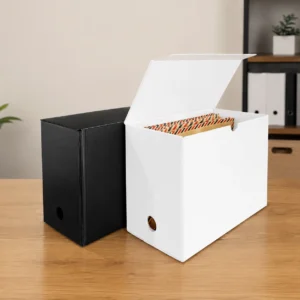
For this reason, boxes made from corrugated PP board (Polypropylene) are an ideal choice. PP material is known for being lightweight yet strong, water-resistant, termite-resistant, and highly durable even when exposed to extreme temperatures or mild chemicals.
Unlike cardboard, which tends to weaken and collapse with repeated use, corrugated PP boxes maintain their structure and strength even after dozens of uses.
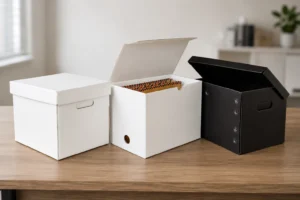
ALVAboard offers customizable corrugated PP box solutions tailored to specific industrial needs from size and thickness to design making them suitable for various applications, including spare parts, electronic components, and pharmaceutical products.
With a wide range of available options, businesses can choose solutions that best match their usage volume and frequency.
In addition, PP material is 100% recyclable, meaning that once the packaging can no longer be used, it can still be processed through recycling systems.
This aligns with sustainability principles applied across various industrial applications, including its use as layer pads to support logistics efficiency.
Conclusion
The challenge of packaging costs in today’s uncertain economic environment cannot be solved with short-term fixes. A more systematic approach is required, from design optimization and standardization to material selection.
Reusable packaging represents a paradigm shift in how industries manage operational costs and environmental responsibility.
More companies are now evaluating the total cost of ownership of their packaging not just the initial purchase price and finding that durable reusable materials can deliver tangible long-term savings.
Corrugated PP sheets are among the most suitable materials to support reusable packaging systems in industrial environments: strong, lightweight, resistant to various conditions, and recyclable.
Interested in finding the most suitable PP board specifications for your operational needs? Consult directly with the ALVAboard team.